
April 1 is the International Bird Loving Day. In the early morning, ecological restoration designer Gao Shaoxiong started his inspection tour of Guangyang Isle, the largest river island in the upper reaches of the Yangtze River.
"I got up early because water birds are active mostly in the morning and evening." Walking slowly while looking up at the sky now and then, he raised his camera and took photos of birds when they appeared.
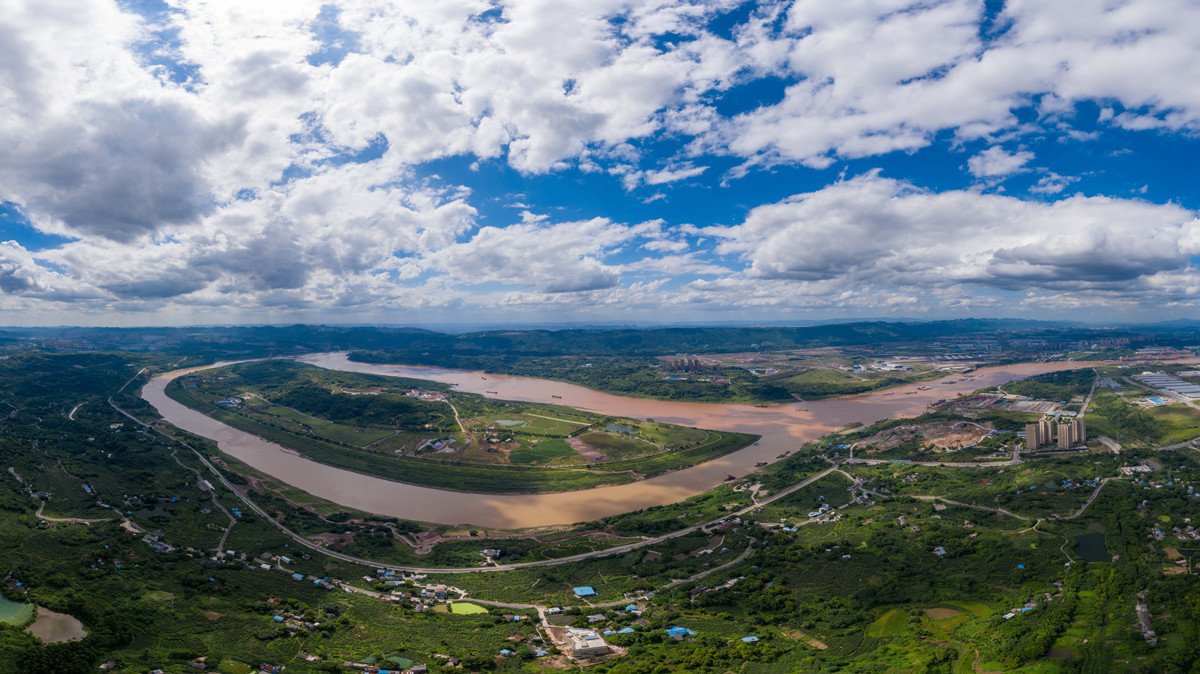
The panorama of the Guangyang Isle (Photo/Xie Zhiqiang)
In 2020, Gao Shaoxiong began serving as Guangyang Isle's ecological restoration designer responsible for biodiversity monitoring, recording, and assessing as part of efforts to restore local ecology. "If you want to protect the ecology of the Isle, you must know well the Isle at first. Due to its unique geographic location, the Ridge and Valley Province, where Guangyang Isle is located, is an important channel for birds migrating between the north and the south. So developing a gene bank of water birds is of great significance for the Isle's ecological restoration."
As he visits the Isle every day, Gao Shaoxiong can distinguish one bird species from another only by hearing their voice. "Birds are like my old friends. When I hear their voice, I know who they are though they may be far away from me. Now, the birds here are mostly egrets, sparrows, light-vented bulbuls, white-browed laughing thrush, and spotted doves."
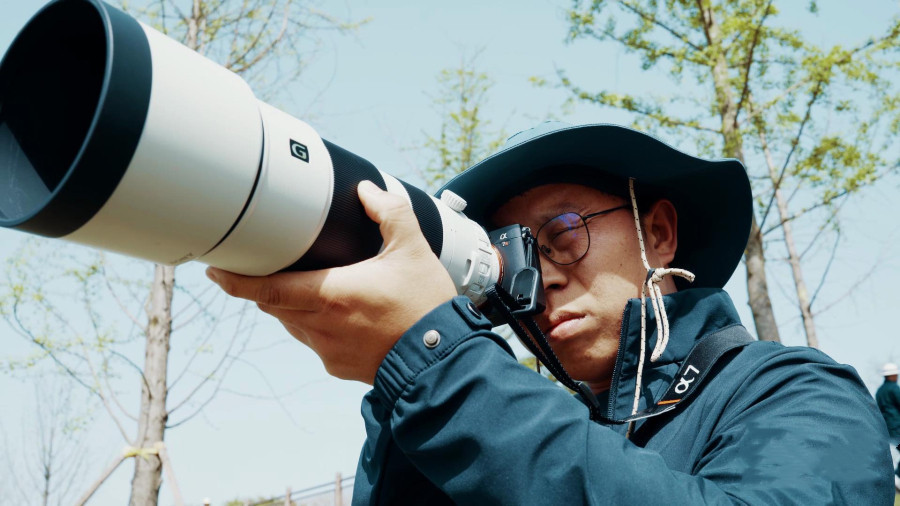
Gao Shaoxiong (Photo/Xinhuanet)
"Around nine o'clock in the morning, grey heron, Indian spot-billed duck, and little ringed plover gather at the wetland areas where there is sunshine." Gao Shaoxiong opened his memo, where he records more than 100 bird species he observed with naked eyes on the Isle. There is detailed information about when and where he saw a bird species and how many birds there were. "After more than two years of recording, the gene bank of water birds on the Isle has become more complete."
Gao Shaoxiong calls himself a watcher who watches and studies birds to protect Guangyang Isle's ecology.
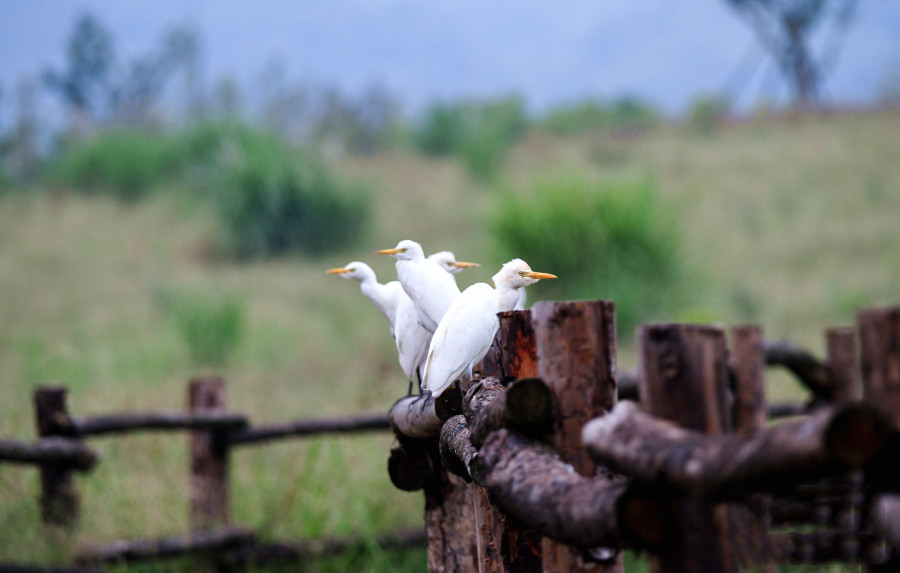
A kind of bird in Guangyang Isle (family Ardeidae) (Photo/Gao Shaoxiong)
More than a decade ago, overdeveloping spoiled Guangyang Isle's nature and culture fundamentally. In August 2017, the government stopped all the Isle development projects and started developing the Isle as "the Scenic Focus of the Yangtze River and Chongqing Ecological Island." To protect biodiversity, Guangyang Isle is divided into three unique ecological areas—forests in mountainous regions, farmlands on level grounds, and wetlands by banks—to restore and regenerate local ecosystems based on different conditions.
"Why do birds perch at Guangyang Isle? Most fundamentally, Guangyang Isle provides an ideal habitat to eat and live for them." According to Gao Shaoxiong, the forests in mountainous areas diversify the food sources for birds; the farmlands on level grounds create a diversity of habitats for birds; the wetlands by banks make Guangyang Isle one of the richest places in Chongqing's main urban area in terms of waterbird diversity. Many bird species are recorded only in the Isle's wetlands.
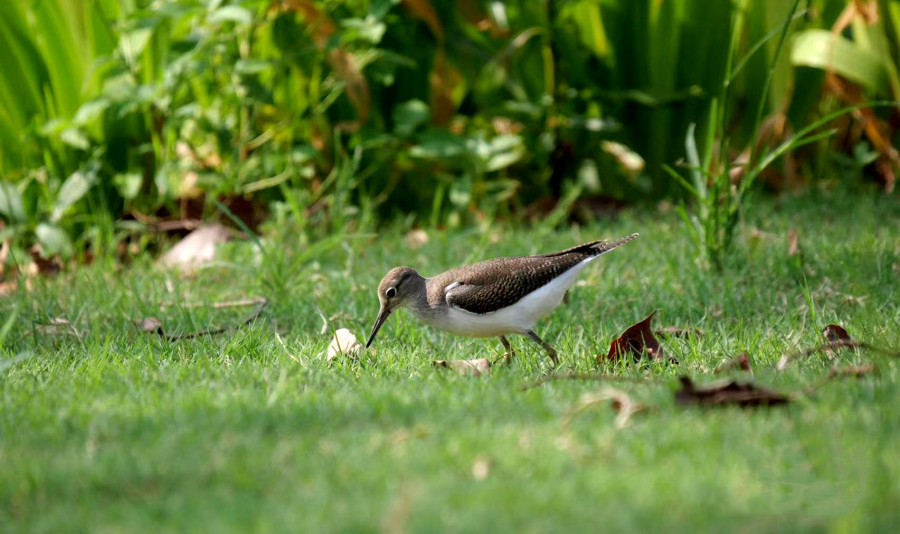
A common sandpiper is foraging (Photo/Gao Shaoxiong)
Impressive achievements have been made in ecological restoration. As of July 2021, 213 bird species had been recorded on Guangyang Isle, accounting for 40% of Chongqing's total. Among them, four are under the national first-level protection: Chinese mergansers, black storks, greater spotted eagles, and yellow-breasted buntings; and 25 are under the national second-level protection.
"Birds are an integral part of an ecosystem. Through constant investigations of bird species, I hope I can build an accurate picture of the bird species on Guangyang Isle and their distribution and promote local biodiversity development," said Gao Shaoxiong.
By continuing to browse our site you agree to our use of cookies, revised Privacy Policy and Terms of Use. You can change your cookie settings through your browser.
For any inquiries, please email service@ichongqing.info