
Chongqing - As China pushes urban renewal forward, installing elevators has become a key livelihood effort, especially in Chongqing’s Liangjiang New Area where residents are taking the lead in reshaping their homes.
In Renhe, high-floor residents have felt the immediate impact. Sixty-year-old Dai Guangli, living on the 12th floor, hesitated to go downstairs after experiencing a sudden elevator drop. Eighth-floor resident Ai Wanduan preferred taking the stairs after being trapped inside once when the old elevator overheated. Now, the stable, new installation, with upgraded air-conditioners in the machine room, makes them “feel safe using it.”
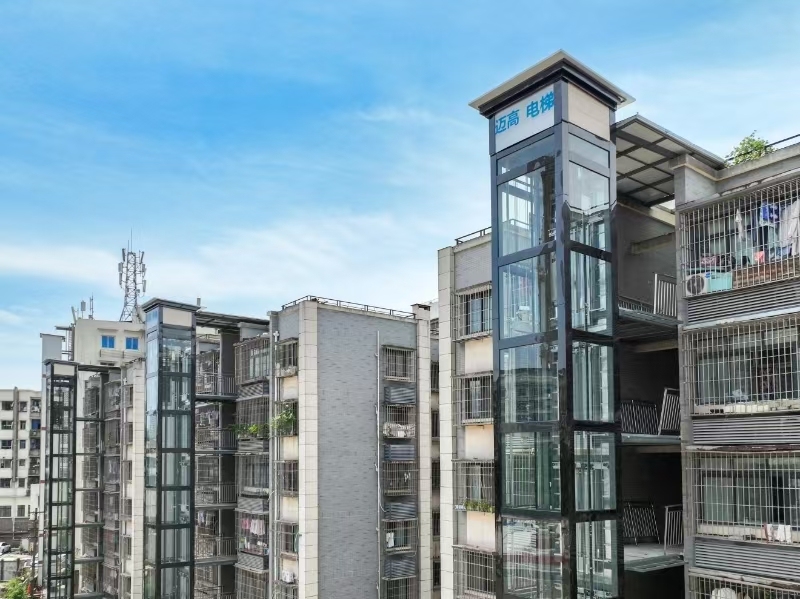
A total of 253 new elevators have been installed in Renhe. (Photo/Renhe subdistrict)
During elevator installations, a community-level self-governance system empowers residents to discuss, decide, and ensure that the changes meet their needs.
Few embody this process better than 71-year-old Chen Chonghui. Living on the 7th floor of a staircase building in Renhe and struggling with knee pain, she left home to stay with her son for years because she could not manage the stairs.
When her community began exploring elevator installations in 2021, she volunteered to help with preparations. As a resident here for nearly three decades, she has many friends and relatives and is well-respected, making her well-suited to play a leading role.
The community committee assisted Chen in hosting consultation meetings, where representatives from each household discussed details such as the installation location, supplier selection, and financial contributions.
The most challenging task was not technical planning but balancing differing interests. Lower-floor residents, who benefit less, were reluctant, while elevator installation requires consent from all households.
Chen visited the second-floor resident, Li, multiple times after she declined to sign, believing the elevator offered her little benefit despite no required payment. Chen won her support by making an exception and offering her elevator access to transport heavy goods. Normally, the elevator is activated with keys held only by contributing households.
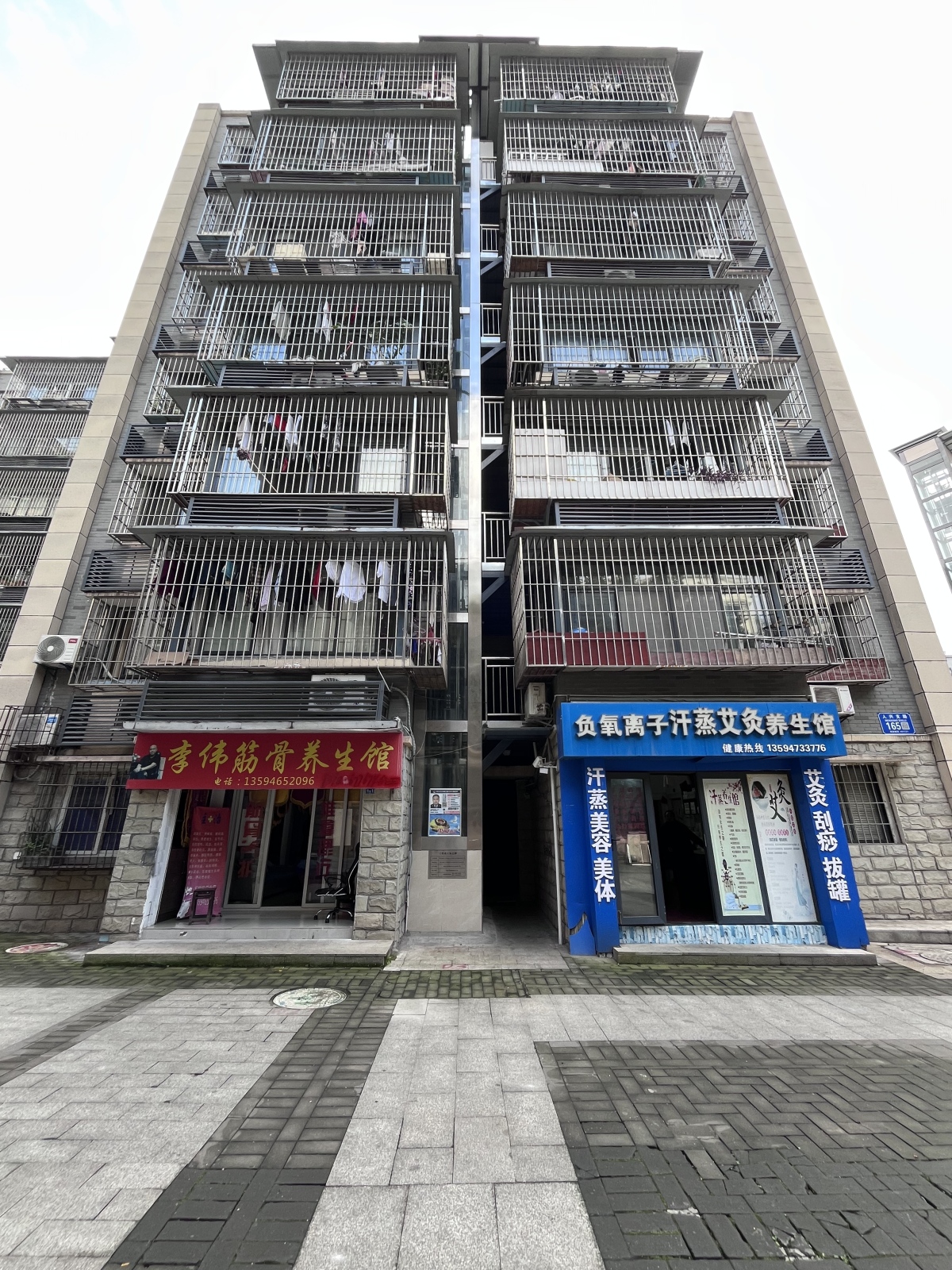
In Chen’s building in Xingjiaqiao Community, the new elevator was added on the left side of the stairwell to avoid blocking sunlight, a key concern for lower-floor residents. (Photo/ Guo Shuyu)
Chen also relied on personal ties, persuading households one by one through trust and familiarity. The community is a resettlement area where residents have known each other for decades and value relationships; even if they disagree, they soften when they see your effort, Chen said. Eventually, all households in her building agreed to proceed.
Renhe’s experience mirrors broader demographic and infrastructure needs across China. The subdistrict includes resettlement housing from the 1990s and older commercial compounds, many of which lack elevators or rely on equipment over 15 years old. With seniors accounting for 15% of the population and more than 21% in older areas, elevator installation has become one of the most common requests.
“We prioritize elevator installation as residents requested,” said Li Jianbin, Party Secretary of Renhe subdistrict. He noted that residents-led projects are more likely to reach consensus and succeed. “We provide technical guidance, policy support, and assist residents in organizing discussions and making decisions,” he said.
To date, Renhe has installed 253 new elevators, supported by government subsidies, national bonds, maintenance funds, community income, and residents' financial contributions.
For Chen, participating in community decision-making has been transformative, and she says it won’t be her last effort. While the process has encouraged Chen to stay engaged, the momentum sparked by resident participation is breathing new life into ageing neighborhoods.
By continuing to browse our site you agree to our use of cookies, revised Privacy Policy and Terms of Use. You can change your cookie settings through your browser.
For any inquiries, please email service@ichongqing.info