
Chongqing - On December 5 in Washington, FIFA will hold the draw for the 2026 World Cup. On the same day, Chinese liquor giant Wuliangye will debut its FIFA 2026 co-branded baijiu in a JD.com livestream before launching it to global markets.
As an official branded and licensed product partner, Wuliangye is using the tie-up to expand its international sports marketing. Its World Cup lineup runs from a flagship "Eighth-Generation Wuliangye" bottle for high-end banquets and gifting to lighter, fruit-flavored and blind-box products for watch parties and younger drinkers, with about 1% of core bottles hiding the emblems of eight former champion teams.
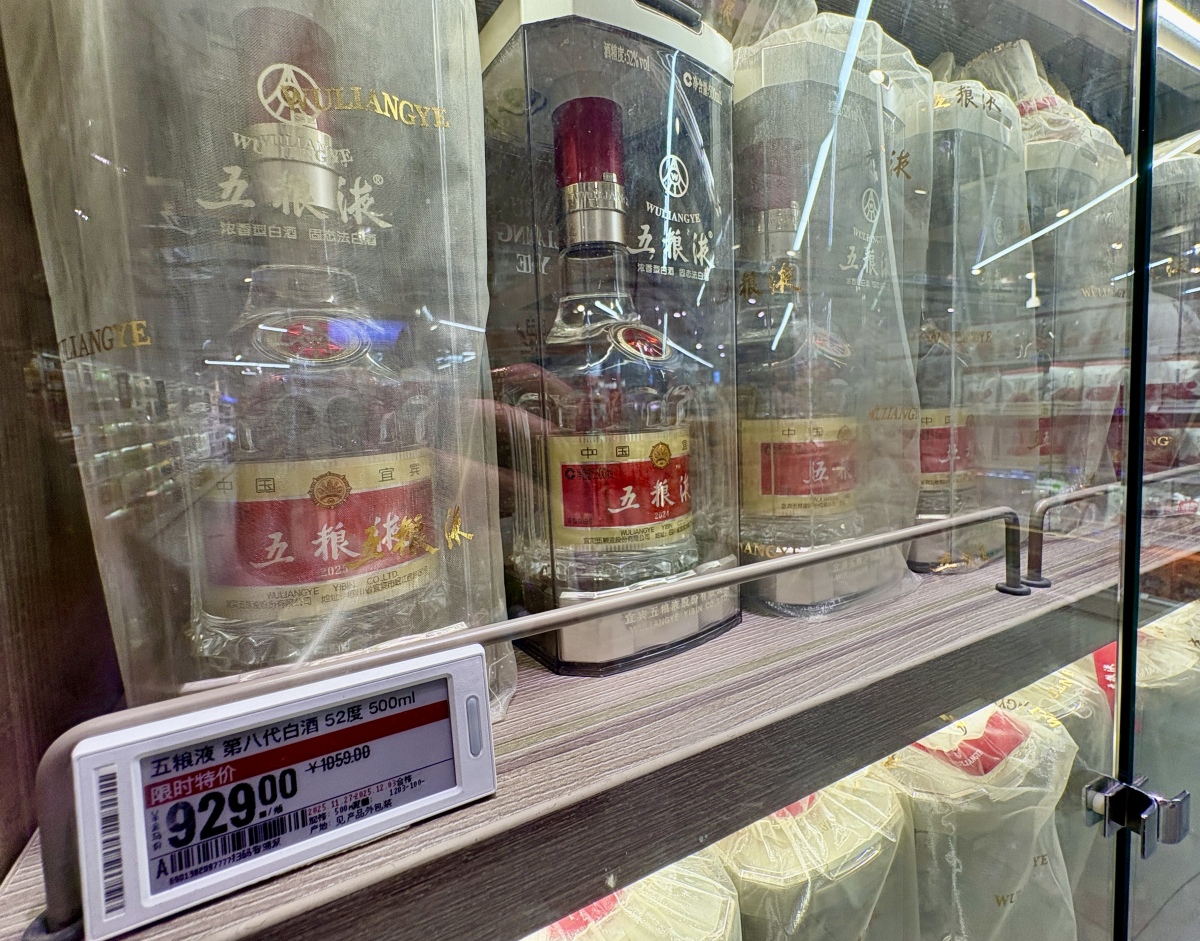
The Eighth-Generation edition of Wuliangye. (Photo/Zheng Ran)
These moves come as the domestic market softens. According to Wuliangye's latest disclosures, the company booked 8.17 billion yuan (about 1.16 billion U.S. dollars) in revenue in the third quarter, down 52.66% year-on-year. The brand dropped to third place among A-share-listed baijiu producers for the first time.
For years, the pecking order in China's baijiu industry has been clear: Kweichow Moutai firmly on top, Wuliangye locked in as the long-standing No. 2, and the No. 3 spot rotating among players like Luzhou Laojiao and Shanxi Fenjiu.
In 2025, only four baijiu stocks in China's A-share market, including Luzhou Laojiao and Jiugui Liquor, posted gains, around 20% of listed players.
An executive at Chongqing-based Bottle Planet Group told Bridging News that China's drinks market is undergoing a generational shift, with younger consumers moving from heavy social drinking to lighter, "feel-good" tipsiness, making low-alcohol new drinks the fastest-growing category.
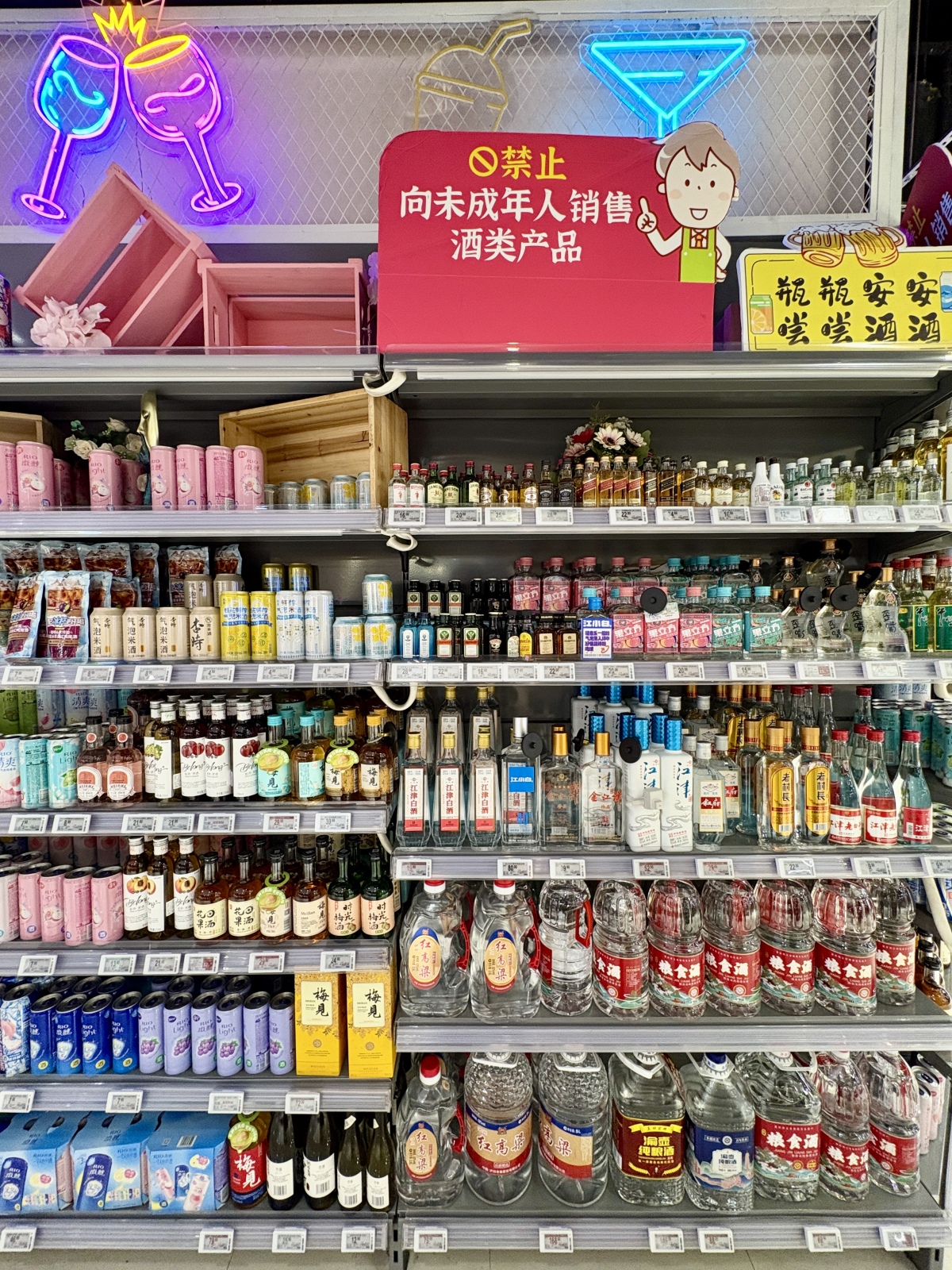
On December 3, at a New Century Department Store in Chongqing Liangjiang New Area, liquor shelves are lined with a growing array of fruit-flavored and low-alcohol drinks. (Photo/Zheng Ran)
Bottle Planet, formerly Jiang Xiaobai, rebranded in 2024 to pivot from a baijiu-led model to a low-alcohol "new drinks" strategy. The company said its products are now sold in more than 30 countries and regions, with Meijian positioned as the spearhead brand. In East and Southeast Asia, it is targeting markets with an existing low-alcohol culture, such as Japan, South Korea, and Singapore, and is pushing Meijian into local formats like izakayas, Korean barbecue restaurants, and other casual dining venues to blend into everyday drinking habits.
In Europe and the U.S., Bottle Planet is going after higher-end, image-building channels. Meijian has been listed in fine-dining restaurants and has appeared as the only Chinese liquor label at events like Les Jeux Artistiques, held at the Louvre in Paris, which the company sees as key touchpoints for building recognition of Meijian as a representative Chinese food-pairing drink.
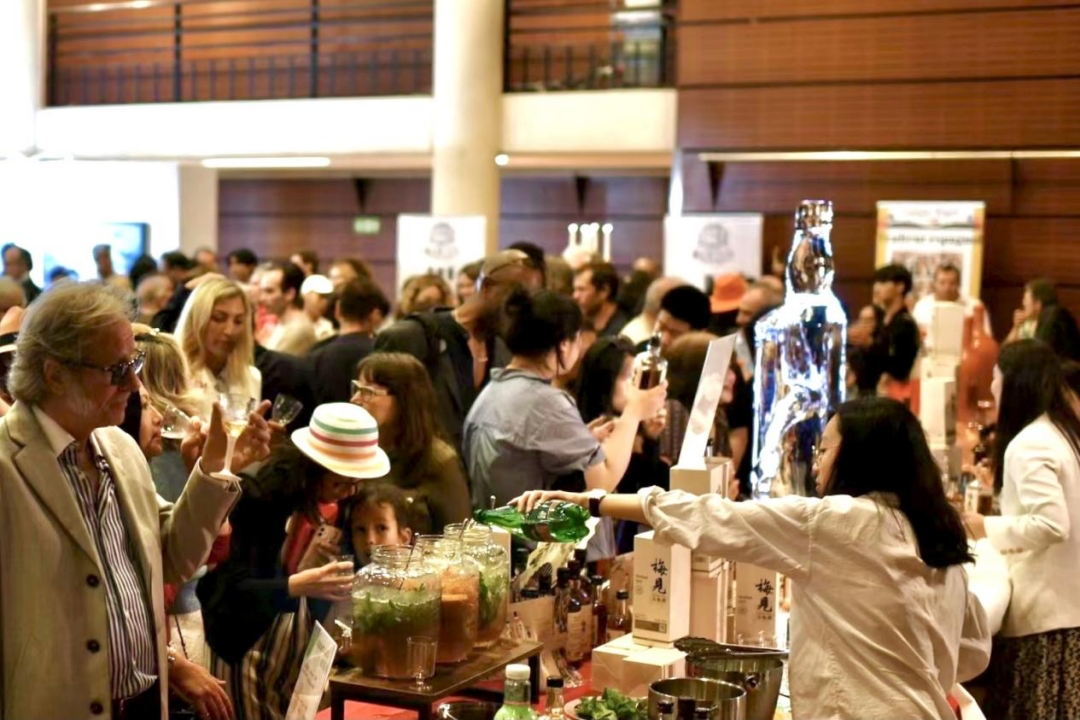 Meijian Plum wine, Meijian, is on display at the Louvre Museum in Paris, France. (Photo/Bottle Planet)
Official data show overseas markets are gaining importance. According to statistics from relevant Chinese industry chambers of commerce, baijiu exports in the first three quarters of 2025 reached $704 million U.S. dollars, up 5.3% year-on-year. The top five export destinations were Hong Kong SAR, Macao SAR, Singapore, the United States, and Japan.
Hong Kong is emerging as a central hub for Chinese baijiu transshipment, accounting for 286 million yuan in baijiu exports, or 40.6% of the total. In December 2024, the city cut the tax rate on imported spirits priced above HK$200 from 100% to 10%, strengthening its role as a liquor trade hub.
According to the China Alcoholic Drinks Association (CADA), 63.9% of baijiu producers have already entered or are expanding into overseas markets.
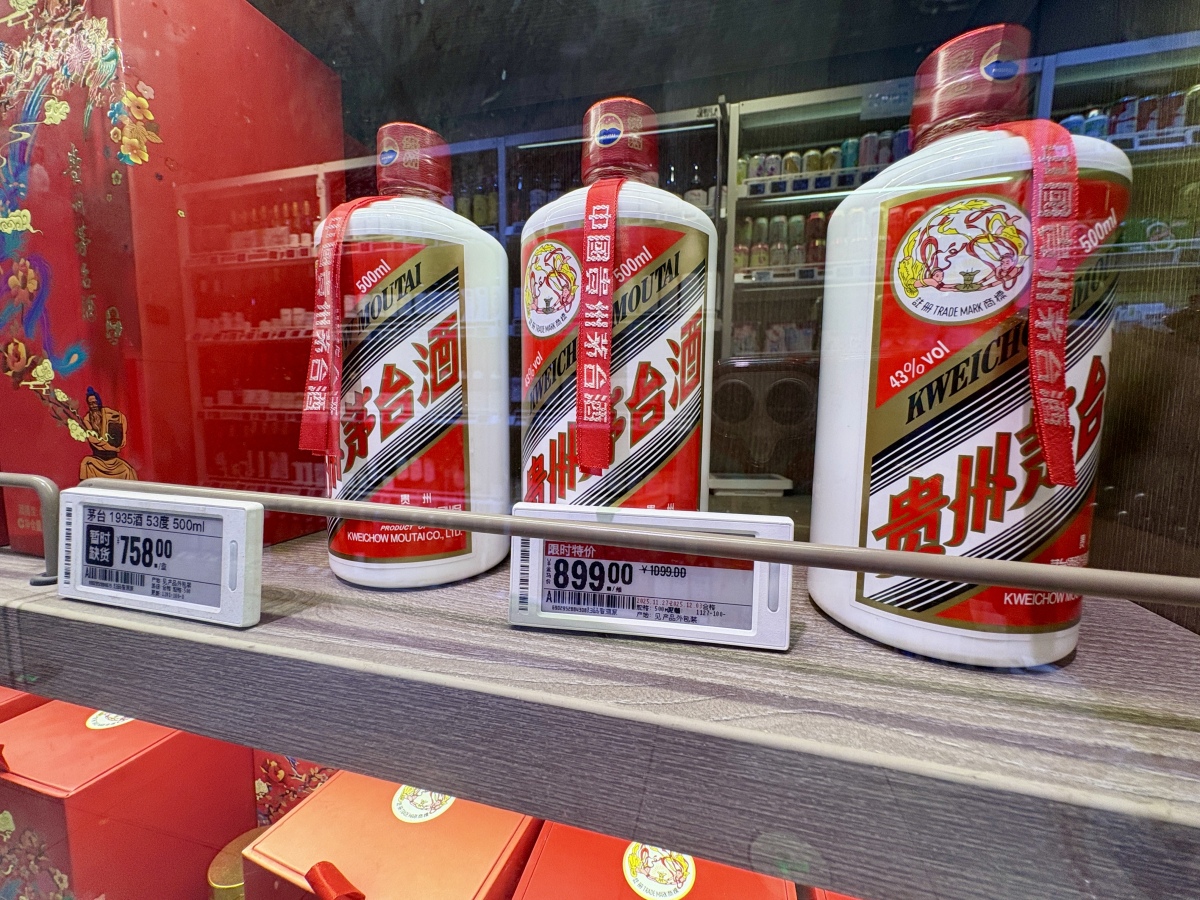
The 43% Moutai Flying Fairy edition. (Photo/Zheng Ran)
CADA said cultural differences, weak brand influence, and tariffs and trade barriers are the main hurdles for baijiu going global. In the UAE, where consumers are familiar with the product, baijiu accounts for less than 3% of high-strength spirits sales, according to Dou Jingjie, a Yanghe distributor in the UAE. After Yanghe expanded into more than half of the UAE's retail outlets and some major hotels in 2024, his company's sales grew by over 50%.
Dou said many Arab and European consumers describe baijiu as "too spicy and intense" on first taste, but become more accepting after several glasses. He argues the category needs more work on lower-alcohol, easier-drinking styles and on a more unified way to explain its history, craft, and flavor.
CADA also warns that internationalization, while unavoidable, will be a long process, requiring products adapted to local habits, localized production and channels, and clearer cultural storytelling to convey what makes Chinese baijiu distinctive.
By continuing to browse our site you agree to our use of cookies, revised Privacy Policy and Terms of Use. You can change your cookie settings through your browser.
For any inquiries, please email service@ichongqing.info