
Chongqing - On January 7, a rail-sea intermodal train carrying 108 "Made in Chongqing" new energy vehicles (NEVs) departed from Yuzui Railway Station at Guoyuan Port. The service marks the first dedicated rail-sea export train for Chongqing-produced NEVs in 2026.
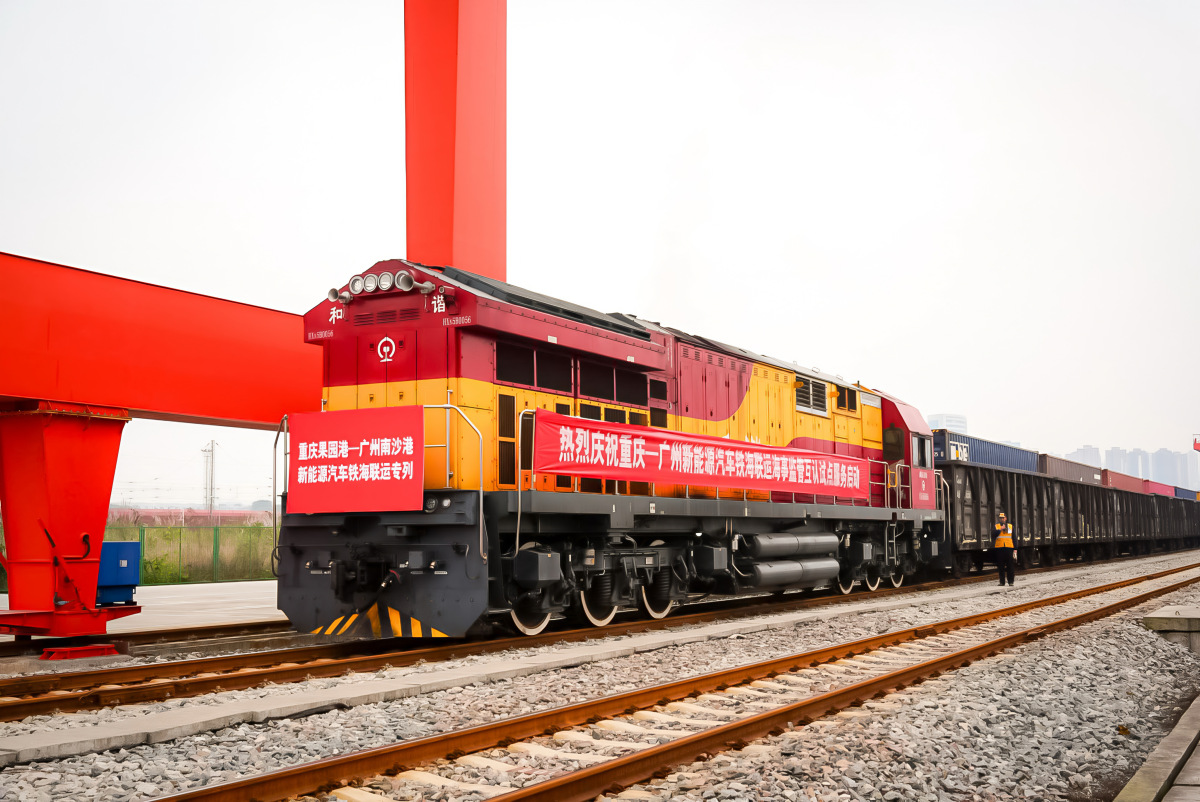
A rail-sea intermodal train carrying "Made in Chongqing" new energy vehicles departs from Yuzui Railway Station at Guoyuan Port in Chongqing on January 7, 2026. (Photo/Chongqing Railway Logistics Center)
The cars are expected to reach Guangzhou's Nansha Port within 48 hours before being shipped onward to Middle Eastern markets.
"Compared with traditional single-mode transport, rail-sea intermodal transport is expected to save about three days for whole-vehicle exports, significantly reducing overall logistics costs," a representative of the Chongqing Railway Logistics Center said, attributing the gains to coordinated regulatory innovation between Chongqing and Guangdong.
Previously, differences in how rail and maritime authorities classified and regulated NEV shipments could slow cargo movement. To address this, port and commerce authorities in Chongqing and Guangdong, together with maritime agencies, introduced a mutual recognition model under which cargo is inspected at the container-loading site, and vessels are checked at the port of loading.
Chongqing Maritime Safety Administration officers completed on-site inspection and declarations before departure, allowing the vehicles to be loaded directly onto ships at Nansha without repeated port inspections. Officials estimate the approach can improve overall logistics efficiency by about 20% and cut logistics costs by roughly 25%.
Chongqing is one of China's major automotive manufacturing bases, with a well-established NEV supply chain covering vehicle assembly, key components, and supporting electronics. Rail-sea routes linking the city with ports in Ningbo and Qinzhou have already been operating steadily.
Since the opening of the Chongqing–Guangzhou service, which directly connects the city with the Guangdong-Hong Kong-Macao Greater Bay Area, container volumes on the route surpassed 22,000 twenty-foot equivalent units by the end of 2025, up 190% year on year. The service now runs three times a week and works with more than ten major global shipping companies, including Maersk and COSCO Shipping, offering "one-time entrustment, through-bill" logistics services to international markets.
Broader corridor data underline the momentum. According to the Port and Logistics Office of Chongqing Municipal People's Government, the city handled 327,700 TEUs via three main transport modes on the New International Land-Sea Trade Corridor in 2025, up 30% year on year, with cargo value reaching 58.31 billion yuan (about 8.35 billion U.S. dollars), a 25% increase.
Operating with Chongqing as its central hub, the New Land-Sea International Trade Corridor (ILSTC) links western Chinese regions to global markets through rail, road, and sea routes via southern ports in Guangxi and Yunnan. It now reaches 584 ports in 127 countries and regions, covering more than 1,300 product categories.
Logistics reform is also extending beyond physical transport. On January 3, New Land-Sea Corridor Operation Corporation issued China's first international rail-sea "single bill of lading" aligned with the United Nations Convention on Negotiable Cargo Documents, which the UN General Assembly adopted on December 15, 2025. The test shipment, involving machinery worth about 3.02 million yuan, traveled from Chongqing to Vietnam via Qinzhou Port.
Unlike traditional transport documents, the new bill is designed to be transferable, giving it potential legal and financial functions beyond proof of shipment. Officials said companies may eventually use such documents as collateral for trade financing, easing cash-flow pressure during transit. Chongqing authorities said they will further refine legal and financial mechanisms to move the system from pilot testing toward commercial use, aiming to enhance trade facilitation and international logistics competitiveness.
By continuing to browse our site you agree to our use of cookies, revised Privacy Policy and Terms of Use. You can change your cookie settings through your browser.
For any inquiries, please email service@ichongqing.info