
Chongqing - As China enters its 15th Five-Year Plan period, Chongqing’s commercial and logistics property market is shifting toward more stable retail performance and stronger logistics demand, with growth driven more by optimization than large-scale expansion.
According to Cushman & Wakefield's 2025 Chongqing Commercial and Logistics Property Market Review and Outlook, the shift reflects a broader change in the city's economic structure, as growth increasingly depends on services, consumption upgrading, and supply-chain efficiency instead of land-driven development.
Chongqing's economy remained resilient in 2025, with GDP reaching about 2.44 trillion yuan (about 340 billion U.S. dollars) in the first three quarters, up 5.3% year on year. The services sector accounted for 59.2% of GDP and contributed 68.6% of overall growth, laying a key foundation for demand in commercial property, the report said.
Against this backdrop, industry observers said at the report's January 15 briefing that the current adjustment should be seen not as a cyclical downturn, but as a structural shift toward more efficient and higher-quality use of existing assets.
"The era of large-scale incremental expansion in China's real estate sector has essentially ended," said Mars Wei, General Manager of Cushman & Wakefield Chongqing. "Future growth will increasingly come from the refined operation of existing assets, better property services, and a more mature leasing market."
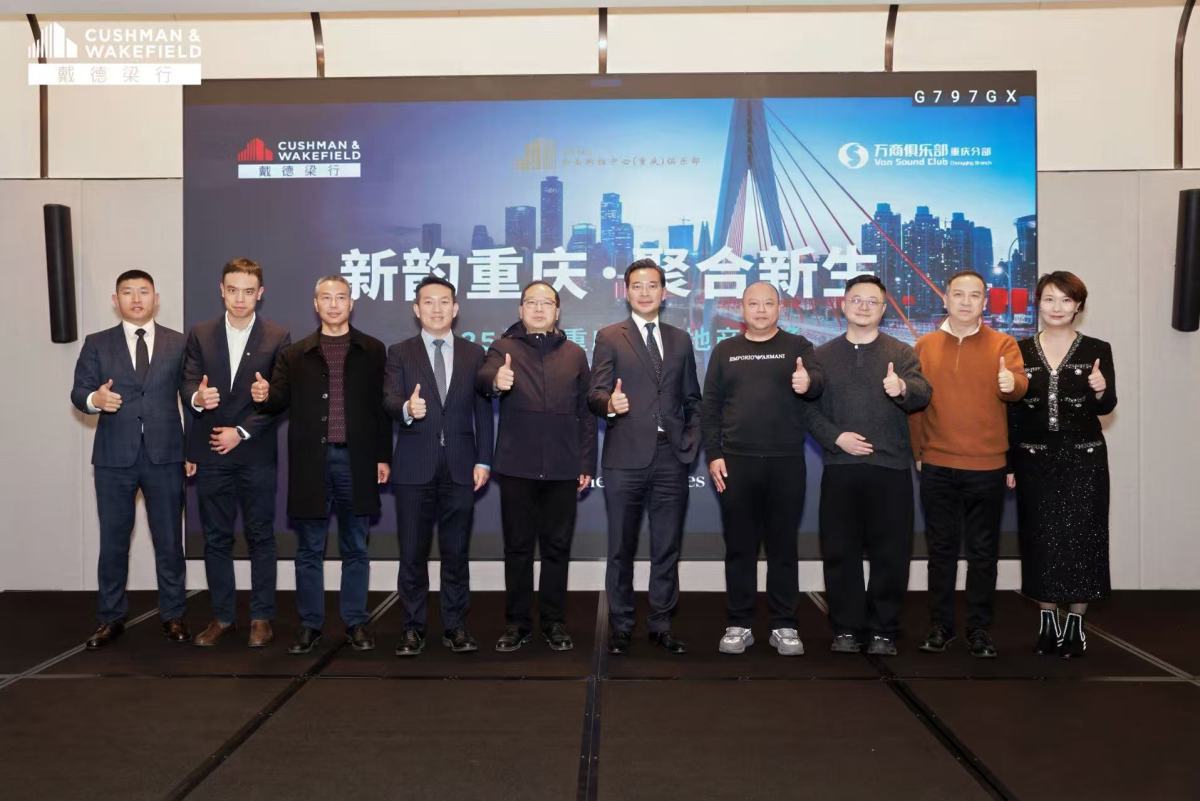
Cushman & Wakefield held the report briefing of the 2025 Chongqing Commercial and Logistics Property Market Review and Outlook on January 15. (Photo/Cushman & Wakefield)
Chongqing's prime retail property market remained broadly stable in 2025 despite cautious consumer sentiment nationwide, supported by steady absorption and gradual format upgrades rather than aggressive new supply.
According to the report, Chongqing's consumer market has shown sustained recovery. Between January and November 2025, total retail sales of consumer goods reached 1.54 trillion yuan, up 3.3% year on year. Demand was particularly strong for upgraded and lifestyle-oriented products, with sales of sports and recreational goods, telecommunications equipment, and cosmetics posting sharp growth of 39.5%, 33.7%, and 17.2%, respectively.
Cushman & Wakefield said the figures reflected a deeper transformation in consumer behaviour. Spending is increasingly shifting away from purely functional purchases toward experience-driven and social consumption, prompting shopping centres to rethink tenant mixes and spatial design.
"Consumption models are being reshaped," said Luo Huanjun, secretary general of the Southwest Shopping Centre Club (Chongqing). "The traditional logic of people, goods, and space has changed. Consumers are looking for immersive experiences and emotional resonance, while commercial spaces are evolving from single-channel retail into integrated, multi-scenario destinations."
Retail operators have responded by reshaping formats and offerings, rolling out large-scale flagship stores, IP-driven merchandise, and hybrid concepts that blend retail with dining, culture, and entertainment. One example is the budget-focused beverage chain Mixue, which opened a flagship outlet at Changjiahui Shopping Park and generated sales of more than 3.5 million yuan in its first eight days. The report said such integration has become a defining feature of the retail market, helping to stabilise footfall and tenant performance.
In 2025, demand in Chongqing's high-standard warehouse market became increasingly concentrated, underscoring a clear shift toward industry-driven requirements. According to the report, the automotive and manufacturing supply chain emerged as the dominant source of demand, supported by rising demand for parts storage and logistics services linked to the city's fast-growing new-energy vehicle sector.
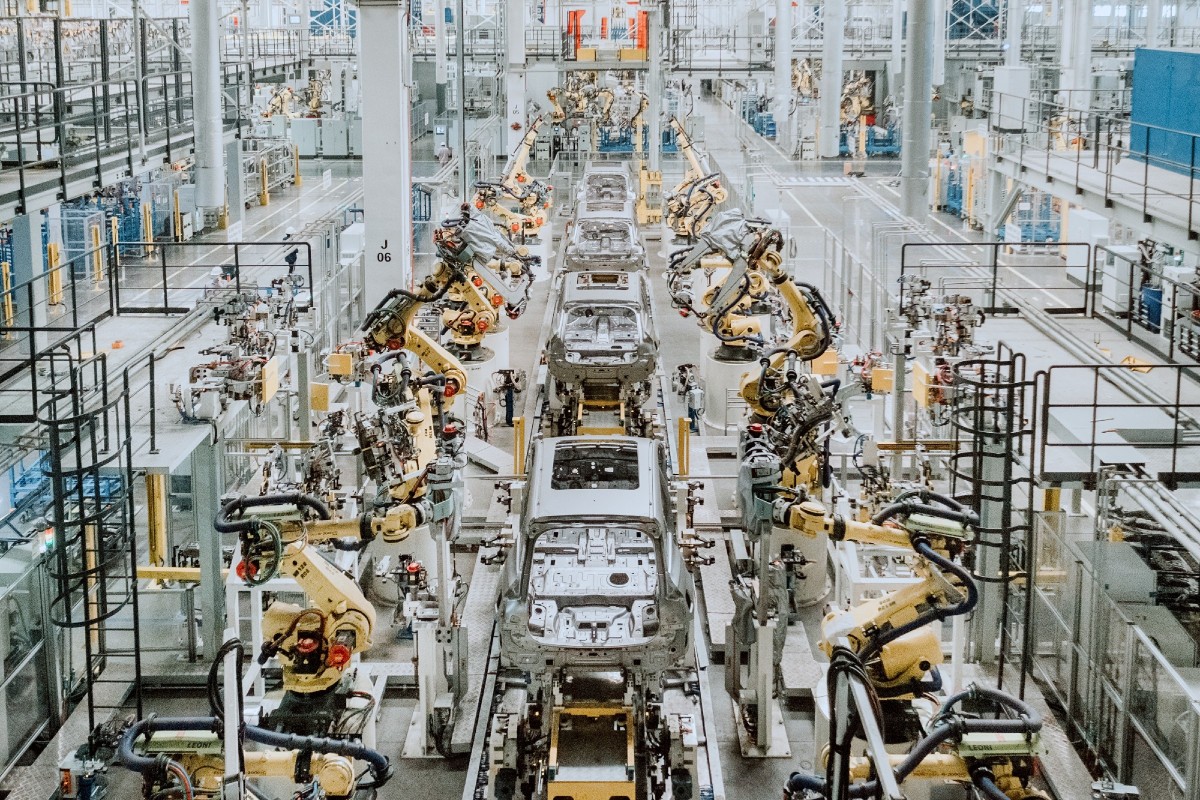
The main welding line at the Seres factory processes automotive components. (Photo/Seres)
Two trends stood out. Demand for warehousing of knock-down (KD) parts rose sharply as manufacturers accelerated their overseas expansion, driving greater volumes of imported components requiring transit and storage. This, in turn, has raised operational requirements for high-standard warehouses, including tighter temperature and humidity control, more efficient cargo sorting, and faster inventory turnover.
At the same time, demand for automotive parts warehousing continued to expand, fuelled by rapid growth in the new energy vehicle industry and the upgrading of supply chains for core components such as batteries, motors, and electronic control systems. Parts storage increasingly features small-batch, high-frequency,y and high-efficiency operations, further strengthening demand for modern logistics facilities.
On the supply side, land for logistics use has become more concentrated in districts such as Jiangjin and Jiulongpo. The two districts have emerged as the main areas for new high-standard warehouse supply, benefiting from their strategic locations and transport links.
For instance, Jiangjin has attracted logistics developers with a steady stream of high-quality sites for integrated warehousing and distribution projects, while Jiulongpo's new land has been closely aligned with the automotive parts and intelligent equipment industries. This shift has eased land constraints in Chongqing's core areas and is accelerating the formation of a more hub-based and clustered logistics network across the city.
For market participants, the shift has opened a window of opportunity for investors to acquire or consolidate logistics assets, particularly state-owned enterprises that benefit from lower financing costs and longer investment horizons, the report said.
By continuing to browse our site you agree to our use of cookies, revised Privacy Policy and Terms of Use. You can change your cookie settings through your browser.
For any inquiries, please email service@ichongqing.info