
Chongqing - It began with a simple cry for help. It ended as one of the winter's warmest viral moments.
In the early hours of January 9, a young woman from Hechuan District, Chongqing—known online as "Daidai"—posted a casual video on social media. She said her family was preparing for a traditional year-end gathering, a common rural custom that involves preparing pork for a shared meal. She invited anyone willing to lend a hand to join them. In return, she promised a bowl of pao zhu tang.
By dawn, the video had spread widely. By noon, strangers were already on the road to her village. By nightfall, thousands had arrived, turning a routine family preparation into an unexpected moment of collective warmth.
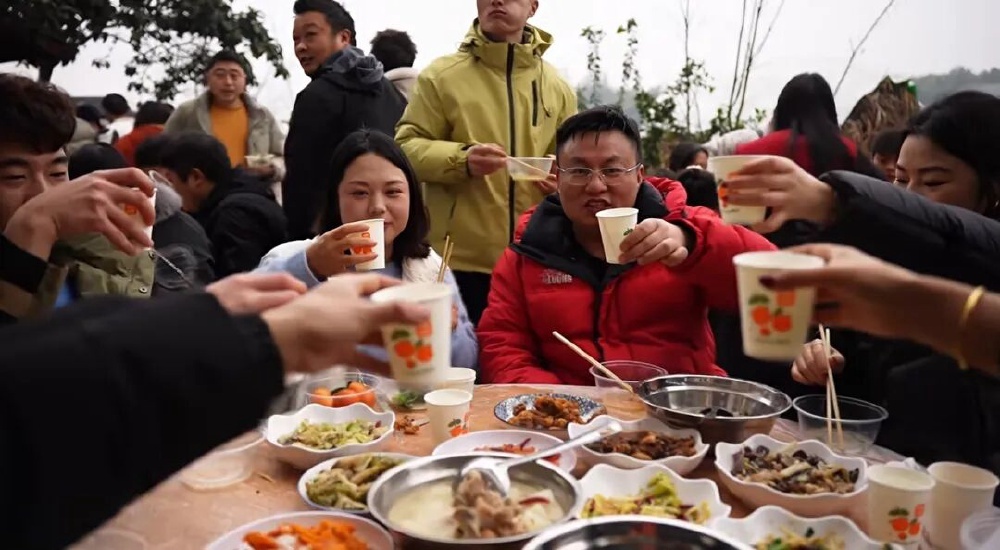
Netizens enjoying pao zhu tang at the home of “Dai Dai” in Hechuan, Chongqing. (Photo: Screenshot from Chongqing Lookout)
Few could have imagined that this half-joking invitation would ignite nationwide enthusiasm, turning a small village gathering into an online sensation—and a powerful reminder of human warmth in the digital age.
This was no planned campaign, no scripted performance. Yet it proved more moving than any carefully designed narrative. In one humble bowl of soup simmered personal sincerity, collective goodwill, and a rare harmony between citizens and local authorities. It was the most authentic kind of festive spirit—rooted in everyday life and shared emotion.
In her original video, Daidai spoke with simple concern. Her father was getting older, she explained, and might appreciate some help with the preparations for the sizable family event.
That unpolished honesty struck a chord.
By January 11, the response was overwhelming. Daidai livestreamed the event, drawing more than 100,000 concurrent viewers online. Offline, thousands of visitors poured into the village. The scale of the feast grew significantly to welcome the unexpected guests, with preparations expanding far beyond initial plans. Many said it felt even livelier than the Chinese New Year.
But were people really traveling long distances to help hold down a pig and drink a bowl of soup?
Probably not.
What they came for was something deeper.
In southwest China's rural areas, the tradition of preparing a homemade feast centered around freshly sourced local ingredients before the Chinese New Year is a long-standing ritual. It marks abundance, gratitude for the year's harvest, and the beginning of reunion season. The meal that follows—pao zhu tang—is not just food.
For readers unfamiliar with the custom, pao zhu tang is a traditional rural pork soup, part of a festive feast marking the year's end. Fresh, locally sourced ingredients like pork, offal, blood curd, and vegetables are cooked together in a large pot and shared with family, neighbors, and helpers. It is about freshness, yes—but more importantly, about sharing labor, warmth, and celebration.
This ritual carries memories of family, community, and mutual help. In a time of material abundance, such simple emotional value has become increasingly precious.
Some visitors arrived a day early to help prepare. From preparing ingredients and cooking dishes to setting bowls—every step was a communal effort. Everyone had a role.
What drew people in was the chance to roll up their sleeves, smell the earth, and connect with others face-to-face. It was a rare, tangible reality in an increasingly virtual world.
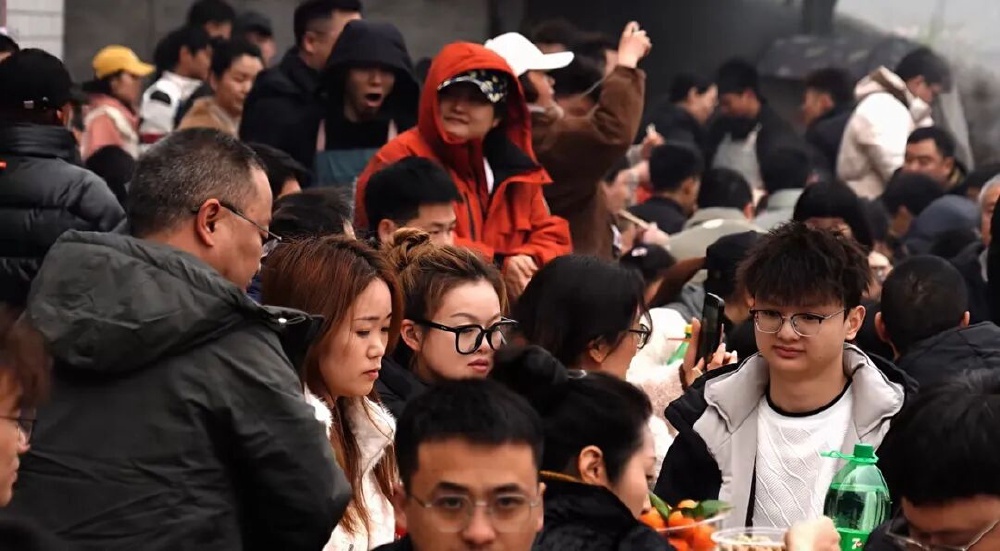
Hundreds of netizens gathered in Hechuan, creating a lively scene. (Photo: Chongqing Lookout)
Many urban residents today live far from their hometown villages, yet their emotional bond with the land has never truly faded. This gathering showed that no matter how times change, kindness remains humanity's most enduring language—and everyday "smoke and fire," the warmth of ordinary life, remains deeply moving.
Some may call it an "accidental carnival." But no moment goes viral without a reason. When sincerity meets goodwill, sparks naturally fly.
Equally noteworthy was how local authorities responded to this sudden wave of attention.
Instead of treating it as a disturbance, they treated it as an opportunity.
With thousands converging on a small village, safety and order became the top priority. Local cultural and tourism officials and traffic police acted swiftly—coordinating across departments, guiding traffic, and maintaining order.
They also went a step further. Seeing so many visitors from outside the area, the local tourism bureau sent staff to assist on-site and distributed free admission tickets to the Diaoyu Fortress Scenic Area. What visitors received was more than a ticket—it was a sense of being welcomed. Along with the taste of pork soup, they carried home a lasting impression of the city's warmth.
In that steaming pot of soup, Chongqing's signature straightforwardness and generosity—and a city spirit that is open, inclusive, and confident —boiled.
Similar stories have unfolded across the city: pedestrian bridges temporarily opened to tourists during holidays; government canteens welcoming visitors to sample local cuisine. Small gestures, perhaps, but powerful expressions of civic sincerity.
Good governance turns fleeting online traffic into lasting goodwill—and strangers into returning guests. This is grassroots governance at its most humane, and a key reason cities continue to grow in charm.
Online discussions around Daidai and pao zhu tang continue.
Turning attention into reputation is the best transformation. Since the soup went viral, farmstay experiences and themed travel routes have emerged. This vitality is welcome, so long as sincerity remains the foundation. No overpricing, no gimmicks—just honest food, genuine hospitality, and the same warmth that made the moment special in the first place.
With the Chinese New Year approaching, friends from across China—and beyond—are welcome to visit Chongqing: walk its streets, explore its villages, taste a bowl of this traditional year-end soup, and feel the city's honest, down-to-earth hospitality.
And in this shared warmth, we see new possibilities—where traditional culture fuels rural revitalization, where local customs become engines for tourism development, and where villages find fresh vitality by welcoming the world with open arms.
By continuing to browse our site you agree to our use of cookies, revised Privacy Policy and Terms of Use. You can change your cookie settings through your browser.
For any inquiries, please email service@ichongqing.info