
Mobile payments, high-speed rail, and robot-delivered room service once dominated foreign travelers' social media checklists in China. Over the past year, a different set of experiences has begun trending online: dental clinics, eye hospitals and Traditional Chinese Medicine therapy. For a growing number of visitors, these practical and in-depth services represent a new way of engaging with the country—a trend some are calling "Becoming Chinese."
Short-form video platforms such as TikTok are now filled with posts tagged “medical tourism,” documenting foreign visitors who combine sightseeing with medical care in China. Their itineraries increasingly include visits to top-tier public hospitals, known in China as Level 3, Grade A hospitals — the highest category in the national system.
Official data suggest the trend is accelerating. In 2024, Shenzhen recorded about 770,000 medical service visits by overseas patients, including roughly 640,000 from Hong Kong and Macao, according to local health authorities. The remaining patients came from countries such as the United States, Canada and Japan.
In Shanghai, 13 designated hospitals received nearly 270,000 foreign patients in 2024, a year-on-year increase of about 15%, official figures show.
Nationwide, major hospitals treated approximately 1.28 million international patients over the past year, representing a 73.6% increase compared with three years earlier, according to a 2025 annual report on international medical services released by China’s National Health Commission.
Foreign patients cite cost and efficiency as the main reasons for seeking treatment in China.
Videos shared online frequently convert Chinese medical bills into U.S. dollars, highlighting stark differences in pricing. A routine cardiac examination in China costing about $75 contrasts with estimates of $10,000 to $20,000 in the United States for uninsured patients. Emergency care involving ambulance transport, blood tests and treatment may total under $150 in China, while a single ambulance ride in parts of the U.S. can cost tens of thousands of dollars.
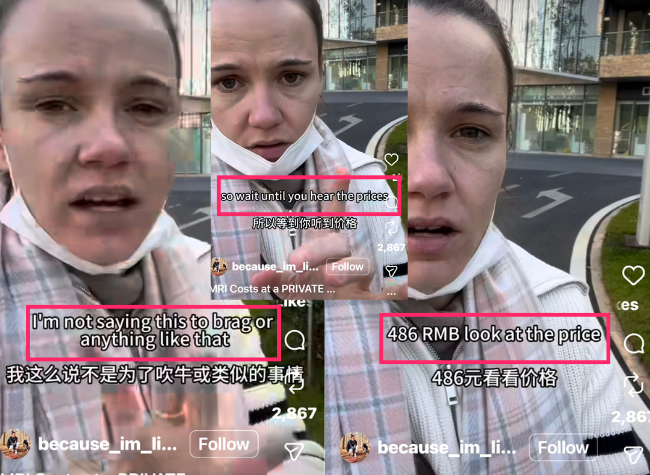
A screenshot from a video by foreign vlogger @because_im_lizzy, which has garnered 1.4 million views, shows her sharing her experience of receiving medical care in a hospital in China. (Photo/Screenshot from social media)
The contrast resonates particularly with patients from countries facing high out-of-pocket medical expenses or lengthy waiting periods. Amy, a British social media creator whose videos documenting her experience have drawn widespread attention, traveled to Beijing after nearly two years of unresolved stomach pain. Unable to obtain a clear diagnosis or timely specialist care at home, she sought treatment in China, preparing for the possibility of serious illness. Doctors diagnosed her with a gastric ulcer on her first day in the city.
Efficiency is another factor frequently highlighted by foreign patients. In many countries, outpatient procedures and diagnostic imaging require weeks or months of appointments. In China, foreign visitors often report registering, consulting a physician and completing multiple tests within hours.
In viral videos, patients describe arriving without prior appointments, seeing a doctor within minutes and completing comprehensive physical examinations — including blood tests and imaging — in a single afternoon.
The trend has also reshaped what social media users call the new “China travel trio”: dentistry, ophthalmology and Traditional Chinese Medicine. Dental care, often excluded from insurance coverage in many countries, has become a focal point. Teeth cleaning procedures costing under $20 in China have circulated widely online, prompting some travelers to schedule dental visits alongside sightseeing.
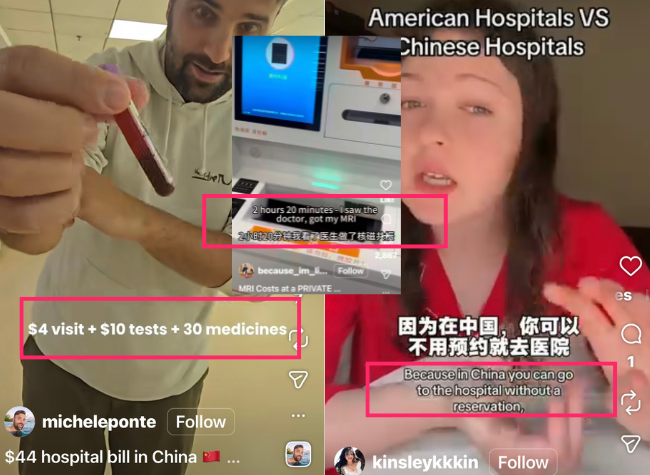
Videos shared online show foreign visitors describing their experiences receiving treatment at Chinese hospitals, including details about medical procedures and associated costs. (Photo/Screenshot from social media)
Others opt for vision tests and affordable eyeglasses, while some treat acupuncture, moxibustion and pulse diagnosis as cultural experiences integrated into their trips.
Despite the growing interest, Chinese health authorities say foreign patients do not crowd out domestic medical resources. Under a 2021 notice issued by the Beijing Municipal Health Commission, international medical services — classified as special services within public hospitals — are capped at no more than 10% of a hospital’s total service capacity.
International medical departments operate independently, and foreign patients are not covered by China’s public health insurance system. Fees charged to international patients are significantly higher than those in standard outpatient departments, often six to twelve times higher for registration and up to twelve times higher for examinations and inpatient care.
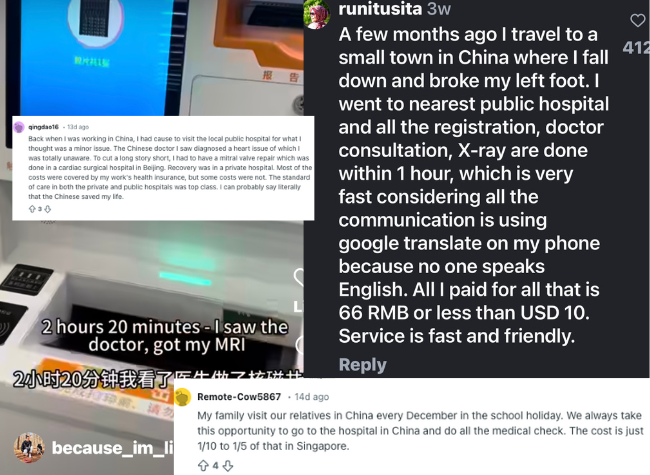
Screenshots of comments posted on international websites and social media platforms show users from different countries sharing their views and personal experiences with China’s medical system. (Photo/Screenshot from social media)
Hospital administrators view international services as a supplemental revenue stream, rather than a strain on public medical resources.
The expansion has also created new employment opportunities, including multilingual patient coordinators and medical companions. At Peking University Shenzhen Hospital, the international medical department has organized a volunteer team of 86 members, providing assistance in 15 languages.
China’s medical opening extends beyond major cities. In southern Hainan province, the Boao Lecheng International Medical Tourism Pilot Zone allows the use of imported drugs and medical devices not yet approved elsewhere in China, benefiting from preferential policies under the Hainan Free Trade Port framework. The zone covers specialties including oncology, cardiology, hematology and ophthalmology, serving both foreign and domestic patients with specialized medical needs.
Analysts say the rise of medical tourism reflects broader global pressures on middle-income households seeking affordable and timely healthcare. For many visitors, traveling to China for treatment has become less an emergency measure than a cost-effective choice, blending healthcare with travel in an era shaped by value-conscious consumption.
As Chinese hospitals continue to professionalize international services, medical tourism is evolving from a novelty into a regular part of some travelers’ itineraries.
By continuing to browse our site you agree to our use of cookies, revised Privacy Policy and Terms of Use. You can change your cookie settings through your browser.
For any inquiries, please email service@ichongqing.info