
Chongqing - The resonant boom of a 2,300-year-old bronze bell echoed through the Chongqing Baren Museum on Tuesday night, marking a Lantern Festival celebration that bridged millennia.
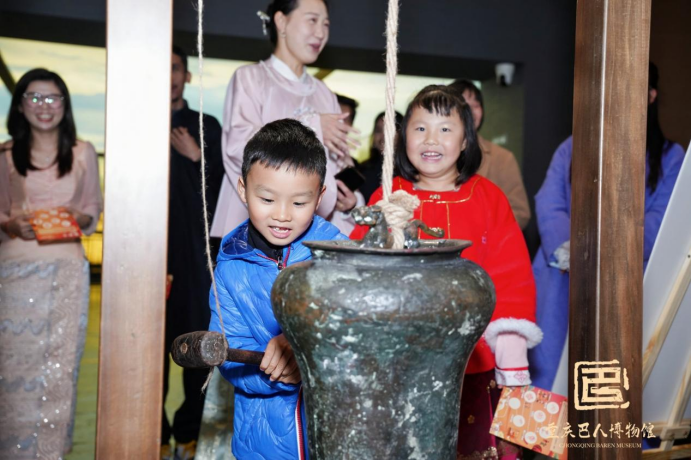
The resonant boom of a 2,300-year-old bronze bell echoed through the Chongqing Baren Museum on Tuesday night, marking a Lantern Festival celebration that bridged millennia. (Photo provided by Chongqing Baren Museum)
"Is this how you strike it?" asked 11-year-old Li Jingwen, gripping a small wooden mallet nervously as she gently tapped the Huning Chunyu, a Warring States period tiger-shaped bronze chime. The deep, lingering tone that emerged seemed to awaken centuries of history, blending ancient echoes with modern laughter in a celebration of China's rich intangible cultural heritage.
The "Lantern Festival Treasure Hunt & Zodiac Crafts" event brought together 36 families dressed in traditional Hanfu and six international youths living in Chongqing for an immersive evening of cultural exploration. Organizers transformed the museum into a living tapestry of ancient customs, moving beyond static displays to create interactive experiences that brought history to life.
Visitors wandered through a corridor illuminated by hundreds of colorful lanterns, each bearing a traditional riddle - a practice dating back to China's Southern Song Dynasty (1127-1279) that remains a beloved Lantern Festival tradition. Families huddled together, deciphering clues and claiming prizes with visible delight.
In the "Pitch-Pot" courtyard, children held their breath as they aimed arrows into narrow-necked vessels, a classical scholarly game requiring focus and precision. Each successful toss drew cheers from onlookers.
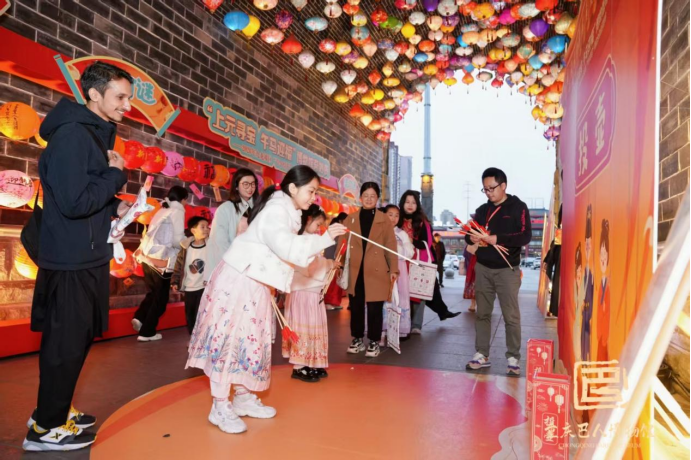
In the "Pitch-Pot" courtyard, children held their breath as they aimed arrows into narrow-necked vessels, a classical scholarly game requiring focus and precision. Each successful toss drew cheers from onlookers. (Photo provided by Chongqing Baren Museum)
Nearby, steaming bowls of tangyuan - sweet glutinous rice balls symbolizing family unity—were shared among participants, their warmth a comfort against the early spring evening.
The event's centerpiece, however, was distinctly local to Chongqing's mountainous east. The Huning Chunyu, a 68-centimeter-tall, 30-kilogram bronze instrument unearthed from the region and prized by experts as the "King of Chunyu," served as an unlikely attraction for hands-on participation.
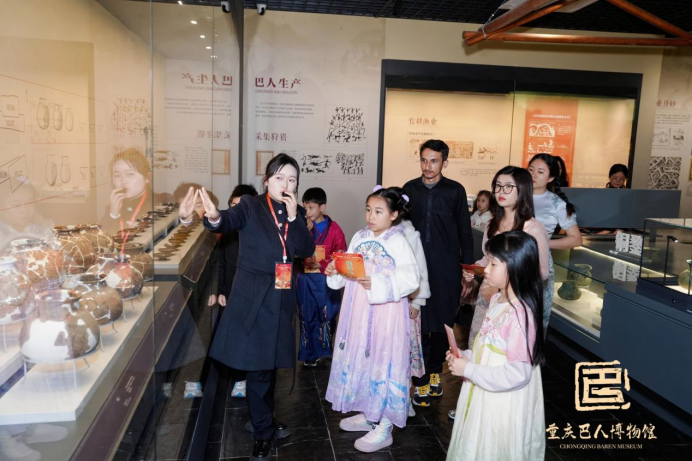
Visitors are touring the Chongqing Baren Museum. (Photo provided by Chongqing Baren Museum)
Originally used on ancient battlefields to signal troop movements and later in ceremonial rites, the tiger-adorned bell allowed visitors to literally touch history. Attendees lined up for the chance to strike it, each chime sending vibrations through the museum hall.
"I've never heard anything like it," remarked one visitor after taking a turn. "It felt like the sound carried a thousand years with it."
Workshop areas buzzed with activity as families tried their hands at traditional crafts. Paper-cutting instructors guided children in creating intricate horse silhouettes - a nod to the lunar year's zodiac animal. At the rubbing stations, participants inked impressions combining the Chinese character for "fortune" with local Bayu cultural motifs. A tie-dye station drew particular interest as visitors transformed plain cotton into patterned roses, creating personalized souvenirs of the evening.
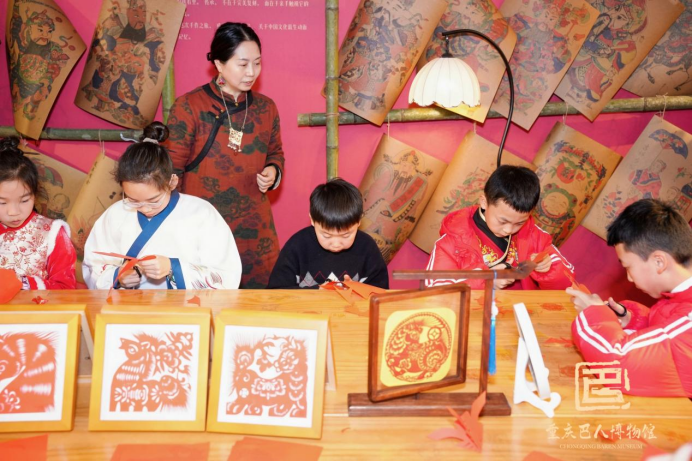
Workshop areas buzzed with activity as families tried their hands at traditional crafts. (Photo provided by Chongqing Baren Museum)
The event also served as a cultural bridge for international participants, who joined locals in riddles, crafts, and tastings. Organizers noted that such interactive programming helps make China's diverse regional cultures accessible to global audiences.
"The traditional museum experience is often quiet and observational," said a museum representative. "Tonight, we wanted the antiques to 'come alive' - for people to hear them, touch them, and understand the living culture they represent."
The museum's approach reflects a broader trend among Chinese cultural institutions to create immersive, participatory experiences that appeal to younger audiences and international visitors alike. By integrating performance, hands-on learning, and festive traditions, the event demonstrated how ancient heritage can find new resonance in contemporary life.
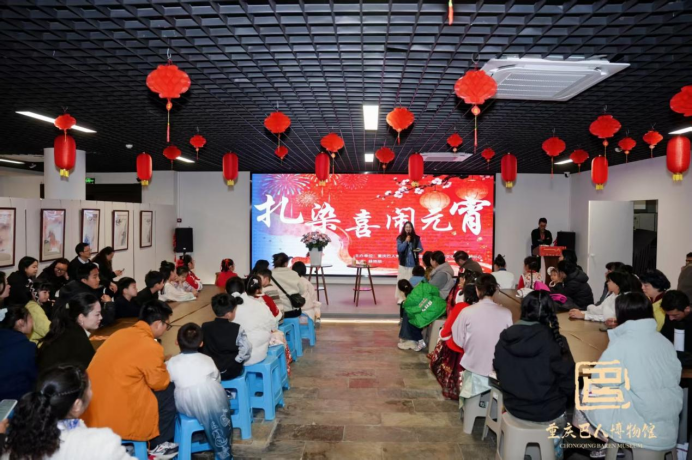
The museum's approach reflects a broader trend among Chinese cultural institutions to create immersive, participatory experiences that appeal to younger audiences and international visitors alike. (Photo provided by Chongqing Baren Museum)
As the evening's final chime faded into the night, participants departed with more than memories - they carried handcrafted tokens, solved riddles, and perhaps most significantly, a tangible connection to a civilization that continues to sound across centuries.
By continuing to browse our site you agree to our use of cookies, revised Privacy Policy and Terms of Use. You can change your cookie settings through your browser.
For any inquiries, please email service@ichongqing.info