
Chongqing - As temperatures rise, Chongqing’s parks are once again filling with visitors. These green spaces have become an important window through which residents and tourists experience the city, offering not only lush scenery but also a glimpse into how this megacity is rethinking urban governance.
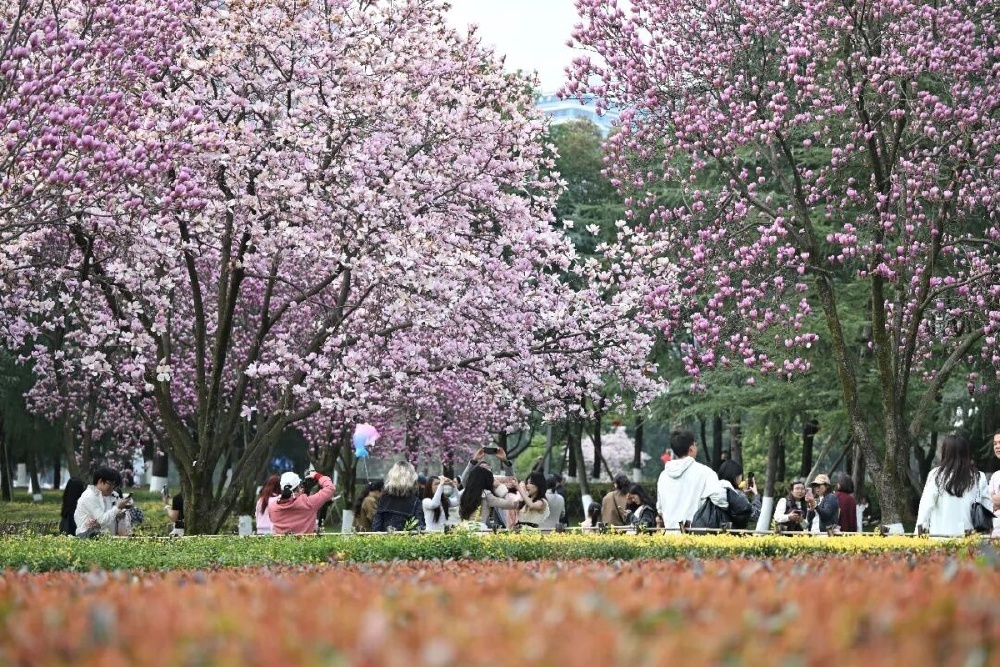
On February 26, 2026, magnolia flowers bloom in full splendor at Chongqing Central Park, where residents stroll among the blossoms and enjoy the pleasant spring sunshine. (Photo/Xie Zhiqiang, Visual Chongqing)
Chongqing's upcoming Five-Year Plan (2026–2030) calls for building a comprehensive citywide park system and strengthening the "Mountain City Parks" brand, while expanding public access to green spaces. The initiative goes beyond simply planting trees or beautifying landscapes. By linking park development with urban renewal and public services, the city aims to bring the vision of a "15-minute high-quality living circle" closer to reality. When everyday needs are addressed through such accessible spaces, urban governance becomes both tangible and human-centered.
Parks have long witnessed Chongqing’s transformation. Xishan Park in Wanzhou District, built in 1925, was the city’s first public garden. In 1927, renowned industrialist Lu Zuofu established Jialing River Hot Spring Park in Beibei District, using it as part of a broader rural development movement. Over time, more parks emerged, embedding the concept of modern public space into the mountainous city.
The story of Pipashan Park also reflects this evolution. Once a private garden and later the site of the CPC Chongqing Municipal Committee offices, the area was transformed into a public park in 1955 after the government relocated, making the city's finest park accessible to residents. This tradition of "returning the best spaces to the people" has helped shape Chongqing’s urban character.
In recent years, the city has accelerated park development. During the 14th Five-Year Plan period (2021–2025), Chongqing built nearly 600 urban parks, 42 community sports and cultural parks, and more than 370 pocket parks, while renovating 358 older parks. Looking ahead, the city plans to establish a seven-tier park system—including natural parks, suburban parks, ecological parks, comprehensive parks, specialized parks, community parks, and pocket parks—to ensure greenery becomes a standard part of daily life.
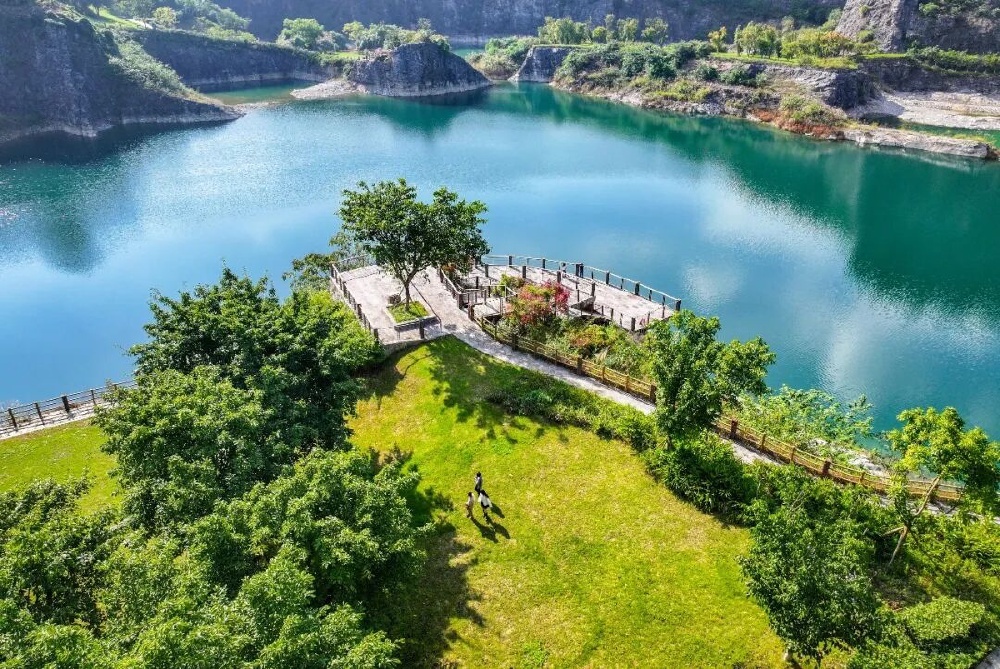
On October 28, 2025, the former quarry at Tongluo Mountain Mining Park in Liangjiang New Area, Chongqing, glows with emerald-blue water, resembling a sapphire nestled among the mountains. (Photo/Long Fan, Visual Chongqing)
Beyond their environmental value, parks are also becoming platforms for innovation. In Liangjiang New Area’s Tongluo Mountain, an abandoned quarry has been transformed into an ecological destination recognized under the United Nations Decade on Ecosystem Restoration. Hanfeng Lake National Wetland Park in Kaizhou District has evolved into an ecological treasure, and last year its carbon sink assets were traded, marking China’s first reservoir-based aquatic carbon transaction.
Parks are also embracing new functions. In Jinzhou Park, Chongqing’s largest professional skatepark, a new "park + sports + events" space has been created for young people. In Jiulongpo District, a pocket sports park built under the Wutaishan overpass has turned previously neglected urban corners into lively community venues.
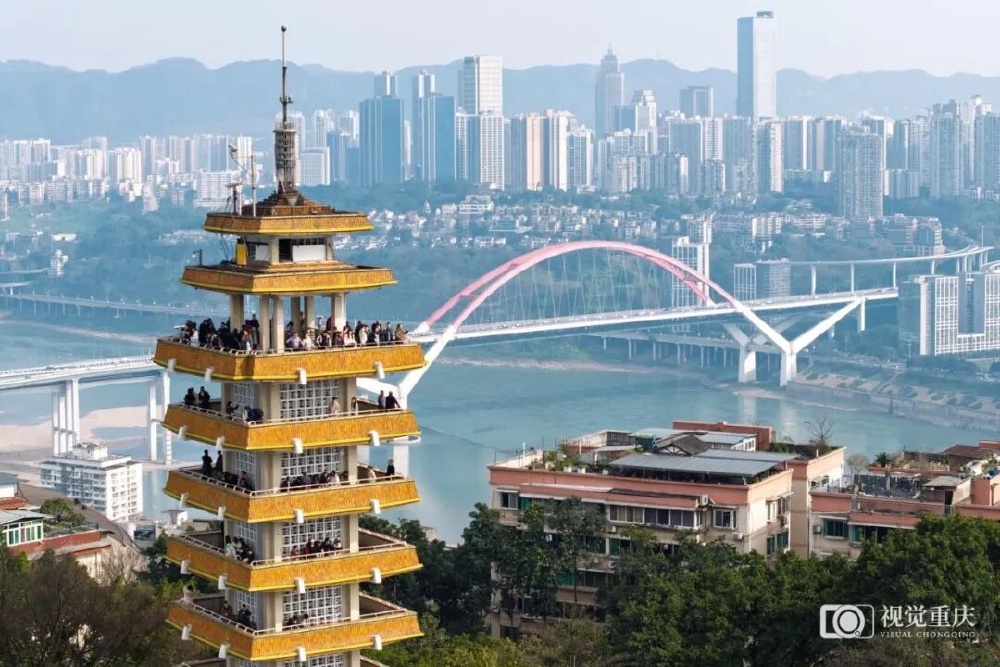
On February 26, 2025, visitors admire the spring scenery along the Yangtze and Jialing rivers at Eling Park in Yuzhong District, Chongqing. (Photo/Li Yuheng, Visual Chongqing)
At the same time, the city is revitalizing historic parks such as People's Park, Eling Park, and Pipashan Park, integrating cultural heritage with everyday urban life. The Eling Cliffside Walkway, for instance, has become both a public path and a cultural corridor overlooking the city.
Yet building parks is only the first step. Effective governance requires sustained management, inclusive design for all age groups, and the integration of digital tools to improve services. From smart monitoring systems to seasonal flower-viewing maps released online, technology is helping enhance the visitor experience while improving park management.
From historic gardens to a comprehensive citywide park network, Chongqing’s green spaces embody a broader vision of urban development—one that prioritizes public well-being. In a megacity, the quality of governance is ultimately measured not just by economic growth, but by the everyday sense of comfort and happiness experienced by its residents.
By continuing to browse our site you agree to our use of cookies, revised Privacy Policy and Terms of Use. You can change your cookie settings through your browser.
For any inquiries, please email service@ichongqing.info