
Chongqing — On March 15, a video posted by Australian content creator Andre, who lives in China and is known on social media as Andre in China, went viral online.
In the footage, Andre calls Chongqing’s 12345 government service hotline to report a loose steel plate creating a safety hazard on a public road. The operator responds in English, and the problem is fully resolved within a day, triggering widespread online discussion about the speed and efficiency of government services in China.
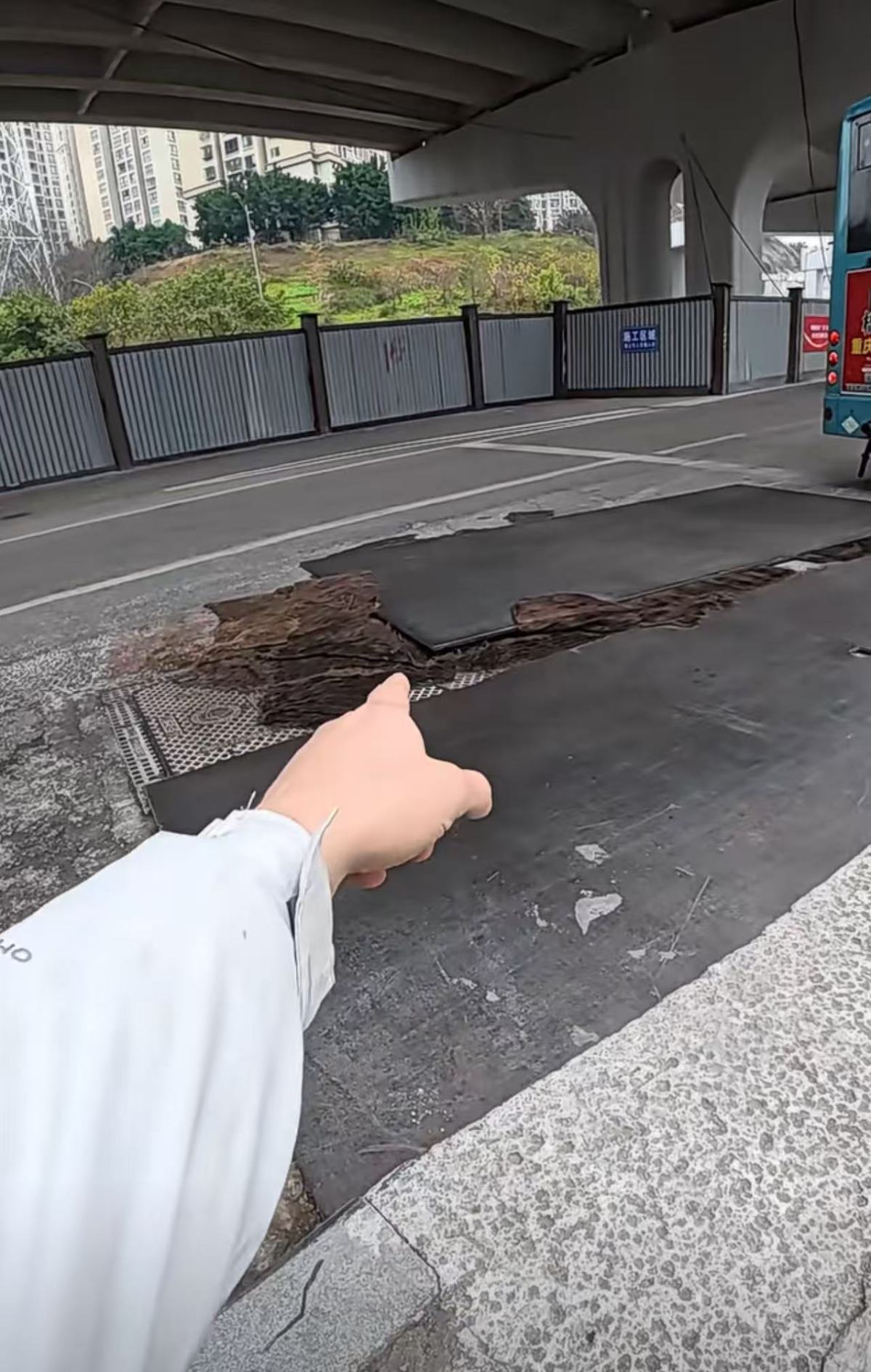
In the video, Andre pointed to the steel plate that was slightly lifted. (Photo/ Andre in China)
According to the Chongqing Municipal Commission of Housing and Urban and Rural Development, the 12345 hotline received a call from a foreign tourist around 10 a.m. on February 12. Andre reported that a temporary steel plate near Ronghui Plaza in the Qinjiaogang Subdistrict of Shapingba District had become loose, posing a potential safety risk to traffic.
Why was the steel plate loose? Li Jiahui, a representative from the Commission, told Bridging News that the temporary plates were installed after excavation work for the University Town Parallel Tunnel Power Diversion Project. To keep traffic moving, crews placed palm mats beneath the plates to stabilize them and fill gaps. But as seen in Andre’s video, constant heavy traffic wore the mats down, causing the plates to rattle and lift.
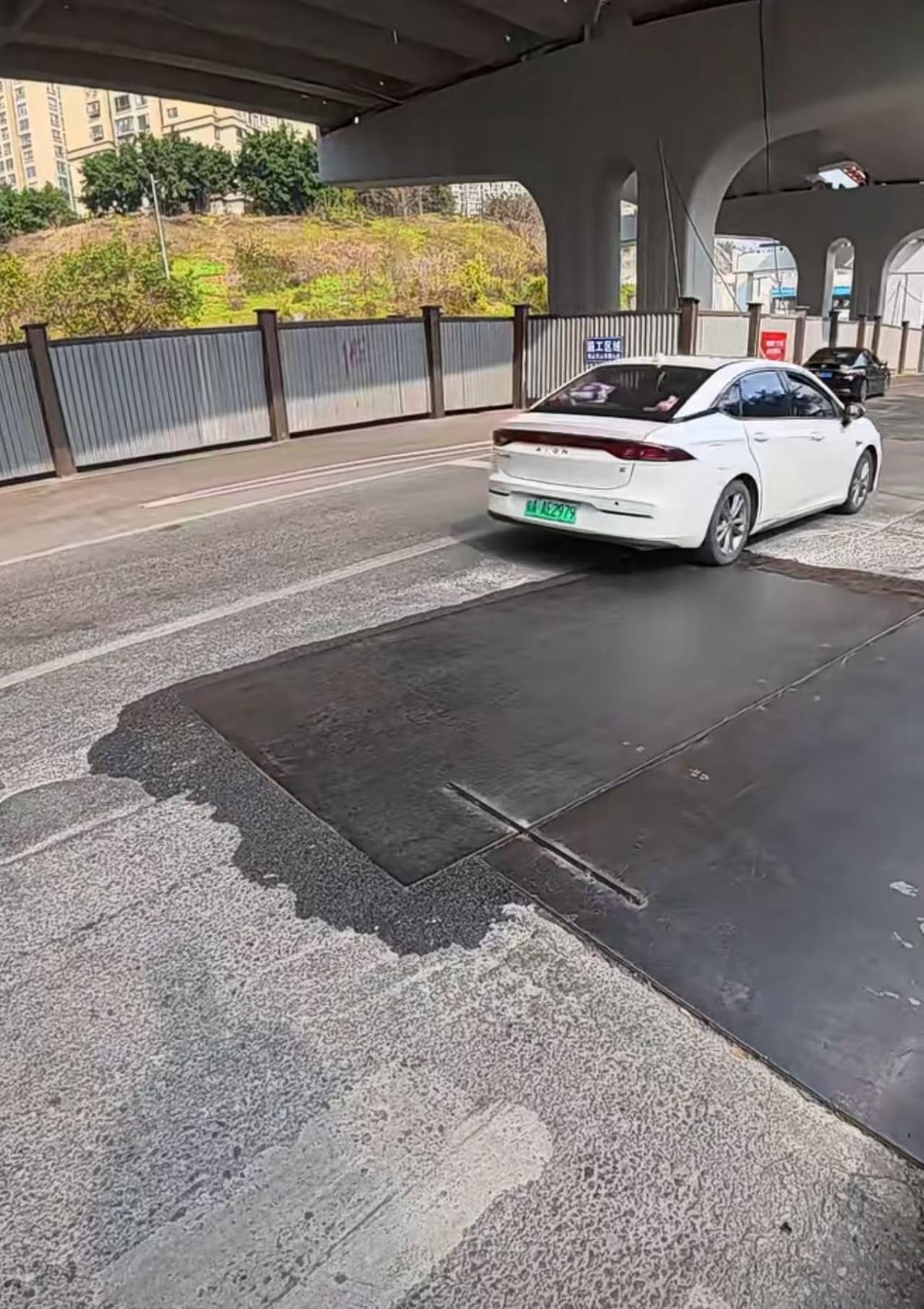
The next day, Andre went to the spot and checked the steel plate. (Photo/ Andre in China)
Upon receiving the report, the 12345 platform immediately dispatched the request to the Shapingba District Governance Center. The center initiated a collaborative online-offline response, coordinating English-speaking staff to verify the details. The request was swiftly routed to the relevant functional departments through a smart online system.
The Shapingba District Commission of Housing and Urban and Rural Development arrived at the scene immediately. Workers reinforced the plates with welding and applied asphalt for stabilization. The repairs were completed by 5 p.m. that same day—a total response time of less than seven hours, representing a 90% reduction in the estimated processing cycle.
After the repairs were completed, district authorities followed up with a call to explain the construction background to Andre. Impressed by the speed and professionalism of the response, he later posted a video praising Shapingba District for resolving the issue efficiently—especially on the final working day before the Spring Festival holiday.
Such incidents are not isolated, but reflect the routine coordination between Chongqing’s municipal and district authorities in addressing public concerns.
Running a megacity like Chongqing demands both coordinated planning and precise execution, an official from the Commission said, as the municipality steps up efforts to modernize governance alongside a broad upgrade of transport infrastructure.
The city is tightening oversight of road, bridge and tunnel projects through closer municipal-district coordination and a closed-loop system that tracks issues flagged by inspections, self-checks and public feedback to ensure construction-related travel hazards are quickly resolved. The approach aims to close safety gaps with greater precision and strengthen urban resilience.
Modern megacity governance requires not only rapid response but also people-centered service, the official said. Authorities plan to step up targeted project coordination, refine construction methods and traffic diversions, shorten timelines and minimize road space occupation to reduce disruption, while pushing ongoing projects to higher standards to improve residents’ safety, convenience and overall well-being.
By continuing to browse our site you agree to our use of cookies, revised Privacy Policy and Terms of Use. You can change your cookie settings through your browser.
For any inquiries, please email service@ichongqing.info