
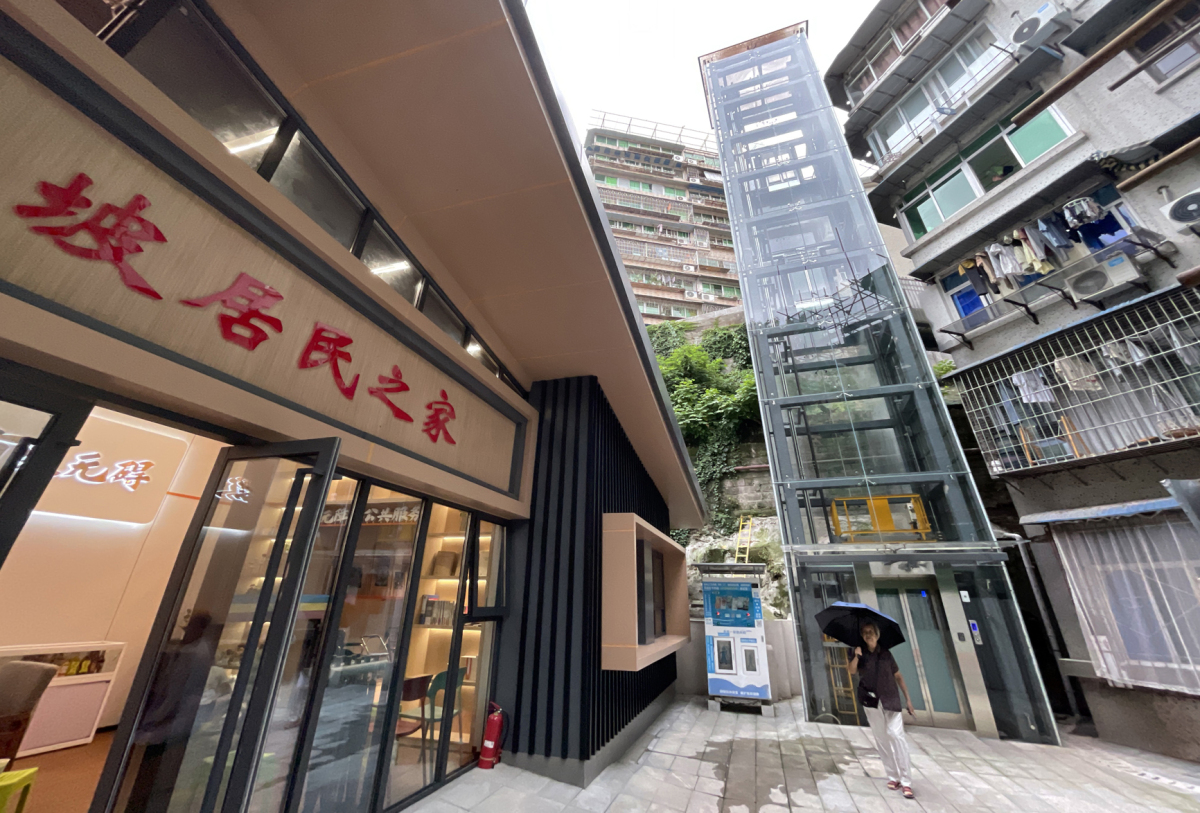
Elevator renovations are extremely meaningful for older neighborhoods in Chongqing. (Photo/Chongqing Daily)
Chongqing - Chongqing plans to install and upgrade more than 2,500 elevators in 2026 to address mobility challenges in older residential communities. According to a March 19 announcement by the city’s housing authority, over 2,000 existing elevators will be upgraded and 500 new ones added this year.
As a megacity, the city’s hilly terrain, dense population, and many aging residential buildings without proper access make elevator upgrades essential.
To date, Chongqing has upgraded more than 7,000 old residential elevators and installed 7,900 elevators in old communities, benefiting tens of thousands of families.
"Having an elevator is so convenient. Going up and down is much easier now, I can do several trips a day without fatigue," said senior residents of Hongxingtingpo Community in Yuzhong District, expressing joy over the new elevators.
This hillside community has a maximum elevation difference of 30 meters, with the long flight of stairs exceeding 50 steps. Among its 533 households, 495 residents are aged 60 or above; climbing can be demanding.
For this livelihood challenge, the Chongqing Municipal Commission of Housing and Urban-Rural Development and local authorities developed a customized renovation plan: installing five elevators, opening up four enclosed courtyards, raising three sections of steps, building two pedestrian pathways, and establishing one community activity center.
"Climbing that slope was really tough for us, elderly folks. The elevator is practical and has solved a major problem for us," a resident said.
Elevator renovation projects in multiple communities of Liangjiang New Area have yielded similar positive results.
"Carrying groceries, furniture, and heavy items upstairs is no longer strenuous; it's so much easier now!" said residents of Wangjiaqiao Community, where four new elevators have been installed and eight old ones upgraded.
The initiative in Chongqing aligns with the national policy, which includes residential elevator installation in old communities within the scope of large-scale equipment upgrades.
In terms of funding, the first batch of 93.6 billion yuan (about 13.0 billion U.S. dollars) in ultra-long-term special treasury bonds for equipment upgrades in 2026 has already been allocated. Additionally, bank loans obtained for equipment upgrades are eligible for a 1.5 percentage point interest subsidy, which supports elevator renovation projects among other sectors.
Despite significant progress, such as that made by Chongqing, China's national push to install elevators in old residential communities still faces implementation challenges.
Difficulty reaching consensus among property owners remains the biggest obstacle: lower-floor residents often oppose projects due to concerns about lighting, noise, and property values, causing proposals to stall even with majority support.
During this year's Two Sessions, Huang Shizhong, a deputy to the National People's Congress, has called for accelerating relevant legislative processes and establishing negotiation and compensation mechanisms between high-rise and low-rise residents to provide more comprehensive legal protection for this livelihood project.
By continuing to browse our site you agree to our use of cookies, revised Privacy Policy and Terms of Use. You can change your cookie settings through your browser.
For any inquiries, please email service@ichongqing.info