
Chongqing - Chongqing aims to become a supply chain and industrial hub linking Europe, China and ASEAN markets by 2030, as the southwestern municipality sets out its development priorities for China's 15th Five-Year Plan period.
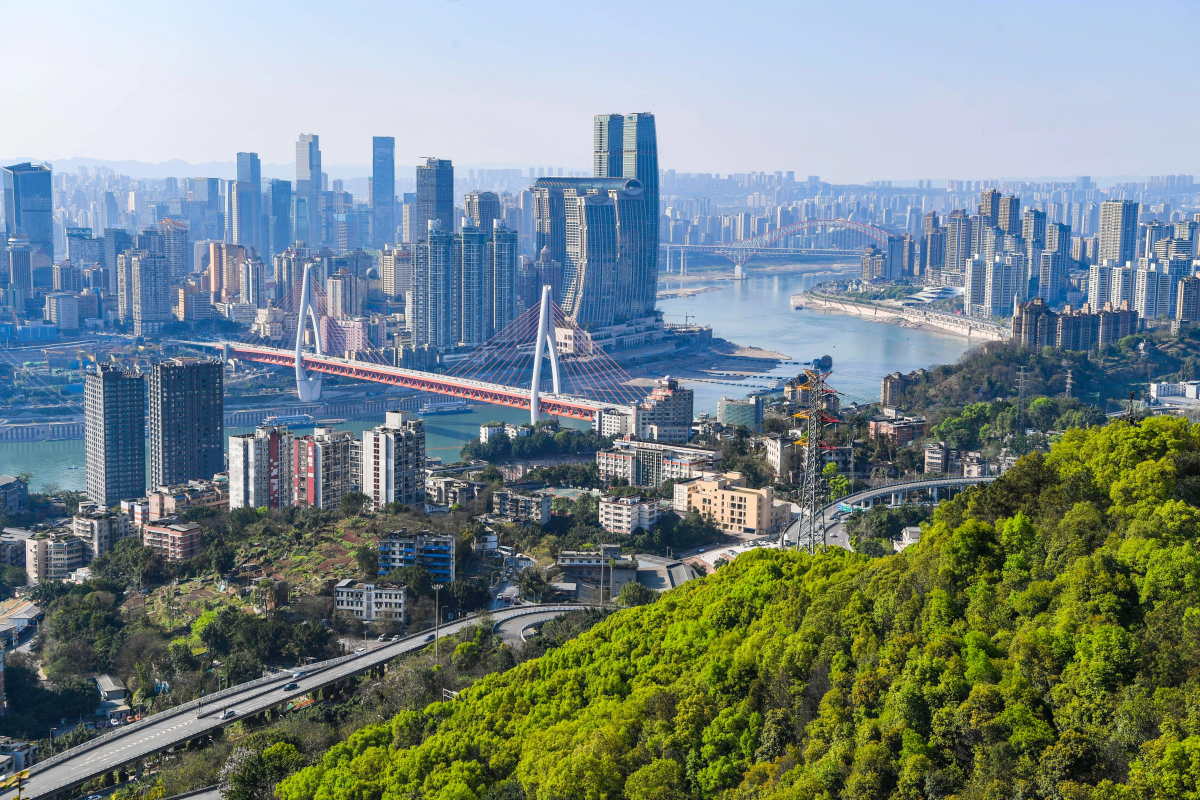
The landscape of Chongqing. (Photo/Chongqing Nan'an District)
At a press conference on May 27, Chongqing officials outlined the city's economic and social development blueprint for the next five years, focusing on its role as a strategic pivot for western China's development and a comprehensive hub for inland opening-up.
Zheng Xiangdong, vice mayor of the Chongqing Municipal People's Government, said the city had become the first in central and western China to surpass 3 trillion yuan (about 442 billion U.S. dollars) in gross domestic product during the 14th Five-Year Plan period. Its per capita GDP has exceeded 100,000 yuan, he said.

Shoppers walk through Beicheng Paradise Walk Shopping Mall in Chongqing. (Photo/Zheng Ran)
By the end of the 15th Five-Year Plan period, Chongqing aims to lift its GDP above 4 trillion yuan and raise per capita GDP to 140,000 yuan, Zheng said.
Zheng said Chongqing will further integrate into China's new development pattern by expanding its corridor and hub advantages. The city plans to promote the integrated development of "corridors, trade and industry," build a modern collection and distribution system, and strengthen transport links across Eurasia.
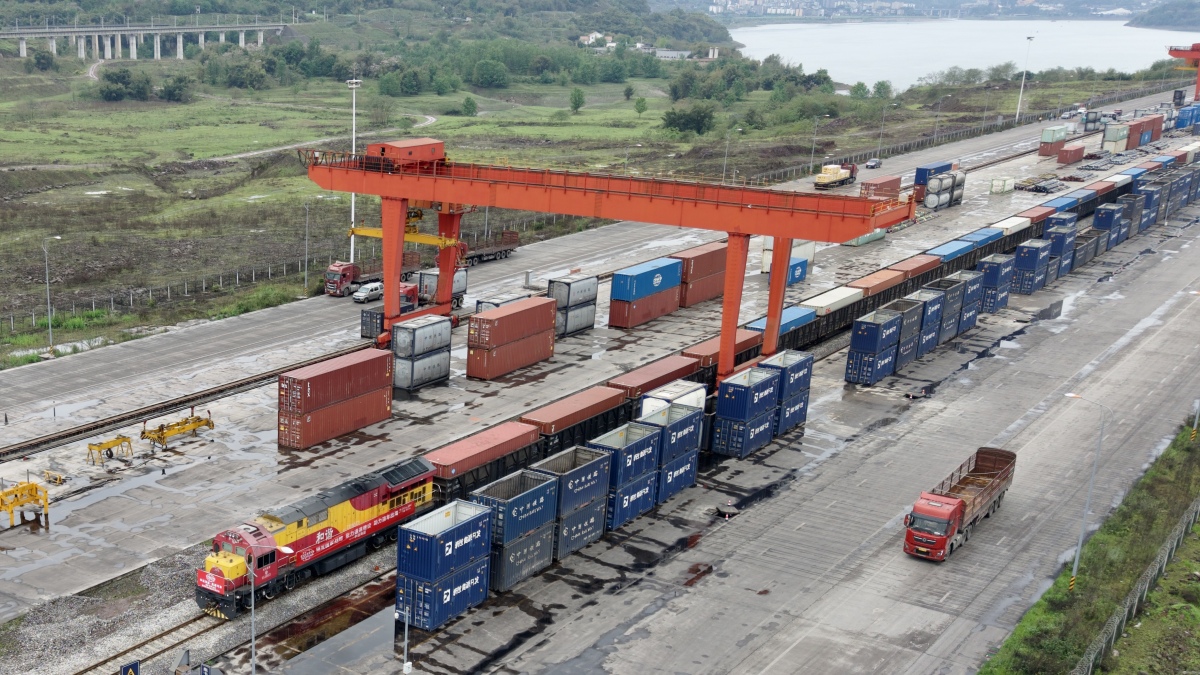
A freight train of the New International Land-Sea Trade Corridor, loaded with semi-knocked-down (SKD) automobile kits, departs from Fuling Longtou Port on March 31, 2026, marking the inaugural launch of the Fuling-to-North Africa route. (Photo/Chongqing Railway Logistics Center)
He said Chongqing will operate regular services, including the Asia-Europe Express and Qianli Qingzhou, a freight service along the Yangtze River's Golden Waterway. The city will also build a comprehensive service system for foreign trade and investment, using the "single document" system as a starting point to explore rules for land-based trade.
By 2030, Chongqing aims to handle more than 500,000 TEUs through the New International Land-Sea Trade Corridor (ILSTC) and increase its total imports and exports to more than 900 billion yuan, Zheng said. The goal is to form a supply chain and industrial hub connecting the European, Chinese, and ASEAN markets.

Chongqing Chongliang Health Industry Company showcases premium jasmine rice imported from Thailand and Cambodia. (Photo/Zheng Ran)
Huang Maojun, vice mayor of Chongqing, said building an inland opening-up hub is a major positioning assigned to the city. He said Chongqing has been advancing the construction of nine key hubs that reflect its role as an inland gateway.
In terms of physical connectivity, Huang explained that the Asia-Europe Express is now operating in both directions across the Europe-China-ASEAN route, while the Qianli Qingzhou service has been launched to activate shipping potential along the Yangtze River. The ILSTC now reaches 593 ports in 128 countries and regions, with both container volume and cargo value growing more than threefold during the 14th Five-Year Plan period.
Huang said Chongqing's foreign trade rose by more than 40% compared with the 13th Five-Year Plan period. One in every three laptops worldwide is made in Chongqing, while the city ranks first, second, and fifth nationwide in motorcycle, mobile phone, and automobile exports, respectively.
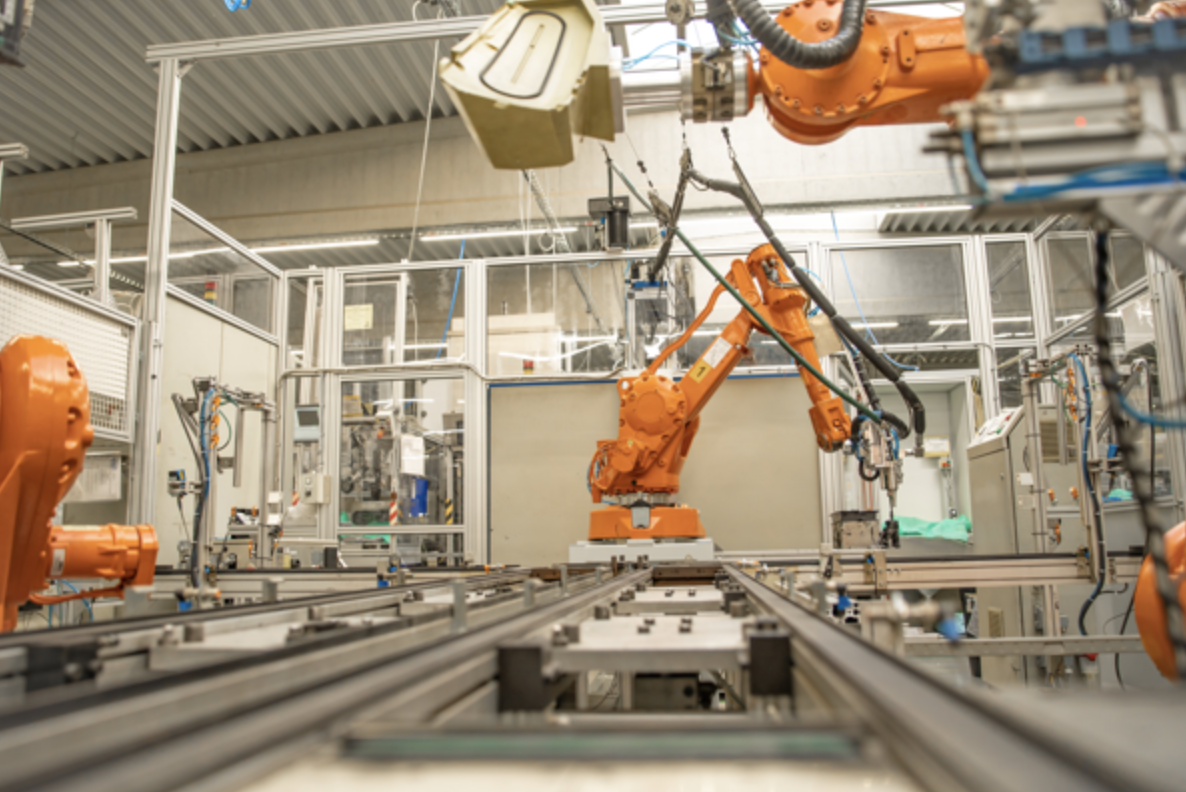
A digital twin production line for motorcycle painting robots at Zonsen Power, developed by Chongqing Humi Network Technology. (Photo/Chongqing Humi Network Technology)
The city is also deepening cooperation in the Chengdu-Chongqing economic circle, a regional strategy linking Chongqing and neighboring Sichuan Province.
Zheng said the two areas' combined GDP rose from 7.5 trillion yuan in 2020 to 10.1 trillion yuan last year, accounting for 7.2% of China's total. Sichuan and Chongqing have jointly built four trillion-yuan industrial clusters in electronic information, equipment manufacturing, advanced materials, and specialty consumer goods.
During the 15th Five-Year Plan period, Zheng said the two sides will work to build new trillion-yuan clusters in intelligent connected new energy vehicles, software, and information services.
Manufacturing remains central to Chongqing's development. Zheng said the city's industrial economy has exceeded 3 trillion yuan, supported by its "33618" modern manufacturing cluster system.
He said Chongqing will deepen the integration of technological innovation and industrial innovation. The city has built 49 innovation complexes, bringing together more than 1,500 innovation entities. In one example, a low-altitude economy innovation complex helped achieve the first flight of the world's first ton-class hybrid unmanned cargo aircraft.
Chongqing is also working to expand its consumer economy. Huang said inbound overnight tourist numbers rose 42.8% during this year's May Day holiday. By 2030, the city aims to raise total retail sales of consumer goods above 2 trillion yuan and achieve average annual inbound tourist growth of around 10%.
Chongqing will also promote the integrated development of commerce, culture, tourism, sports, exhibitions, and agriculture, expand international air routes to more than 70, and improve services, including inbound payment systems, visa facilitation, and departure tax refunds. The city aims to develop more than 2,000 departure tax refund merchants, he said.
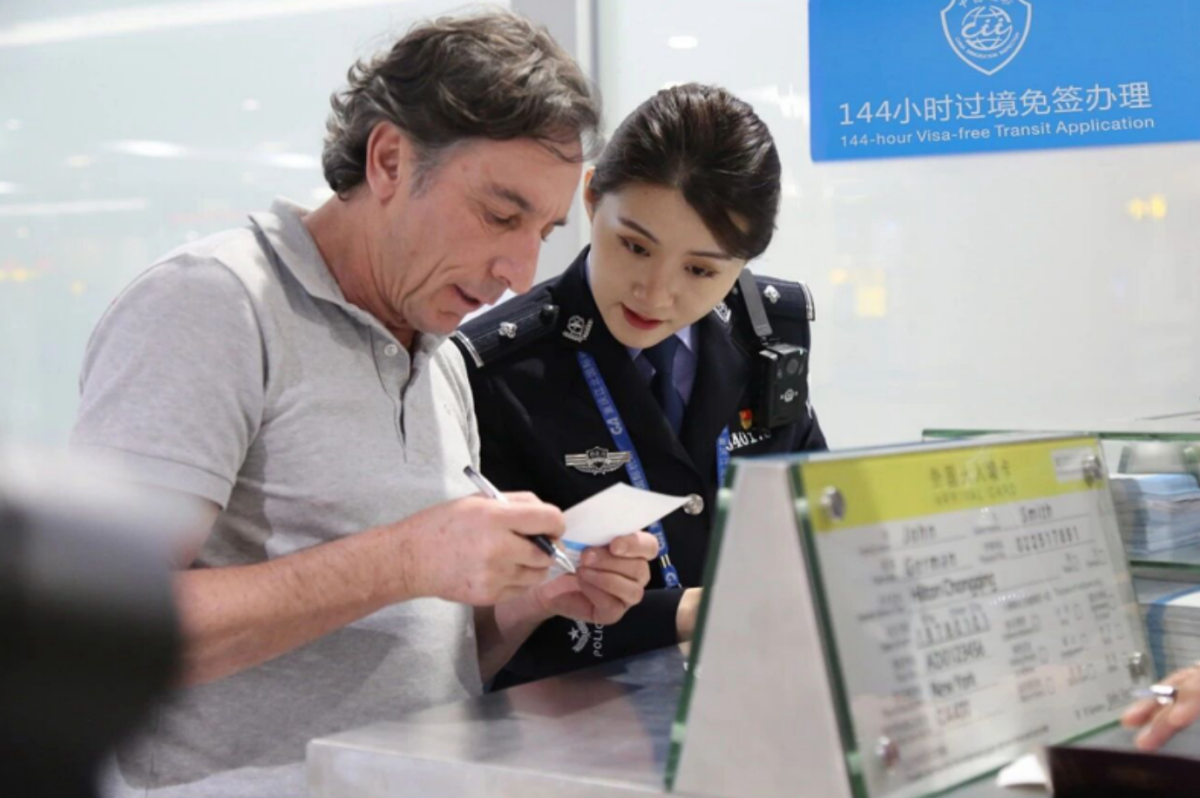
An official assists a foreign traveler with immigration procedures. (Photo/Chongqing Jiangbei International Airport)

Starlight 68 shopping mall in Chongqing Liangjiang New Area offers an instant tax refund service point for eligible shoppers. (Photo/Zheng Ran)
By continuing to browse our site you agree to our use of cookies, revised Privacy Policy and Terms of Use. You can change your cookie settings through your browser.
For any inquiries, please email service@ichongqing.info