
Chongqing - In a recent exclusive interview with Bridging News, Savills Western China Managing Director Criz Dai said Chongqing is emerging as a key gateway for international firms in western China, as the region moves beyond low-cost manufacturing toward industrial upgrading, consumption growth and digital infrastructure.

Bridging News conducted an exclusive interview with Savills Western China Managing Director Criz Dai. (Photo/Savills)
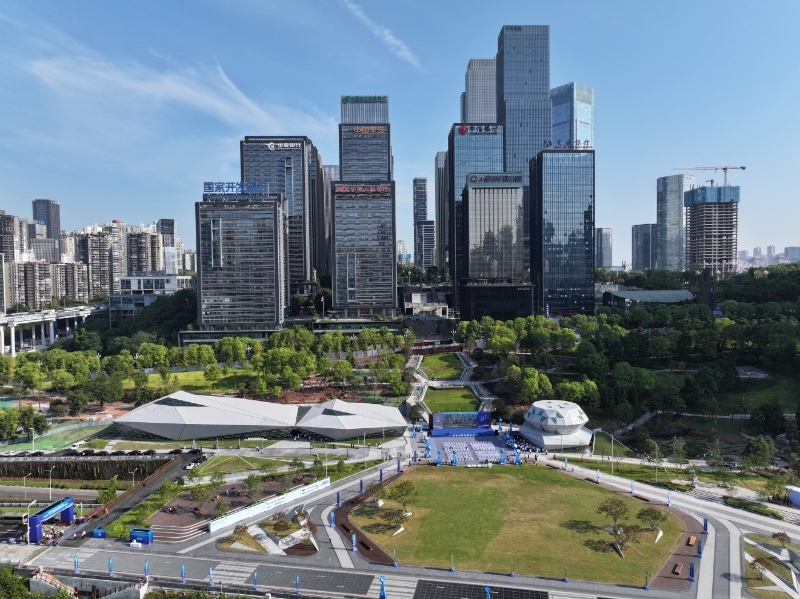
Jiangbeizui Financial Center in Chongqing Liangjiang New Area. (Photo/Chongqing Liangjiang New Area)
Chongqing’s latest data underline its growing economic weight. In 2025, its GDP reached 3.37 trillion yuan (approx. 468 billion U.S. dollars), making it the first city in central and western China to surpass the 3 trillion mark. It also produced 2.788 million vehicles, reclaiming the top spot among China’s auto-producing cities. Retail sales of consumer goods ranked first nationwide for the first time, while foreign trade topped 800 billion yuan.
Dai said western China's appeal to investors is changing. "Industry chain supplementation and precise positioning are the biggest shortcomings," he said, referring to the need for cities to build differentiated industrial strengths and attract companies that fill gaps in local supply chains.
He added that business-matching platforms need to move beyond information exchange and help companies better understand local markets, policies, and long-term operating conditions.
"Companies' lack of clear understanding of local policies and market conditions is a major obstacle," Dai said. "More importantly, there is a lack of long-term operational support. He said companies need clearer policy guidance, market assessment, and early business planning to operate sustainably after entering a new city.
Dai said Chongqing's appeal is not based on a single factor. "Chongqing's attractiveness is not one-dimensional; it is comprehensive competitiveness formed by multiple advantages," he said.
He cited the city's complete industrial base, its logistics role through the New International Land-Sea Trade Corridor, talent supply, and access to the broader western China market. The corridor is a rail-sea trade route linking western China with Southeast Asia and other global markets.
In 2025, it connected 593 ports in 128 countries and regions. Cross-border road freight services under the corridor operated more than 12,000 trips, carrying goods worth more than 17 billion yuan.
Retail is undergoing structural change, Dai said, citing Savills’ 2026 retail trends report. China’s retail market is shifting from scale expansion to value restructuring. “In the past, retail answered ‘what to buy’; today, it responds to ‘whom to become’,” the report noted, adding that commercial spaces are evolving from transaction sites into experience-led hubs for daily life.

Daqi Teahouse in Chongqing's Chaotianmen area offers immersive experiences of teahouse culture and intangible cultural heritage performances. (Photo/Zheng Ran)
Dai said western cities such as Chongqing and Chengdu show different consumption patterns from first-tier cities. "Compared with first-tier cities, western China places more emphasis on value for money and everyday vitality, while culture, tourism, and commerce are deeply integrated," he said. He added that the first stores in the region tend to focus on fashion, parent-child consumption, and specialty dining.
He cited two examples: Chongqing's Luzu Temple area, where urban renewal preserved local street culture while bringing in first-store brands, and Chengdu's CPI KOKO MARKET, which used a smaller-scale, community-based model to differentiate itself.

The KOKO MARKET in Luxelakes CPI in Chengdu. (Photo/IN-FIELD studio)
In digital infrastructure, western China is moving from an energy base to a green computing hub. He said modern data centers are no longer just "server warehouses," but integrated systems combining energy, cooling, network resilience, and physical security.
The national "Eastern Data, Western Computing" project, a policy designed to move computing workloads from data-heavy eastern regions to energy-rich western regions, is creating new opportunities, Dai said. "Western China is upgrading from an energy base to a national green computing hub and AI training core carrying area," he said.
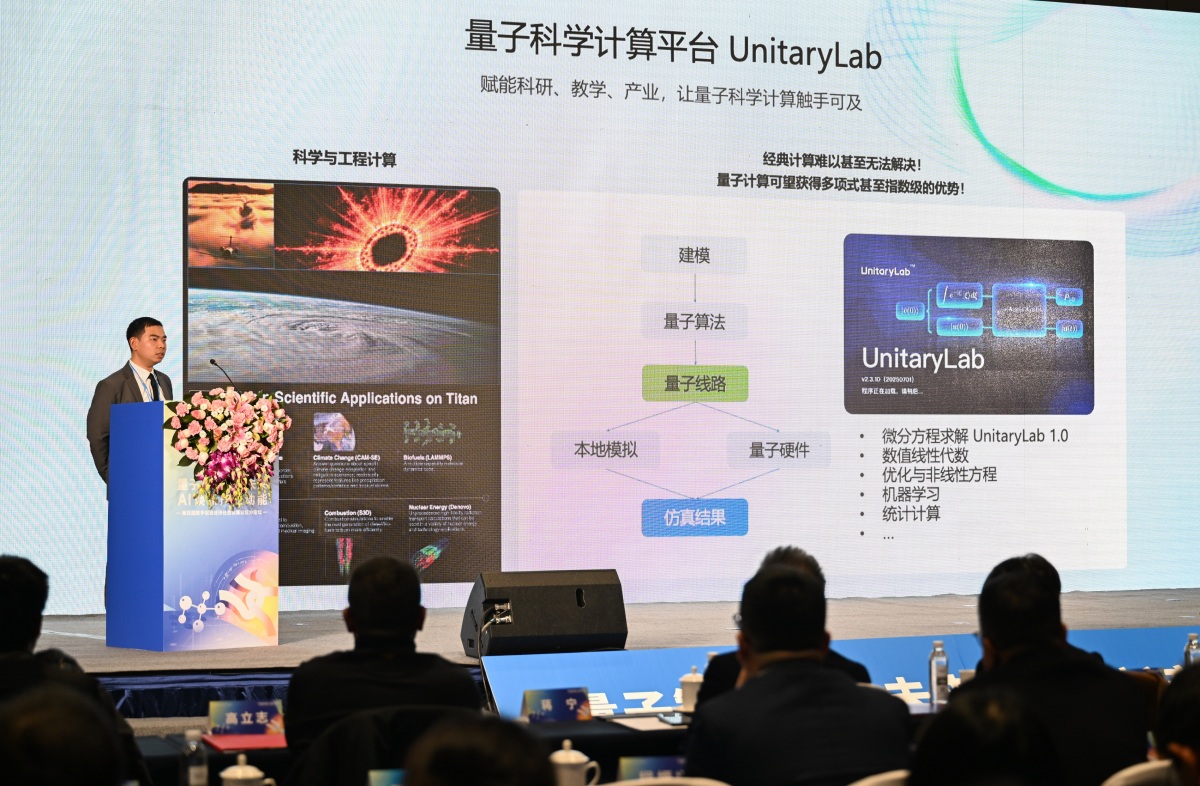
UnitaryLab 1.0, the world's first quantum scientific computing platform, was unveiled at the Chongqing Science Hall on November 29, 2025. (Photo/Chongqing Daily)
He said the region can develop green intelligent computing clusters, cross-regional computing scheduling, asset securitization, and industrial introduction.
Dai said western China can form an integrated "computing power-AI-advanced manufacturing" ecosystem. He said coastal regions focus on research, algorithms, and high-end applications, while the West can support AI training, industrial simulation, digital twins, and autonomous driving data processing using lower-cost green electricity and large-scale computing resources.
"Western China is creating a distinctive path for inland cities to move toward the frontier of opening-up, providing a vivid example for inland regions to integrate more deeply into the global economic and trade system," he said.
By continuing to browse our site you agree to our use of cookies, revised Privacy Policy and Terms of Use. You can change your cookie settings through your browser.
For any inquiries, please email service@ichongqing.info