
Chongqing - Chongqing aims to expand its service sector beyond 2.5 trillion yuan (about 370.5 billion U.S. dollars) by 2030 by integrating AI, strengthening manufacturing-related services, and boosting consumption
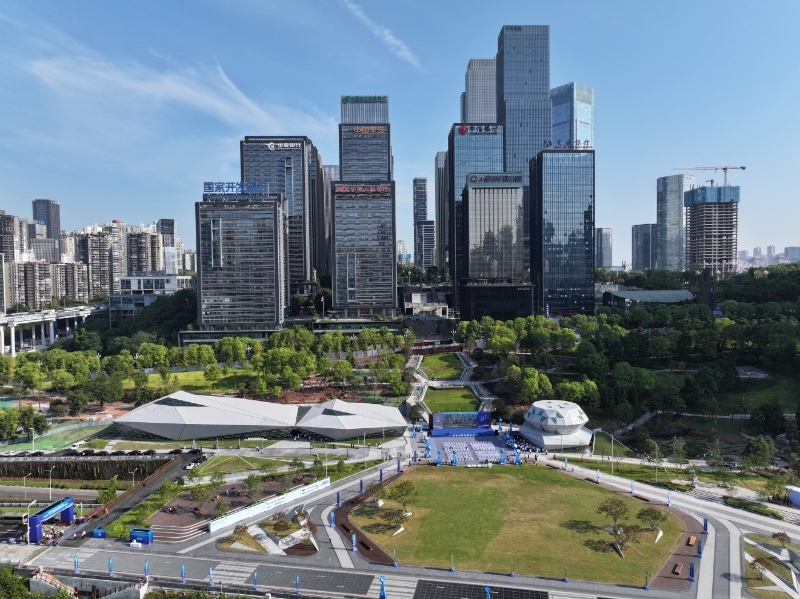
Jiangbeizui Financial Center in Chongqing Liangjiang New Area. (Photo/Chongqing Liangjiang New Area)
The target is outlined in the recently released Chongqing Modern Service Industry Development Plan for 2026–2030. The plan sets 32 quantitative indicators and places AI-enabled development at the heart of the service economy, Gao Jian, director of the Chongqing Municipal Development and Reform Commission, said at a press conference Tuesday.
In 2025, Chongqing's service sector generated 1.98 trillion yuan in value added, accounting for 58.8% of the city’s GDP and 67.4% of its economic growth.
Gao said Chongqing will build a "9611" modern service industry system.
The "9" refers to nine categories of producer services intended to support manufacturing, including digital information, scientific and technological innovation, logistics and supply chains, finance, business and exhibitions, design and testing, cultural and creative industries, energy conservation and environmental protection, and vocational training.
Chongqing is a major manufacturing center for industries including automobiles and electronics. As manufacturers shift toward smarter and greener production, officials said demand is increasing for research, design, testing and other specialized services.
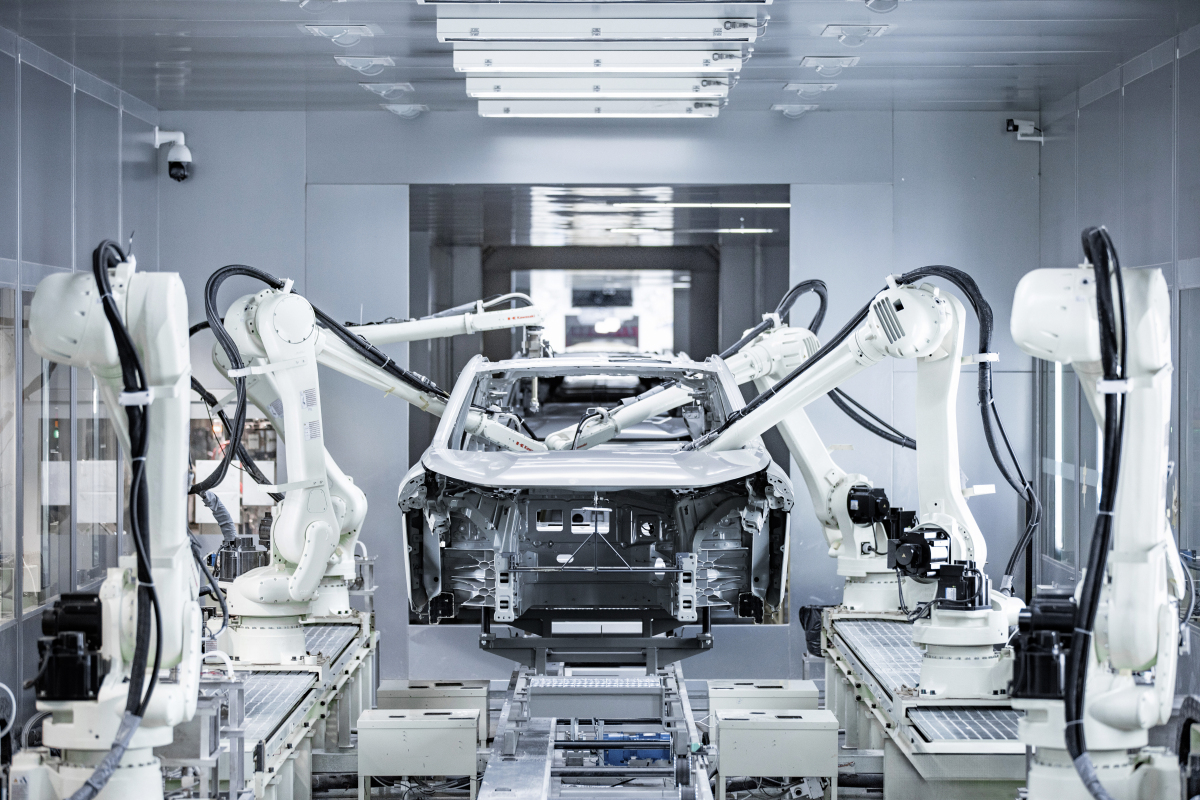
At Changan Digital Intelligence Factory, robotic arms with AI vision technology are performing operations on automotive components. (Photo/Changan)
Gao said Chongqing would continue its software development program with "AI plus software" as a priority. Automotive software, including intelligent driving assistance and in-vehicle applications, will be among the areas targeted.
The "6" covers six consumer-oriented service sectors: elderly and childcare services, healthcare, community services, commerce, culture-tourism and sporting events, and "emotional consumption" - spending centered on personal enjoyment, self-expression and well-being, including areas such as pets, beauty and cosmetics. Chongqing aims to increase the overall scale of consumer-oriented services to more than 1 trillion yuan.
The plan also identifies 11 service-sector brands that authorities want to develop in fields ranging from software, design and testing to tourism, healthcare, commercial districts and Chongqing cuisine.
Artificial intelligence will run through the broader strategy. Chongqing plans to develop specialized large language and AI models for specific industries and to expand the use of intelligent devices and AI agents in transportation, logistics, and vocational training.
Officials also want AI services to become more accessible to smaller manufacturers.
Gao cited Seres, a Chongqing-based automaker, as an example of digital integration. An industrial digital platform links more than 300 companies across its upstream and downstream supply chains, helping to improve research, design, and production efficiency, he said.
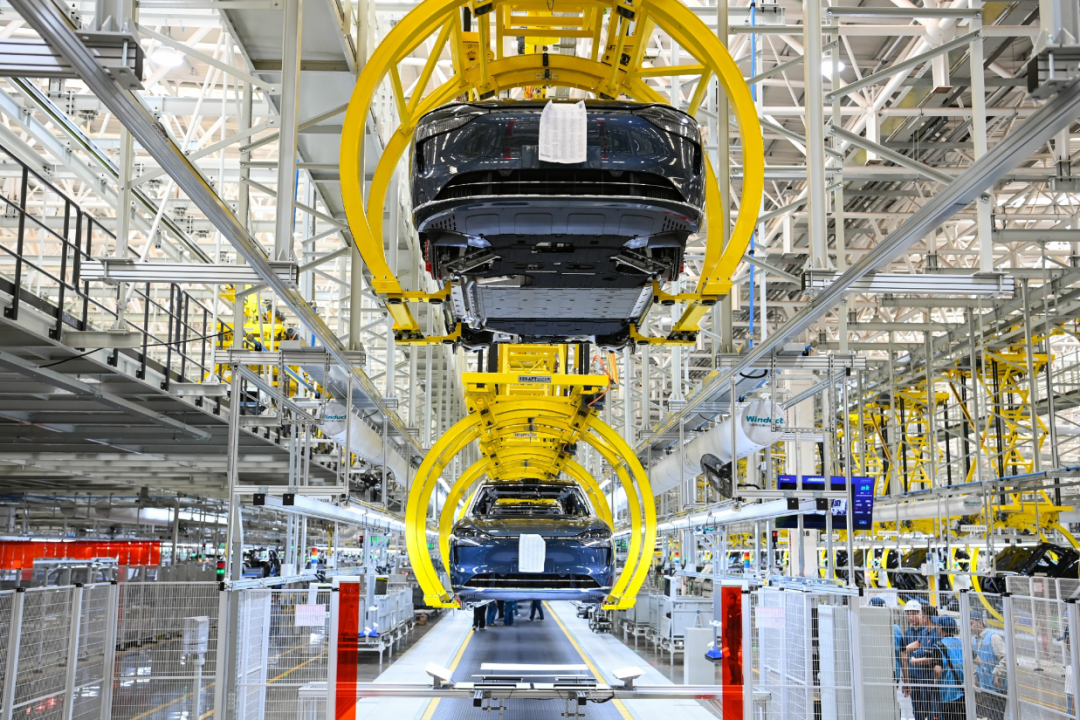
Seres Super Factory in Chongqing Liangjiang New Area. (Photo/Wang Jiaxi)
The city plans to encourage digital service providers to offer modular, lower-cost solutions for small and medium-sized companies, including "model-as-a-service" and "agent-as-a-service" products.
Other measures include stronger legal and intellectual property services for companies expanding overseas, greater access to major research infrastructure and additional training for engineers and skilled workers.
Consumption is another major part of the five-year strategy.
Chongqing recorded 849.14 billion yuan in total retail sales of consumer goods in the first half of 2026, up 2.3% from a year earlier, Li Xunfu, deputy director of the Chongqing Municipal Commission of Commerce, said at the briefing.
The municipality plans to upgrade major commercial areas, including Jiefangbei and Guanyinqiao, attract more international and Chinese brands, expand digital shopping services, and develop consumption that combines tourism, sports, performances, and exhibitions.

Longfor Beicheng Paradise Walk in Chongqing's Guanyinqiao business district. (Photo/Zheng Ran)
Authorities will also seek to make spending easier for overseas visitors by improving multilingual signage, expanding departure tax refund stores, increasing payment convenience, and promoting more accessible group-tour visa procedures at ports of entry.

Payment options are displayed at the customer service desk of Starlight 68 shopping mall in Chongqing's Guanyinqiao business district. (Photo/Zheng Ran)
Chongqing will also expand pedestrian-friendly commercial areas, improve parking and transport links, encourage outdoor retail markets, and explore services such as drone delivery.
The measures are intended to support Chongqing's development as an international consumption center while raising the service sector's contribution to the municipality's next phase of economic growth.
By continuing to browse our site you agree to our use of cookies, revised Privacy Policy and Terms of Use. You can change your cookie settings through your browser.
For any inquiries, please email service@ichongqing.info