
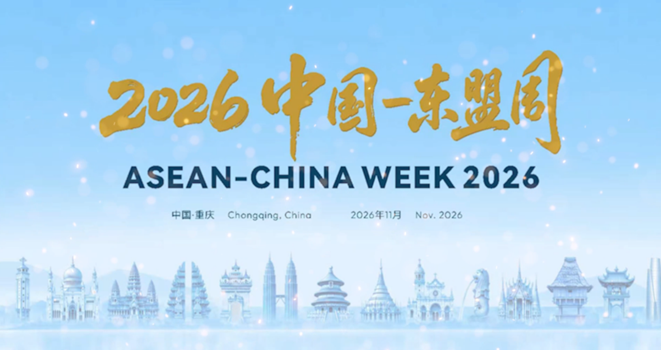
Chongqing - A press conference for ASEAN-China Week 2026 was held in Chongqing on Nov. 16. The event will open on Nov. 23 under the theme"Deepening Strategic Cooperation, Connecting for Shared Prosperity."A total of 30 activities across six categories are planned, covering government engagement, corridor economy, technological innovation, cultural exchange, press events, and visits to local businesses and facilities. The program will focus on four areas of practical cooperation: trade and investment, logistics connectivity, tech innovation, and culture and tourism. A economic and trade cooperation matchmaking conference and a consumer exports expo will also take place during the week, while cooperation in computing power is expected to draw attention.
China and Southeast Asian countries have a long history of exchanges. Chinese merchants were already traveling to the region for trade during the Tang Dynasty (618-907). During the Ming Dynasty (1368-1644), the voyages led by Zheng He further promoted trade, migration, and cultural exchanges. Since ASEAN was established in 1967, regional cooperation has become increasingly institutionalized. The year 2026 marks the 35th anniversary of China-ASEAN Dialogue Relations and the fifth anniversary of the establishment of the China-ASEAN Comprehensive Strategic Partnership. Cooperation has since expanded beyond traditional trade to cover industry, logistics, technology, education and tourism.
In 2025, Chongqing's imports and exports with ASEAN reached 132.65 billion yuan, up 12.6% year on year, making ASEAN the municipality'slargest trading partner. As a major gateway for China's opening-up in the west, Chongqing is exploring ways to strengthen its links with ASEAN markets through industrial cooperation and people-to-people exchanges. Several local initiatives offer a glimpse into how these ties are developing.
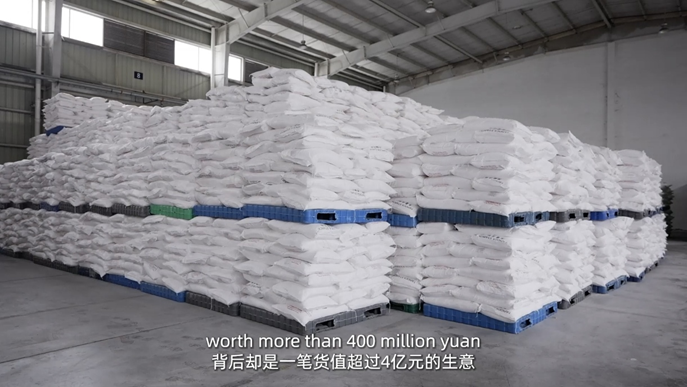
Bubble tea is a popular drink among young people, but few may know that cassava starch is a key ingredient in many tapioca pearls. In2025, a distribution center in Chongqing handled around 130,000 tonnes of cassava starch trade. Based on an assumed 30 grams of starch per serving, that volume could theoretically make about 4.3 billion cups of bubble tea. How does cassava starch from Southeast Asia reach Chongqing? Behind the trade is the ASEAN Southwest Cassava Starch Distribution Center, located in the Chongqing International Railway Port Comprehensive Bonded Zone.
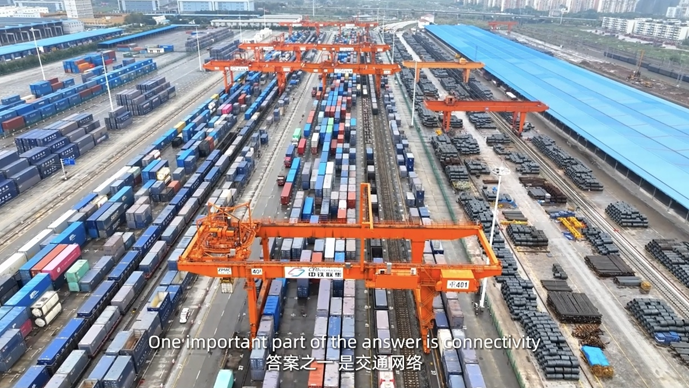
The Chongqing International Railway Port Comprehensive Bonded Zone was approved by the State Council on April 30, 2024. On April 16, 2025, the ASEAN Southwest Cassava Starch Distribution Center was officially inaugurated. That same day, the first shipment of 1,060 tons of cassava starch from Laos arrived in Chongqing by freight train via the China-Laos Railway, a key link in the New International Land-Sea Trade Corridor. The cargo was then transferred and cleared through customs before entering the food warehouse in the bonded zone.
In 2025, the center handled around 130,000 tonnes of cassava starch trade, valued at more than 400 million yuan. Beyond bubble tea pearls, cassava starch is used in a range of products, including hot and sour noodles, taro balls, instant noodles and vermicelli, as well as in industrial applications such as papermaking.
Chongqing is neither a coastal city nor directly connected by land to Southeast Asia. How, then, has it become a distribution point for agricultural products from ASEAN?
Wang Cihang, a staff member at the Chongqing International Logistics Hub Park and one of the initiators of the ASEAN Southwest CassavaStarch Distribution Center, said Shapingba District sits at the intersection of the New International Land-Sea Trade Corridor and the China-Europe Railway Express. Its transport links extend southward to major cassava-producing areas in ASEAN, supported by an established multimodal transport network.
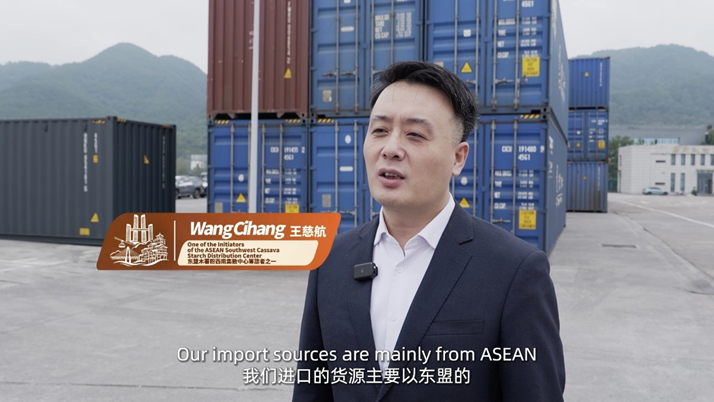
"Setting up a distribution center here means placing raw materials at a logistics hub close to downstream customers, shortening supply chain cycles and reducing overall costs," Wang said. Supporting customs inspection facilities also help ensure regular and stable imports of bulk cassava starch.
The center's cassava starch is mainly sourced from Laos, Vietnam and Cambodia. Shipments from Laos typically depart from Vientiane South Station and travel to Chongqing by rail after customs clearance on both sides of the border. The journey usually takes around five to seven days.
Getting the goods to Chongqing is only part of the process. Connecting them with downstream industries and markets is equally important to the expansion of the business.
Deng Yanwei, general manager of sales at New West(Chongqing) Agricultural Products Co., Ltd., an ASEAN cassava starch distributor, expects the company's imports to reach around 150,000 to 200,000 tons in 2026 and 2027.
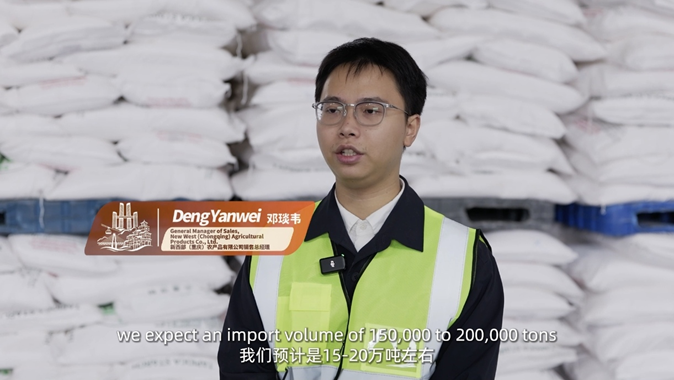
"Our main customers are food manufacturers, modified starch producers, paper mills and feed manufacturers in southwest China," Deng said. Cassava starch is also used in the production of ham sausages, instant noodles and vermicelli, as well as in related industries making packaging paper, Oxford paper and adhesives. The company's sales network currently covers Sichuan, Chongqing, Hubei, Hunan and Henan.
The trade follows a clear supply chain: raw materials are sourced from Southeast Asia, transported to Chongqing via the China-LaosRailway, and then distributed to markets across several provinces in western China.
For Chongqing, the distribution center represents more than an additional imported commodity. With the support of railway port facilities and the comprehensive bonded zone, the city can provide services for cargo distribution, customs clearance, and logistics, linking overseas suppliers with downstream businesses in China. As trade expands, transport infrastructure is becoming more closely connected with local trading and processing companies.
At a restaurant in Chongqing, Han Bing, a Thai national, speaks Chinese with the staff before switching to Thai to explain the dishes to his friends. Sitting beside him are Pun and Pong, Thai twin food bloggers who have come to Chongqing to film content. The brothers jointly run the food channel TheFadd, which has more than five million followers on social media. During their visit, Han Bing serves as both a friend and a local guide, helping them get to know the city.
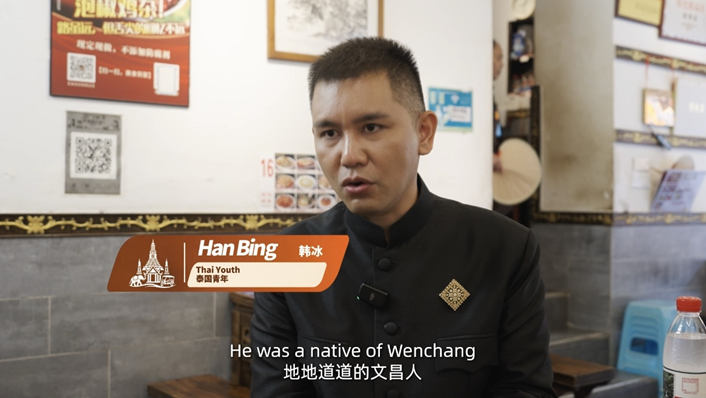
Han Bing's connection with China began with a desire to learn more about his family roots. His grandfather was from Wenchang, HainanProvince, before moving to Thailand. Learning Chinese initially offered him away to understand that part of his family history. "If I learn Chinese, I can learn more about my roots," Han said. He studied basic Chinese at university. Later, while pursuing postgraduate studies at Nanjing University, an invitation to appear on a television program unexpectedly led him into the media industry. He went on to take part in productions in different Chinese cities and work with local production teams. Through these experiences, he came to appreciate the practical value of the language. "If your Chinese isn't good, there can be misunderstandings in communication," he said. Being able to understand a director'sinstructions directly also makes it easier to work with the production team.
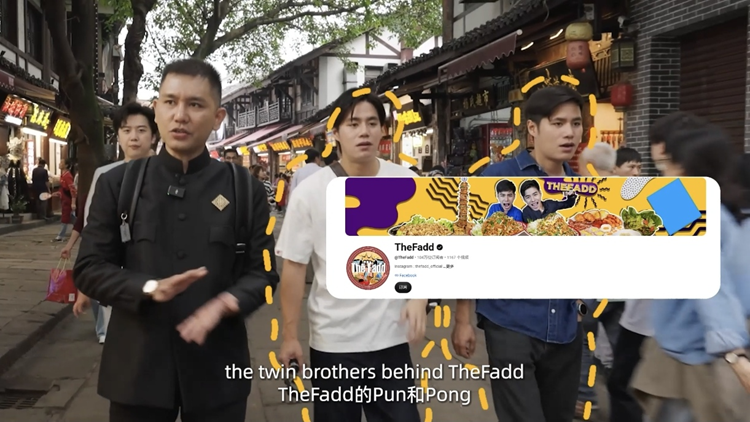
To help Pun and Pong make the most of their visit, Han invited his longtime Chongqing friend Zhang Nan to join them. Zhang is a host at CQTV. The two first met in 2017 on a hosting competition show produced by a Chinese video platform, where Zhang was a contestant and Han served as a judge. Years later, they reconnected professionally, bringing their respective expertise to cultural and business exchanges between China and Thailand. Their projects have included children's variety programs introducing Chinese children to Thai culture, as well as promotional activities in Thailand for automakers from Chongqing. Han is mainly responsible for overall project planning, whileZhang draws on his experience in television program planning and production. Zhang said their different professional strengths complement each other and make their cooperation work well. For Han, however, successful cooperation involves more than coordinating projects. It also requires an understanding of each other's cultural backgrounds. The aim, he said, is to introduce Thai culture to Chinese audiences while also sharing Chinese culture, particularlyChongqing's local culture, with Thai partners.
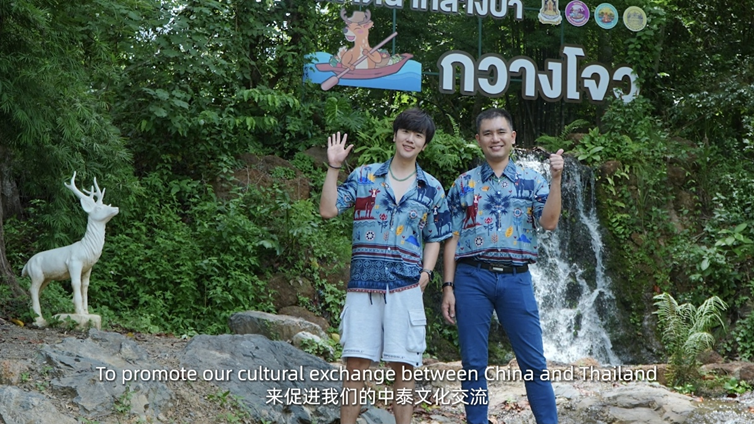
The opportunities created by learning Chinese have also extended into business. Han recently had a Thai client interested in working with a Chinese team on AI-generated short dramas, and he plans to discuss potential cooperation. He is also interested in tourism exchanges between China and Thailand. For Han, language skills are essential to business communication. "If youdon't understand Chinese, how can you do business with Chinese partners? How can you explain whether a product is good or bad, or recommend one option over another?" he said. He has also noticed that more people in Thailand are learning Chinese. His nephew, who lives in northeastern Thailand, recently passed Level 3 of the HSK, China's standardized Chinese proficiency test for non-native speakers.
During this visit, Han also took Pun and Pong to Ciqikou to explore the historic neighborhood and sample local food, giving the two Thai visitors a closer look at everyday life in Chongqing. Looking ahead, Han hopes to become a cultural bridge between China and Thailand.
A cassava starch distribution center connects agricultural suppliers in Southeast Asia with processing businesses in western China. HanBing's experience, meanwhile, shows how language learning can lead to opportunities in media, tourism and business cooperation. Together, these examples illustrate the different ways Chongqing's ties with ASEAN are developing.
ASEAN-China Week was launched by the ASEAN-China Center in 2023 and has been held three times. It serves as a platform for exchanges and cooperation between China and ASEAN countries.
For Chongqing, a key task is to make better use of its railway connections, port facilities and industrial base to bring more ASEAN products into the Chinese market while helping local businesses expand into Southeast Asia. Exchanges in education, culture and tourism can also create opportunities for closer business ties and market connections.
As ASEAN-China Week 2026 approaches, businesses, institutions and representatives from Chongqing and ASEAN countries will have more opportunities to connect and explore cooperation. Turning transport connectivity into industrial partnerships and translating exchanges into concrete projects will be important to deepening ties in the years ahead.
By continuing to browse our site you agree to our use of cookies, revised Privacy Policy and Terms of Use. You can change your cookie settings through your browser.
For any inquiries, please email service@ichongqing.info