
Chongqing — Following Starbucks China’s decision to sell 60% of its stake to local partners, Burger King is also scaling back its direct investment in China. According to Chinese corporate information platform Aiqicha, Burger King China has raised its registered capital from about US$460 million to roughly US$475 million, an increase of just over 3%.
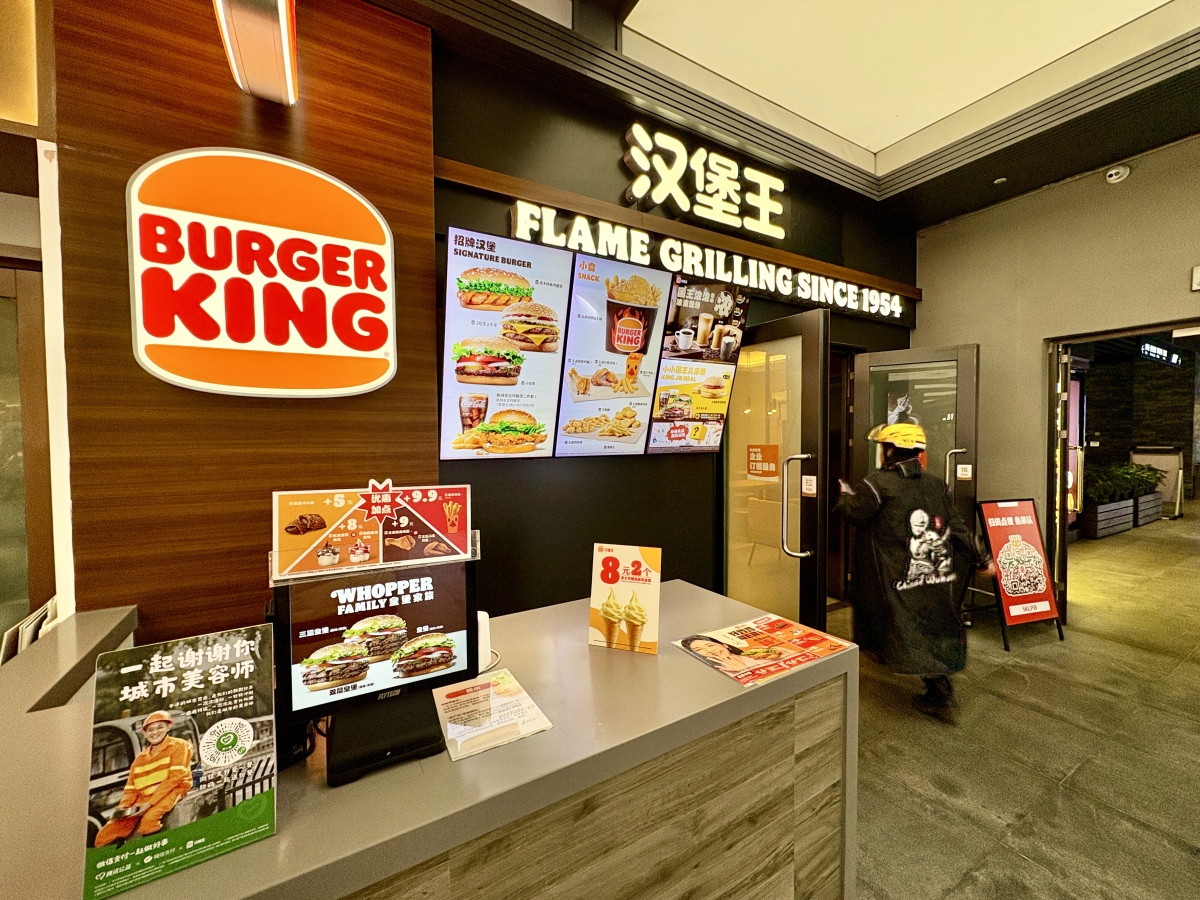
A delivery rider hurries into the Burger King in Chongqing's SKLP mall. (Photo/Zheng Ran)
Alongside the capital change, several senior personnel adjustments were made. Fan Jun has been appointed as a director, while Mustafa Yasar is stepping down from the board. Public records show Fan Jun worked at Burger King parent company Restaurant Brands International (RBI) in 2025 and previously held leadership roles at Yum China overseeing KFC and Pizza Hut operations. Yasar had served as vice president of Burger King China.
This marks Burger King China’s second capital increase this year. In February, registered capital rose from about US$310 million to US$410 million, followed by a further increase in March to around US$460 million.
On November 10, RBI announced it would establish a joint venture with Chinese private equity firm CPE. Under the deal, CPE will invest approximately US$350 million and take an 83% stake in Burger King China. RBI will retain 17% ownership and one board seat. The transaction is expected to close in the first quarter of 2026.
RBI’s financial report shows Burger King China’s store count dropped from 1,587 at the end of 2023 to 1,367 in the first half of 2025.
CPE plans to reverse that decline. The firm aims to double Burger King’s footprint in China from roughly 1,250 stores today to 2,500 within five years, with a long-term goal of 4,000 by 2035.
CPE currently manages more than 180 billion yuan (about US$25.3 billion) in assets and has invested over 10 billion yuan (about US$1.41 billion) across consumer brands, including Mixue Ice Cream & Tea, Pop Mart, Lao Pu Gold, Weilong Delicious, and Beauty Farm.
The shift comes after RBI spent US$158 million earlier this year to buy back China operations from its previous operator. Despite recent headwinds, RBI CEO Joshua Kobza has described China as “one of Burger King’s most attractive long-term growth markets.”
RBI’s annual disclosures show Burger King China generates about US$700 million in annual sales, but the average store brings in only US$400,000 — far below performance levels in markets such as Brazil, Turkey, and South Korea.
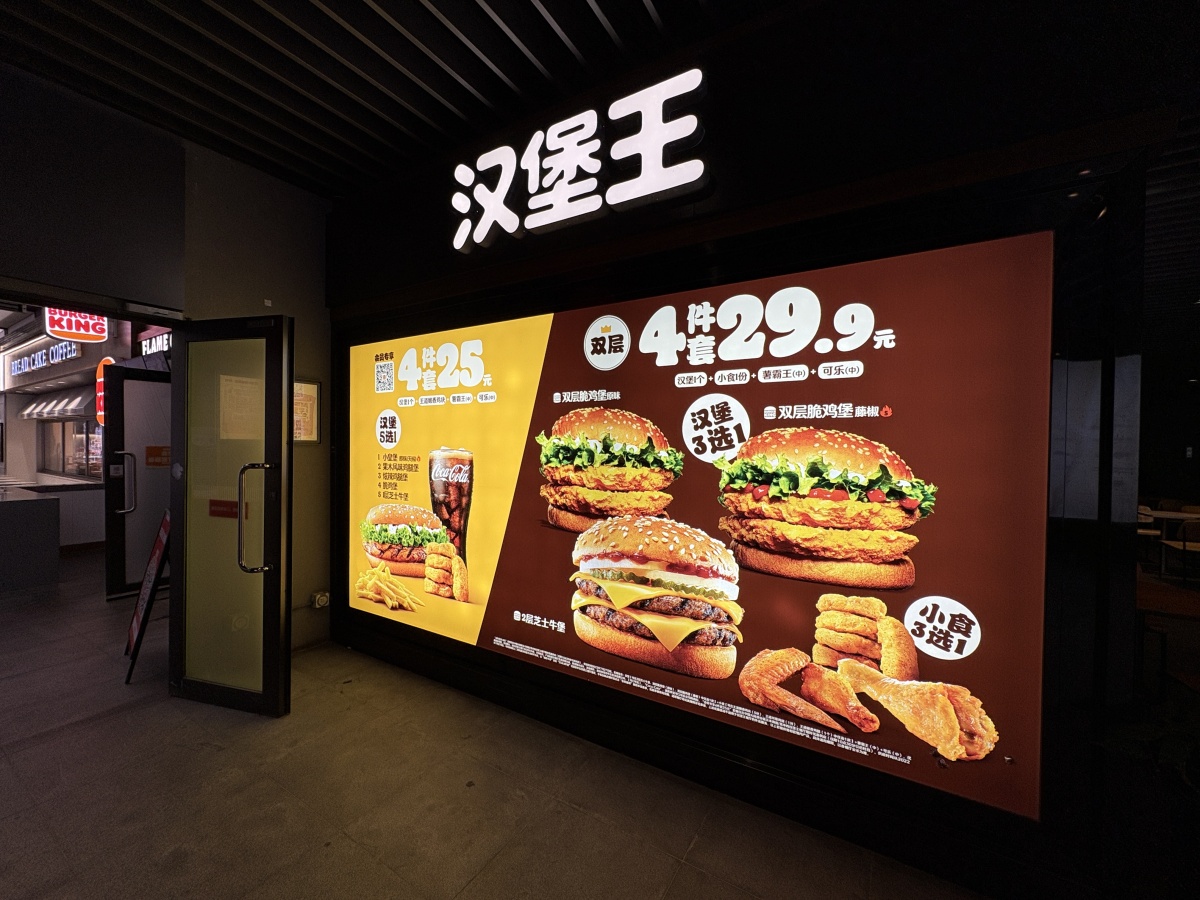 A Burger King promotional poster was displayed in the passage connecting SKLP mall to the Chongqing Rail Transit line. (Photo/Zheng Ran)
Experts say operational challenges also contributed to the reset. For years, Burger King China was run by Turkey’s TFI Group under a licensing structure that some analysts argue limited flexibility and slowed the brand’s adaptation to local preferences. Public trust also took a hit when the chain was named in China’s annual CCTV consumer rights program.
Since regaining control, RBI has rebuilt the local leadership team. Burger King China deputy CEO and chief supply chain officer Chen Wenrui said the brand still enjoys broad recognition and strong long-term potential. CPE managing director Mao Wei said the firm will draw on its experience with Chinese consumers to bring more customers to Burger King’s flame-grilled offerings.
Burger King’s move comes closely after Starbucks' own strategic adjustment. On November 4, Starbucks announced a joint venture with Boyu Capital, giving the private equity firm up to 60% control of its China retail business, while Starbucks retains 40%.
Starbucks, which entered China in 1999 and long dominated the premium coffee market, is now under pressure from lower-priced rivals Luckin and Cotti, whose rapid expansion and aggressive pricing have reshaped consumer behavior.
Canyan Data shows that as of September, Luckin operates 27,200 stores and Cotti 14,500, compared with Starbucks’ 8,011. New-style tea brands such as CHAGEE and Heytea are also rising, adding even more competition.
The impact is visible in Starbucks’ financials. After reaching US$3.675 billion in China revenue in FY2021, sales declined for three consecutive years: US$3.008 billion in 2022, US$3.081 billion in 2023, and US$3.008 billion in 2024. Luckin, meanwhile, generated US$3.508 billion in 2023 — surpassing Starbucks China for the first time.
By continuing to browse our site you agree to our use of cookies, revised Privacy Policy and Terms of Use. You can change your cookie settings through your browser.
For any inquiries, please email service@ichongqing.info