
Chongqing — On November 29th, the 2025 Baiheliang Academic Symposium was held in Fuling District, Chongqing, bringing together experts and scholars from China, Egypt, Germany, Türkiye, Sri Lanka, Uzbekistan, and other countries.
Centered on the theme "The Global Value of Water Heritage: Collaborative Responses of Human Societies under Climate Change," the conference focused on the protection, research, and sustainable use of hydrological heritage.
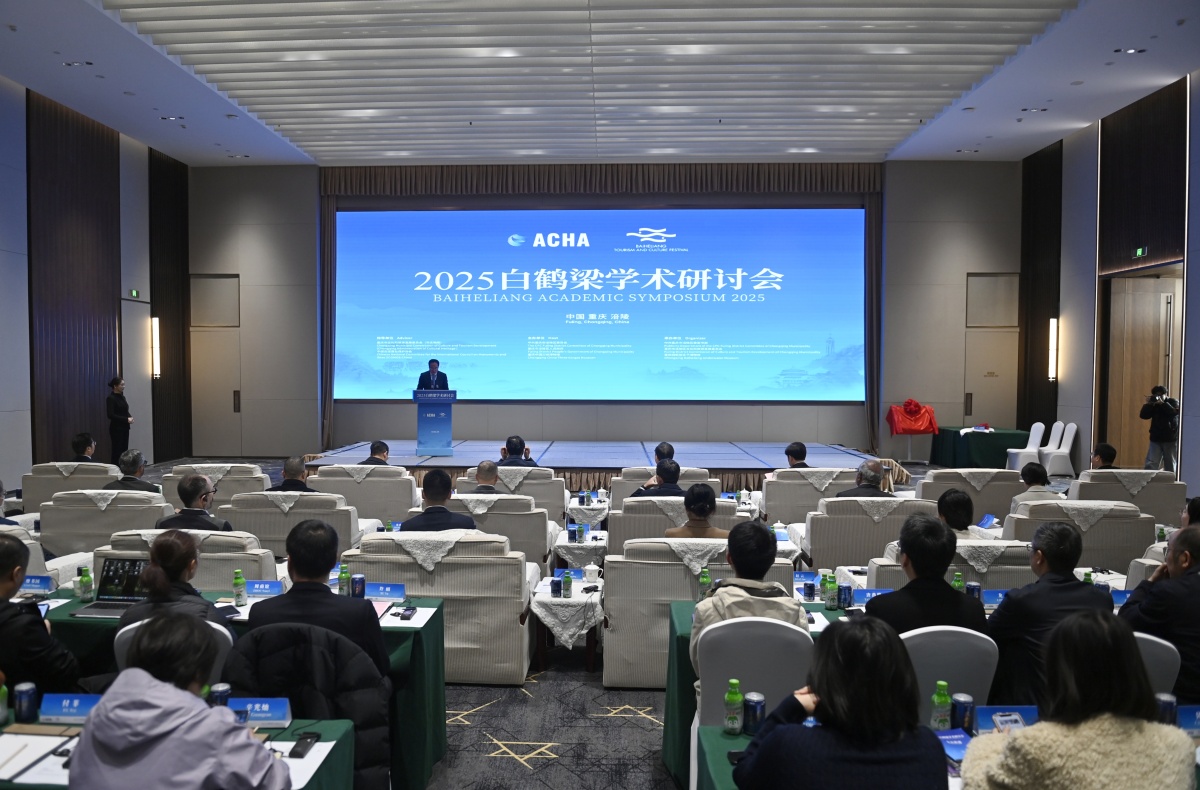 On November 29th, the 2025 Baiheliang Academic Symposium was held in Fuling District, Chongqing, bringing together experts and scholars from China, Egypt, Germany, Türkiye, Sri Lanka, Uzbekistan, and other countries. (Photo: Zhu Zhiqiang)
"Over the past year, we have used culture as a bridge to deepen exchanges between China and Egypt. Baiheliang culture has traveled overseas to Egypt; the documentary When the Yangtze Meets the Nile gained global popularity, and the digital exhibition Baiheliang: A Millennium of Underwater Memory in the Yangtze continued to draw attention at the National Museum of Egyptian Civilization, enriching the dialogue between two ancient civilizations," said Li Yong, Secretary of the CPC Fuling District Committee.
Li added that Fuling District will take this symposium as a new starting point to advance archaeological research, enhance underwater preservation technologies, and accelerate the joint World Heritage inscription process for the Baiheliang inscriptions.
Chang Xiaoyong, Director of the China Chongqing Three Gorges Museum, emphasized the progress in international cooperation on water heritage. He said that experts from China, Egypt, the United States, France, and other countries have contributed strategic recommendations on the heritage value and comparative characteristics of Baiheliang and the Nilometer, offering guidance for conservation and joint inscription. The signing of the China–Egypt Agreement on Strengthening Cooperation on World Cultural Heritage Nomination, Management, and Protection at the Second General Assembly of the Alliance for Cultural Heritage in Asia marked a significant advancement in joint World Heritage efforts.
Dr. Ahmed Rehema, Assistant to the Minister of Tourism and Antiquities of Egypt for Human Resources Development, Training, and Capacity Building, highlighted the deepening cooperation between China and Egypt in the field of cultural heritage. He noted that 2026 marks the 70th anniversary of diplomatic relations between the two countries.
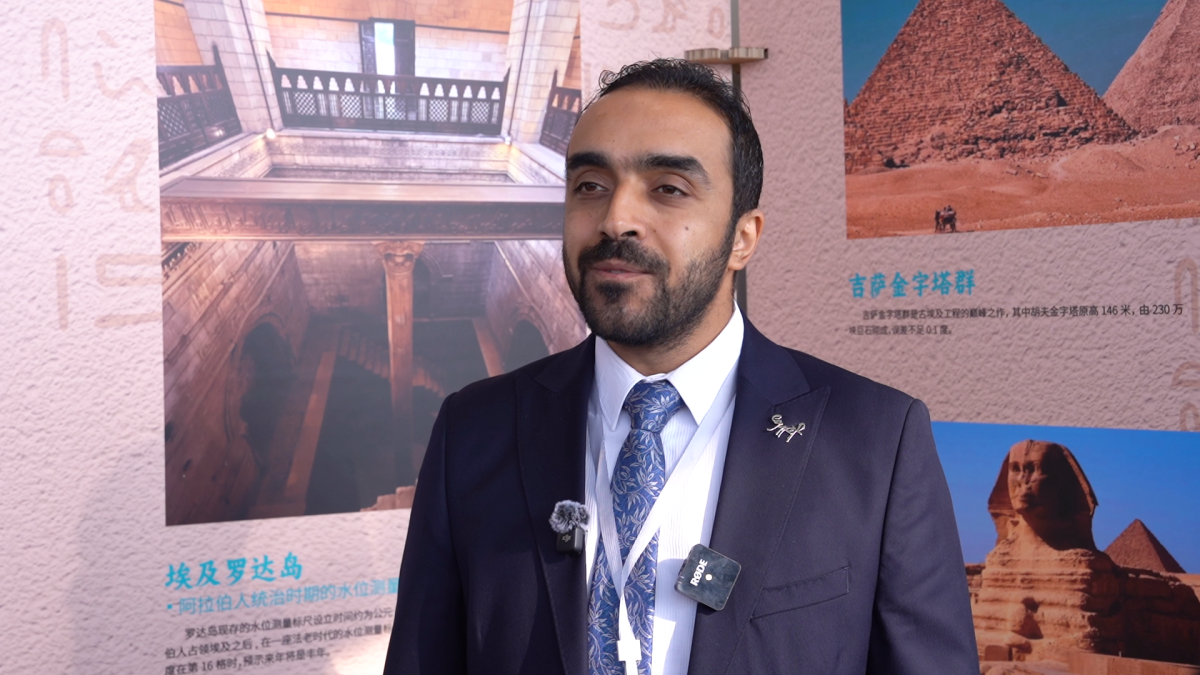
Dr. Ahmed Rehema, the Assistant to the Minister of Egypt Tourism and Antiquities for Human Resources Development, Training, and Capacity Building. (Photo: Deng Yan)
"In recent years, cooperation between our two countries has flourished, which is truly special. From an archaeological perspective, we have carried out a number of joint projects between Egypt's Supreme Council of Antiquities and Chinese partners. Several Chinese archaeological missions are currently working in Luxor on excavation projects. Three months ago, China and Egypt signed a memorandum of understanding in Alexandria to establish a China–Egypt Center for Underwater and Maritime Archaeology and Underwater Cultural Heritage, during the celebration of Underwater Heritage Day on August 21st. We are now advancing a joint World Heritage application linking the Baiheliang Inscriptions with Egypt's Nilometer. This cooperation is progressing very well. We expect that within the next two to three weeks, another MOU will be formally signed to officially launch the project and establish a joint committee to move the work forward," he added.
During the event, the China Institute of Water Resources and Hydropower Research and the Baiheliang Underwater Museum unveiled a new National Key Research Base (Workstation) for the Protection and Research of Water Conservancy Heritage of the Cultural Heritage Administration.
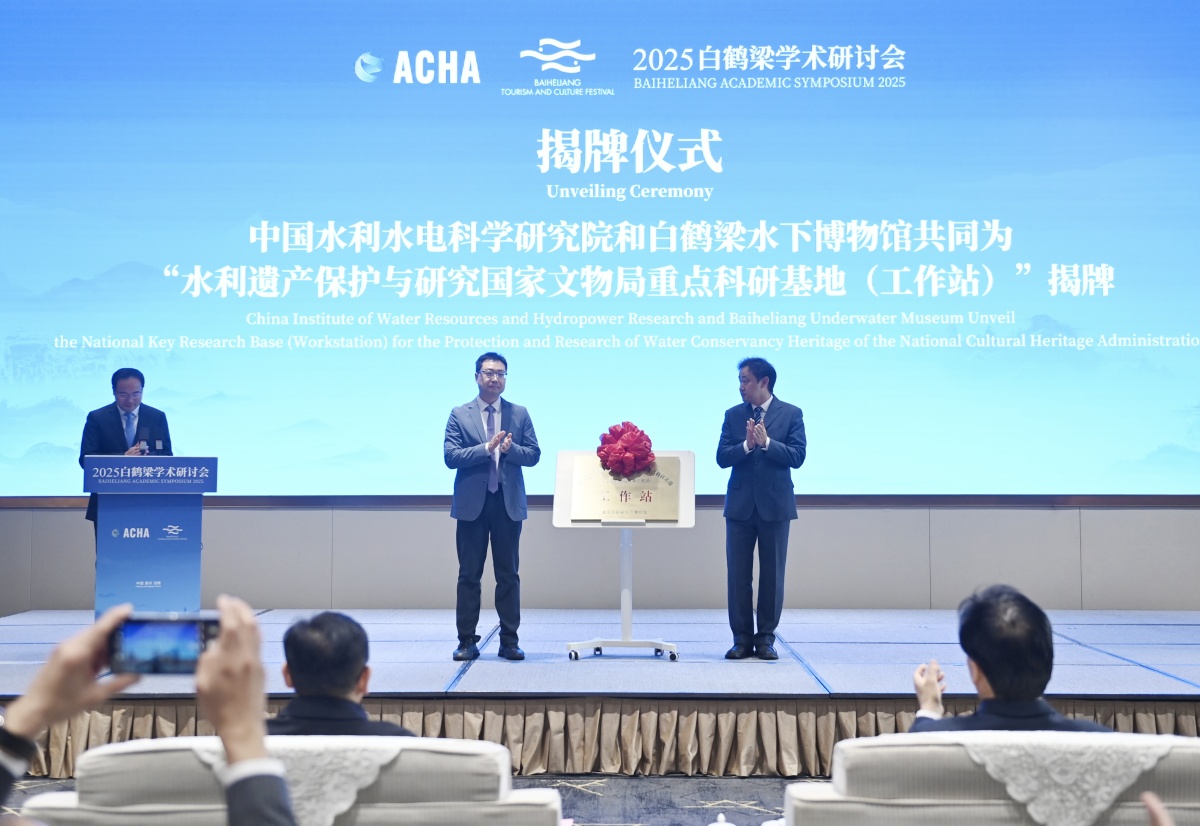
During the event, the China Institute of Water Resources and Hydropower Research and the Baiheliang Underwater Museum unveiled a new National Key Research Base (Workstation) for the Protection and Research of Water Conservancy Heritage of the Cultural Heritage Administration. (Photo: Zhu Zhiqiang)
In addition, Tencent signed a strategic cooperation framework agreement with the Fuling District Government and the China Chongqing Three Gorges Museum to support the digital and intelligent transformation of cultural heritage.
The symposium's keynote session featured in-depth discussions on topics including the hydrological value of the Baiheliang inscriptions, water heritage protection under climate change, and collaborative international World Heritage applications.
An academic dialogue was also held, where multiple scholars explored how ancient water records can support research and help interpret significant historical events.
At the closing ceremony, all participants jointly released the "Initiative for Collaborative Research on the Water Cultural Heritage of China's Baiheliang and Egypt's Nilometer," calling for strengthened international cooperation on water heritage and contributing cultural momentum to building a community with a shared future for mankind.
By continuing to browse our site you agree to our use of cookies, revised Privacy Policy and Terms of Use. You can change your cookie settings through your browser.
For any inquiries, please email service@ichongqing.info