
São Paulo, Brazil - Books once crossed oceans with potatoes, corn, and coffee—and they still carry ideas and imagination across borders today. On December 1, “Land Sea Talk” made its first overseas debut at the Confucius Institute of Universidade Estadual Paulista in Brazil, marking a new milestone in China–Brazil cultural exchange.
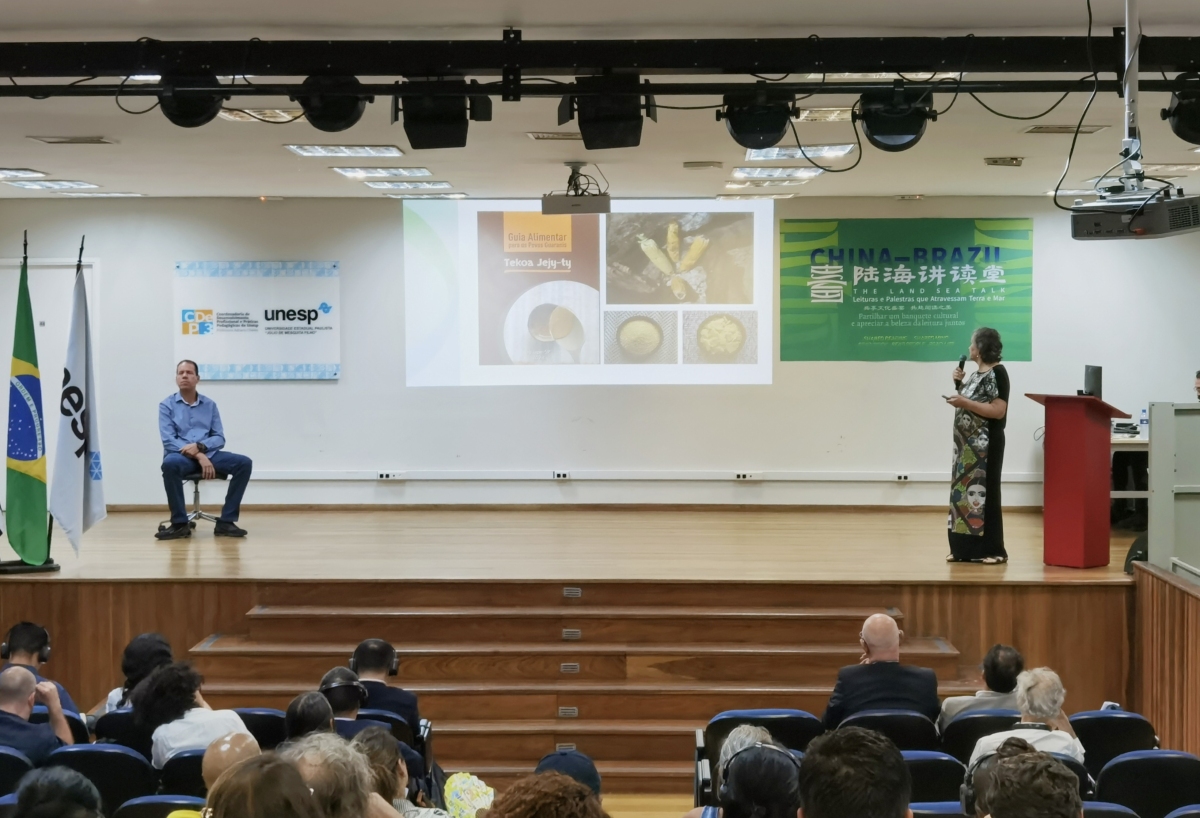
The "Land Sea Talk" makes its overseas debut. (Photo/Chongqing Municipal Press and Publication Bureau)
The overseas debut in Brazil is a key component of Chongqing’s strategy to expand the reach of its “Land Sea Talk” initiative, following successful participation at the Guadalajara International Book Fair in Mexico earlier last week. Together, the two stops form a continuous effort to promote cross-cultural understanding, publishing cooperation, and the development of a global shared reading network spanning Latin America.
At the Brazil session, Li Xinsheng, Director of the Research Center for History of Science and Technology at Southeast University, delivered the keynote reading titled “Corn, Sweet Potato, Potato: How Three Crops Redrew the Global Map and Shaped Agricultural Civilizations in China and Brazil.” His talk centered on a related volume from the “Land–Sea Library,” which examines how three staple crops reshaped China’s agricultural development within the broader context of global circulation. The book is one of the latest additions to the series, and this session marked its first systematic introduction in Latin America.
Li explained how potatoes, corn, and sweet potatoes—native to South America—were introduced to China centuries ago and triggered profound changes in agricultural productivity, population growth, and food security.
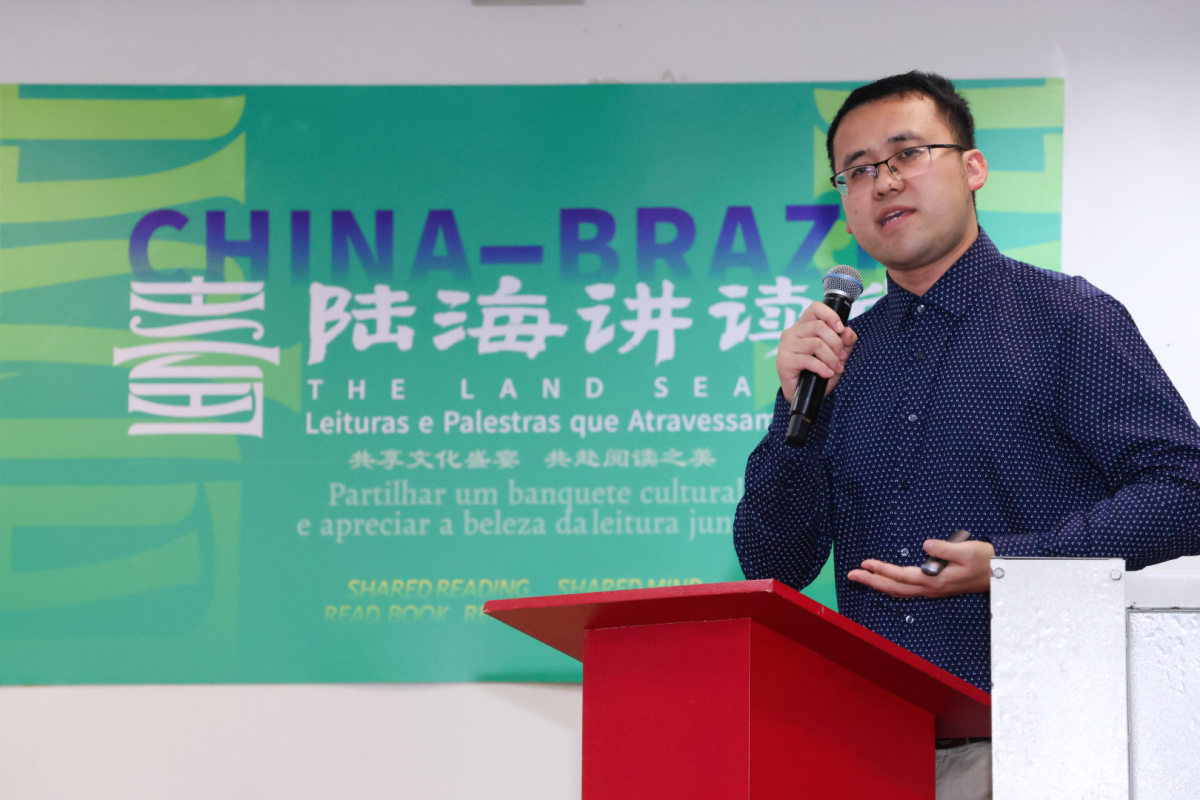
Li Xinsheng, Director of the Research Center for the History of Science and Technology at Southeast University, gives a reading session. (Photo/Chongqing Municipal Press and Publication Bureau)
“These crops were not just food,” Li noted. “They were engines of globalization. Understanding how they travelled and took root helps us understand how modern world connections were formed.”
The session explored the idea that small crops carry long histories, revealing how the movement of goods paved cultural pathways long before digital connectivity. Audience members remarked that everyday foods were suddenly reframed as messengers of civilization.
Students from the Confucius Institute expressed enthusiasm, “I’ve eaten potatoes all my life, but never imagined they carried global history inside them,” one attendee said. Another added, “Learning how crops connected our cultures made globalization feel tangible. I hope to join more activities like this.”
The event also produced concrete outcomes. Chongqing University Press signed a Portuguese-language copyright cooperation agreement with Brazil's Editora Anita Garibaldi for a book series on the global history of material circulation. A second agreement was reached with DWWeditorial for the Brazilian introduction of “The Competencies of the Winnicottian Therapist,” expanding bilateral publishing into new thematic territories.
Following the lecture, a roundtable on “Shared Reading & International Publishing Cooperation” brought together scholars, translators, and publishing houses from both countries. The dialogue focused on three key pathways: literary co-translation and classic exchange, joint publishing and resource collaboration, and innovation in reading promotion for the Global South.
The roundtable aims to accelerate two-way cultural circulation and incubate co-developed publishing projects with global readership potential.
The Brazil event concludes a three-day publishing mission across Mexico and Brazil, during which Chongqing publishers showcased more than 160 titles and signed several cooperation agreements.
Earlier at the Guadalajara International Book Fair, Chongqing’s striking cubic red booth—combining Latin color aesthetics with Chongqing Miao embroidery—drew widespread attention.
The exhibition introduced major works, including the “Six Perspectives of Chinese Modernization Series,” which illustrate China through fresh, diverse, and globally accessible narratives.
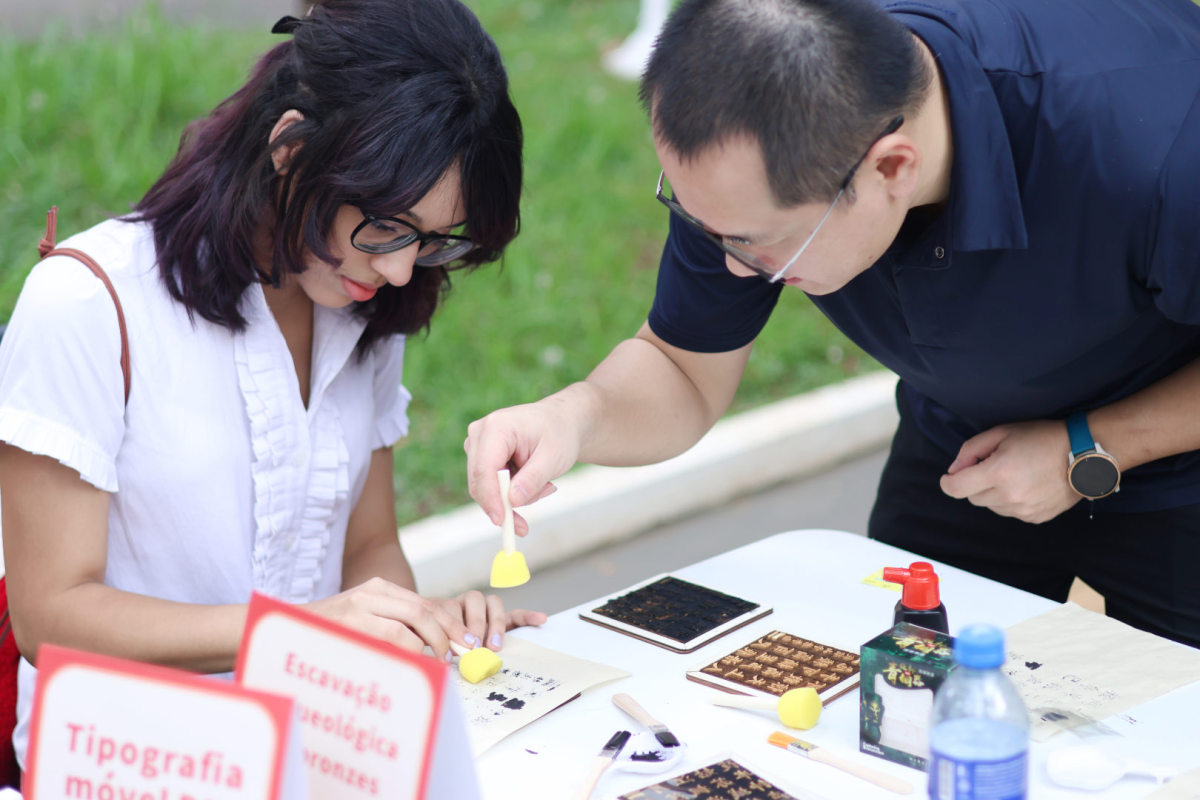
Students from the Confucius Institute of Universidade Estadual Paulista in Brazil experience movable-type printing. (Photo/Chongqing Municipal Press and Publication Bureau)
The combined Mexico–Brazil program marks the second consecutive year that Chongqing Publishing has entered Latin America, positioning the city as an active connector in the Global South cultural network.
Through the Land–Sea Reading platform, Chongqing aims to establish a long-term cooperative mechanism between Chinese and Latin American university presses. Over the next three years, efforts will focus on building a multi-national shared reading network, expanding international publishing partnerships, and advancing the application for UNESCO World Book Capital.
The event was jointly hosted by the Chongqing Municipal Press and Publication Bureau, and co-organized by Chongqing University Press and Southwest University Press, as an important part of the larger program “Reading Across the Land-Sea·Book-Fragrant Chongqing—2025 Chongqing Publishing's Trip to Mexico and Brazil.”
By continuing to browse our site you agree to our use of cookies, revised Privacy Policy and Terms of Use. You can change your cookie settings through your browser.
For any inquiries, please email service@ichongqing.info