
Chongqing - On December 19, Chongqing reported a 13.7% year-on-year trade growth in 2025, with total imports and exports reaching 719.3 billion yuan (about 102.1 billion U.S. dollars) in the first 11 months. Exports totaled 499.7 billion yuan, up 12.2%, while imports grew 17.2% to 219.6 billion yuan.
This performance in Chongqing aligns with China's broader trade momentum. China's trade surplus has reached a historic milestone, surpassing $1 trillion in the first 11 months of 2025, according to the General Administration of Customs.
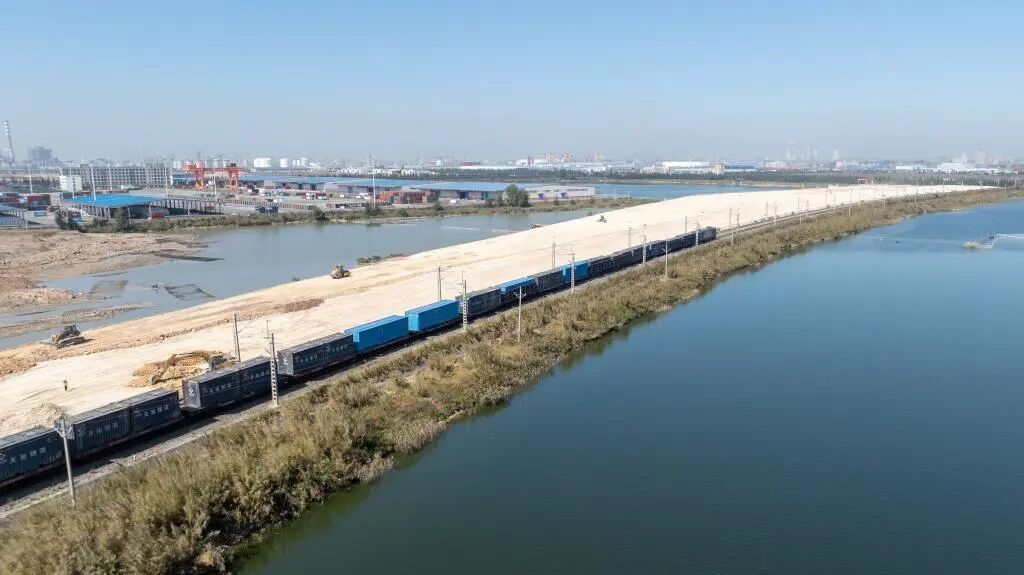
On November 29, a rail-sea intermodal train loaded with containers departs from the Qinzhou Port East Station, heading through the New International Land-Sea Trade Corridor. (Photo/New Land-Sea Corridor Operation Co., Ltd.)
According to Customs data, China's trade with ASEAN, its largest partner, totaled 6.82 trillion yuan in the first 11 months, with exports to ASEAN reaching 4.29 trillion yuan, up 14.6% year on year. Exports to the EU, China's second-largest partner, rose by 8.9% to 3.64 trillion yuan. Exports to the U.S., China's third-largest partner, fell 18.3% to 2.76 trillion yuan.
A notable shift in China's export composition is the rise of high-value products like machinery, electronics, and vehicles. Exports of mechanical and electrical products totaled 14.89 trillion yuan, accounting for nearly 61% of total exports. Integrated circuits grew by 25.6%, reaching 1.29 trillion yuan, while automobile exports increased by 17.6% to 896.9 billion yuan. In contrast, traditional labor-intensive goods such as clothing and plastic products saw a decline in exports.
According to industry insiders, China's trade success is rooted in its efficient supply chain and manufacturing capabilities. A representative from the Thai-Chinese Rayong Industrial Park, which specializes in automotive wire harnesses and connectors, explained that China's supply chain has become the go-to for many businesses. "We don't fear higher prices as much as we fear supply chain disruptions. China's ability to produce with consistent quality and meet our specific needs has kept our export orders stable," the representative said.
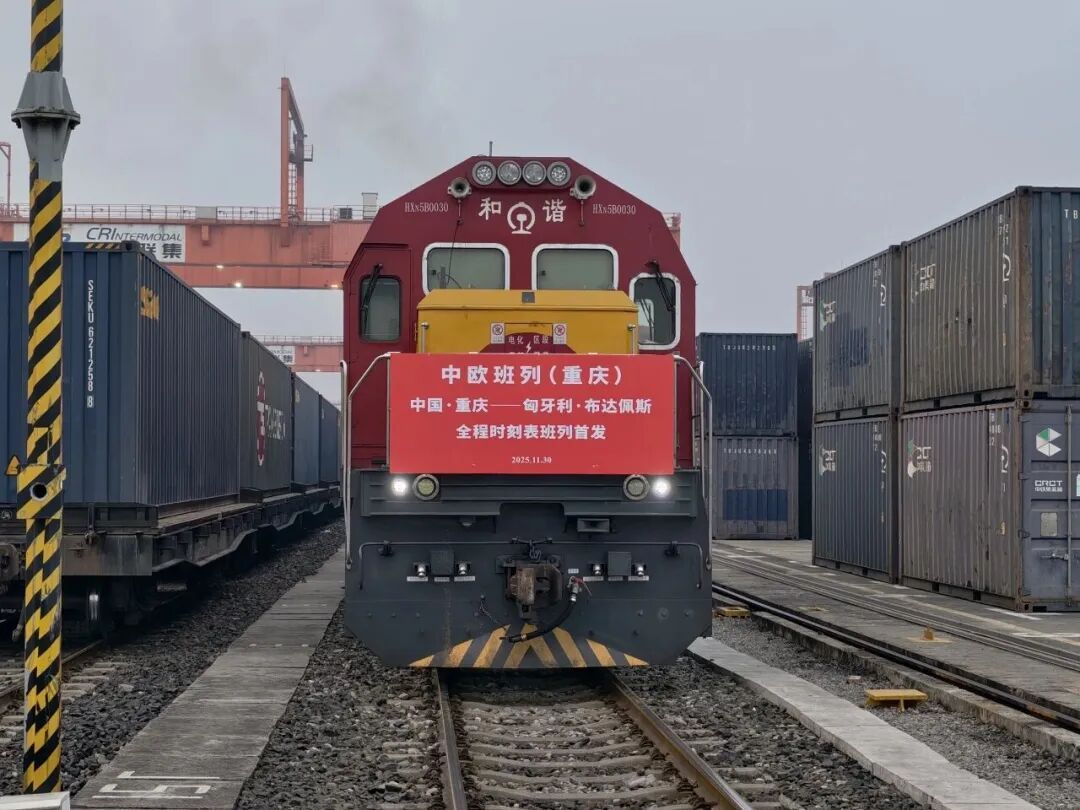 On November 30, a China-Europe Railway Express loaded with automotive parts, electronics, and daily goods departed from Chongqing Tuanjiecun Railway Station, heading towards Budapest, Hungary. (Photo/Chongqing International Logistics Hub Park)
Efficient international logistics channels are crucial for the supply chain, and as a key hub connecting the New International Land-Sea Trade Corridor (ILSTC), the China-Europe Railway Express, and the Yangtze River Golden Waterway, Chongqing plays a pivotal role in this network.
Customs data shows Chongqing's Trade with ASEAN surged 23.7%, reaching 120.7 billion yuan, solidifying ASEAN as the city's top trade partner. In addition, trade with Belt and Road co-building countries increased by 15.6%, totaling 330.4 billion yuan.
Chongqing remains China's top exporter of laptops, with exports valued at 137.85 billion yuan. Mobile phone exports rose 40.7% to 52.15 billion yuan, automotive exports increased 16.8% to 45.98 billion yuan, and electric vehicle exports surged 78.9% to 13.41 billion yuan.
"Imports of materials such as pulp, spodumene, and rubber from countries like Thailand, Mozambique, and Indonesia have surged, while exports from Chongqing, including generator sets, and from Guangxi, particularly auto parts, have experienced strong growth," said Zhao Jian, deputy director of the Qinzhou Port East Station of Guangxi Coastal Railway.
In recent years, the ILSTC has rapidly expanded, with scheduled rail routes growing from two in 2019, to 26 by 2025, connecting cities like Chengdu, Chongqing, and Guiyang to ports such as Fangchenggang and Qinzhou. Beibu Gulf Port has expanded its capacity through additional shipping channels and container berths, while Qinzhou Port's automated rail-sea terminal has boosted throughput and efficiency.
On a broader scale, the ILSTC also fostered industrial cooperation between China and its neighboring countries. "This corridor is a bridge to prosperity for many of the countries along its route. It connects businesses and communities, promoting stability and growth," said Thammanat Prompao, Deputy Prime Minister of Thailand, at the Forum on Economic Development Along New International Land-Sea Trade Corridor.
On May 16, Changan Automobile launched its first overseas NEV plant in Rayong, Thailand, marking Chongqing's first overseas NEV base. The factory includes five smart workshops with an initial capacity of 100,000 vehicles. Changan will also establish seven capability centers in Thailand, including a global right-hand-drive parts center for markets such as Thailand, Australia, and New Zealand.
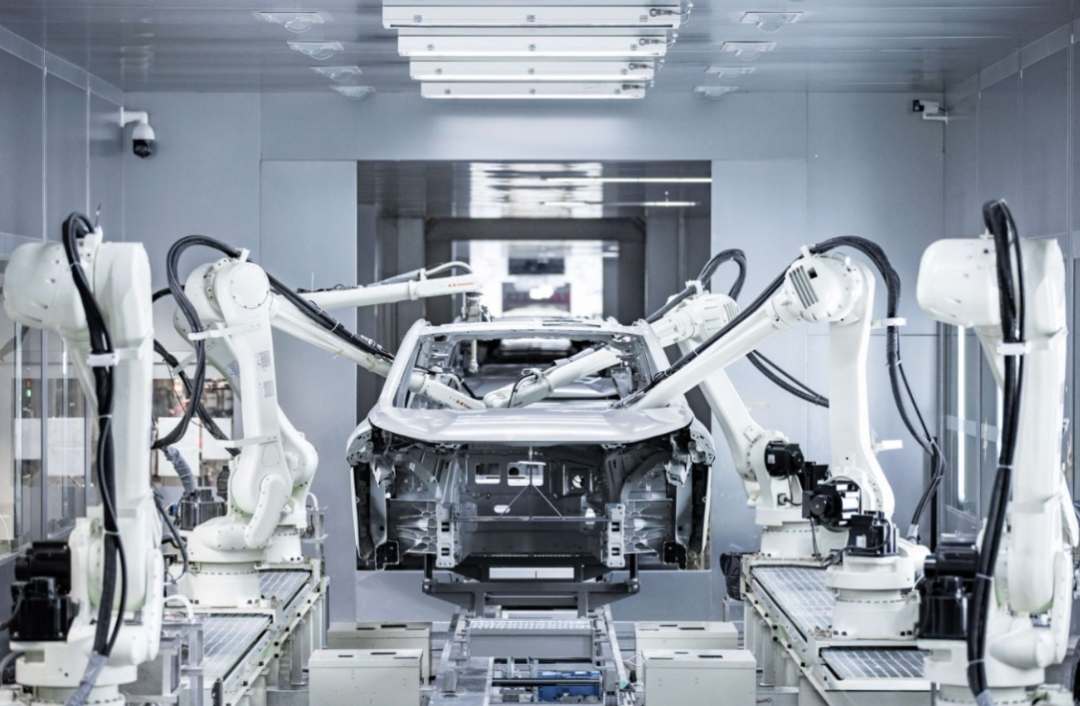
At Changan's Rayong factory in Thailand, a Deepal S05 right-hand drive version is on the production line. (Photo/Changan Automobile)
Wang Ming of the China Macroeconomic Research Institute put it this way: "The corridor is poised to become a critical driver of economic integration across regions, linking domestic and international markets in ways that will foster continued growth and industrial development."
By continuing to browse our site you agree to our use of cookies, revised Privacy Policy and Terms of Use. You can change your cookie settings through your browser.
For any inquiries, please email service@ichongqing.info