
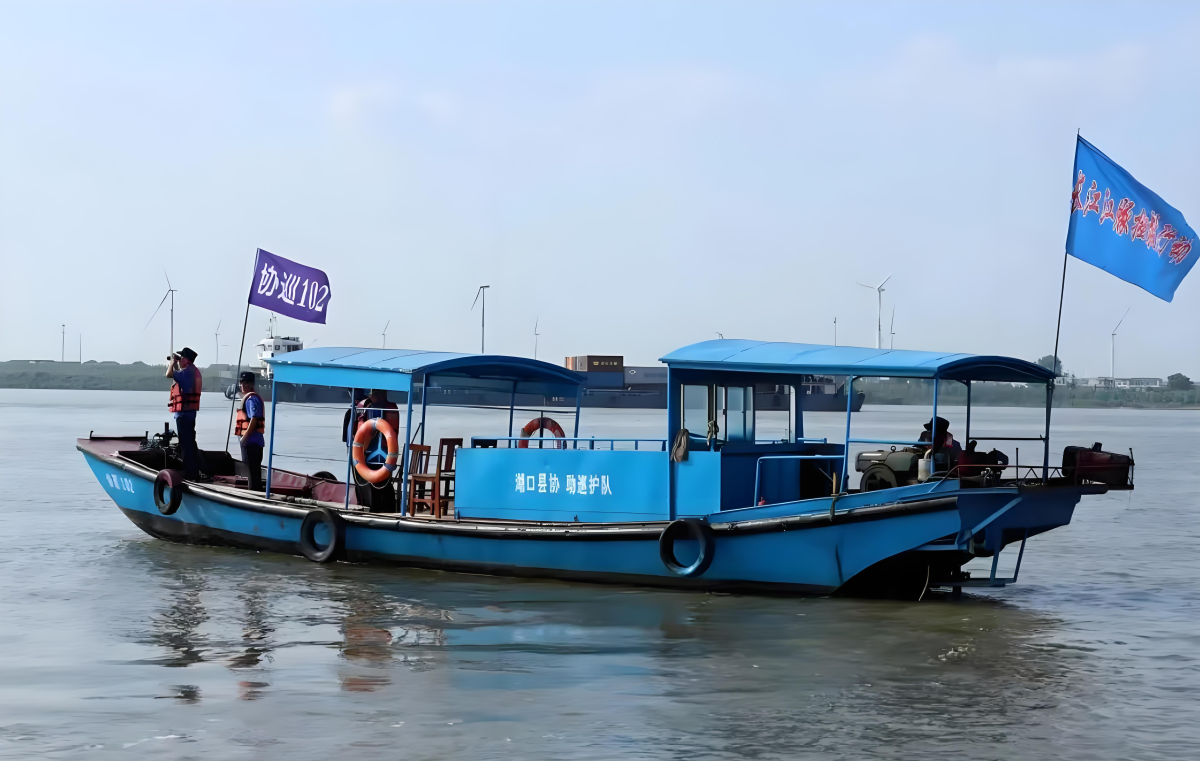
The patrol team members are responsible for patrolling the river. (Photo/Changjiang Conservation Foundation)
Chongqing - As ecological protection along the Yangtze River grows more urgent, Jiangxi Hukou County has formed a patrol team to protect biodiversity, focusing on the biological resources and combating illegal fishing. Team captain Shu Yin'an has seen the team's key role in ecosystem protection since its establishment.
Hukou, located at the outlet of Poyang Lake where it flows into the Yangtze River, serves as an important passage for aquatic species such as Yangtze finless porpoises migrating between Poyang Lake and the main Yangtze River. It also marks the boundary between the mid and lower reaches of the Yangtze River.
Yangtze finless porpoises, rare aquatic mammal endemic to the river, is listed as "Critically Endangered" by the International Union for Conservation of Nature (IUCN). It is the only surviving cetacean species in the Yangtze River.
According to the 2022 scientific survey by China's Ministry of Agriculture and Rural Affairs, the population of Yangtze River dolphins is approximately 1,249, showing signs of recovery compared to 2017.
In 2017, as part of the larger Yangtze River ecological protection policy, Changjiang Conservation Foundation (CCF), under the guidance of the Ministry of Agriculture and Rural Affairs, launched a pilot program for a collaborative patrol system. The program aimed to transform fishermen into protectors to assist fisheries departments in tackling illegal fishing and protecting aquatic species such as Yangtze finless porpoises.
Hukou quickly responded to the call and, in 2017, organized a patrol team made up of local fishermen. This team, supervised by the fisheries authorities, became the first official collaborative patrol team in the Yangtze River Basin.
Shu Yin'an was among the first members of the patrol team and, following the retirement of the previous captain, he took over as the team leader. At 57 years old, Shu Yin'an comes from a fishing family. He started fishing with his parents in Poyang Lake at a young age and continued as a fisherman until 2017. He has personally witnessed the rise and fall of local fishery resources.
He recalled that the once-plentiful Yangtze River delicacy, the shad, nearly disappeared after the 1990s, and the number of fish species has steadily declined since then. The spread of destructive fishing techniques, such as electric fishing, made him realize that even in a resource-rich area like Poyang Lake, continued destructive fishing could eventually lead to the depletion of these resources.
Since Shu began working to protect fish, he has remained on the front lines with his team, braving harsh winters and scorching summers. In the first three years, as fishermen had not yet fully transitioned to land-based livelihoods and a ten-year fishing ban had not been implemented, illegal fishing teams from outside counties in the Hukou water area was rampant, and illegal fishing cases were frequent.
By the end of 2020, all fishermen in Hukou and surrounding counties had transitioned to land-based work, reducing illegal fishing activities from outside areas. However, new threats emerged, such as the potential harm to Yangtze finless porpoises from fishing tools like anchor hooks and explosive hooks. Shu and his team began raising awareness about protection among fishermen, and with his patient guidance, more and more volunteers joined the effort to protect the Yangtze River's ecosystem.
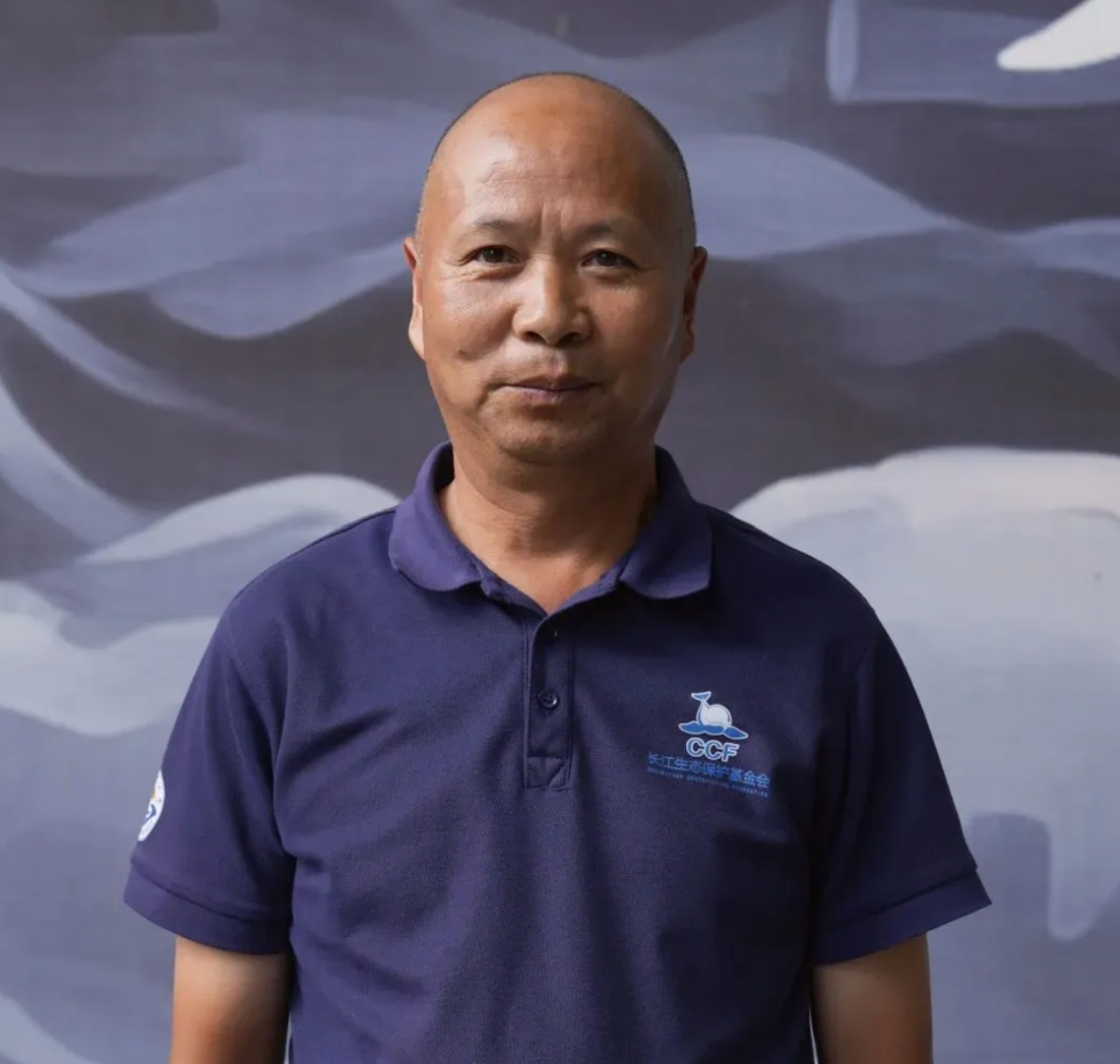
Shu Yin'an is currently the captain of the Hukou patrol team in Jiangxi Province. (Photo/Changjiang Conservation Foundation)
In addition to forming the patrol team, Hukou works to develop the "Yangtze Finless Porpoises Bay" brand, exploring ways to integrate protection with eco-tourism for economic development. Shu Yin'an remarked, "We want visitors from across the country to come here and see Yangtze finless porpoises living happily. Our patrol team will continue to assist the fisheries department in eliminating any potential threats to the dolphins' safety."
(Credit to Yangtze Ecology and Environment Conservation Foundation)
By continuing to browse our site you agree to our use of cookies, revised Privacy Policy and Terms of Use. You can change your cookie settings through your browser.
For any inquiries, please email service@ichongqing.info