
Chongqing - A cutting-edge project to digitally preserve the ancient Baiheliang underwater inscriptions in Chongqing has been selected for Tencent's NextGen "Explore Origin" Program, marking a significant advance in the use of artificial intelligence to protect cultural heritage beneath the waves.
The project, titled "Smart Protection of Baiheliang: Multimodal AI Restoration of Millennia-Old Underwater Inscriptions," brings together millimeter-level precision scanning and multimodal AI restoration technologies. Through this collaboration, deeply submerged inscriptions are expected to gain new life in the digital world, opening a pathway for technology-empowered preservation of underwater heritage.
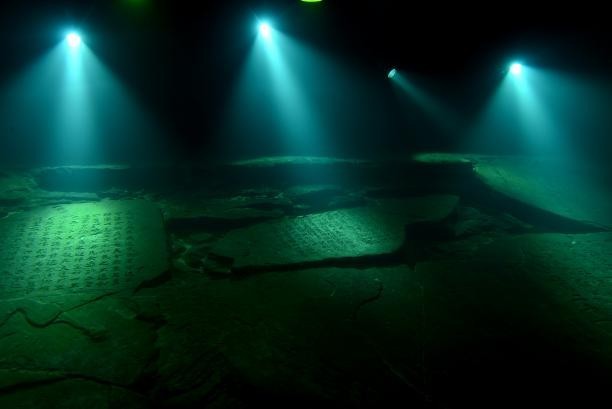
Current Preservation Status of the Baiheliang Stone Inscriptions. (Photo: Chongqing Baiheliang Underwater Museum)
Jiang Rui, Director of the Chongqing Baiheliang Underwater Museum, said the project's ultimate goal is to create a "high-definition underwater imaging and 3D deterioration dataset of the Baiheliang inscriptions." This dataset will underpin future efforts in digital archiving, museum exhibitions, and immersive virtual experiences related to the site.
Located on the Yangtze River, the Baiheliang inscriptions are often described as a "hydrological diary carved in stone," documenting water levels over centuries while also embodying significant scientific, historical, and artistic value. The site was added to UNESCO's World Heritage Tentative List in 2008 and, in 2025, was included in China's National Documentary Heritage Register.
To preserve the inscriptions in situ, the Baiheliang Underwater Museum opened in 2009, using an innovative "non-pressure vessel" design that allows visitors to access the submerged site without diving. The project earned global recognition from UNESCO as the world's first non-diving-accessible underwater heritage museum.
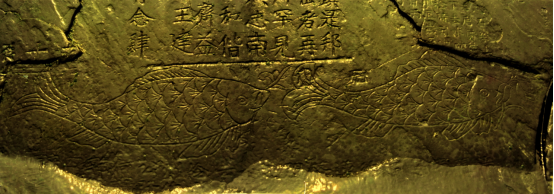
Stone inscriptions on Baiheliang. (Photo: Chongqing Baiheliang Underwater Museum)
Despite these achievements, long-term submersion has exposed the inscriptions to ongoing natural deterioration. Factors such as pH levels, dissolved oxygen, turbidity, microbial activity, and algae growth have caused flaking text, blurred carvings, rock fractures, and surface encrustations. In some cases, characters and decorative patterns have become challenging to identify.
Traditional conservation methods face severe constraints. Current monitoring and data collection still rely heavily on professional divers operating in confined underwater spaces, where water levels, pressure, and safety risks severely limit working time and data quality. Comprehensive, close-range, high-resolution documentation of all inscriptions remains difficult to achieve. At the same time, their underwater location restricts public access and limits innovative forms of cultural display.
The newly launched project aims to overcome these challenges by establishing a digital preservation system centered on 3D reconstruction of the real underwater environment, supported by intelligent data acquisition and AI-based restoration.
Using multispectral imaging and active light scanning, the team plans to penetrate turbid waters and counteract light refraction and absorption, ultimately capturing clear underwater imagery and high-precision 3D point-cloud data at millimeter accuracy. Advanced 3D reconstruction techniques—such as next-generation Gaussian splatting—will then be applied to build a highly accurate digital twin of the inscriptions and their micro-environment.
On this digital foundation, a multimodal AI virtual restoration engine will play a central role. By integrating image enhancement, deterioration recognition, and intelligent character identification, the system will process and analyze digitized inscriptions in depth. AI models will assist in recognizing blurred or damaged characters and, drawing on historical texts and contextual semantics, propose reasoned reconstructions—while striving to preserve historical authenticity and scholarly rigor.
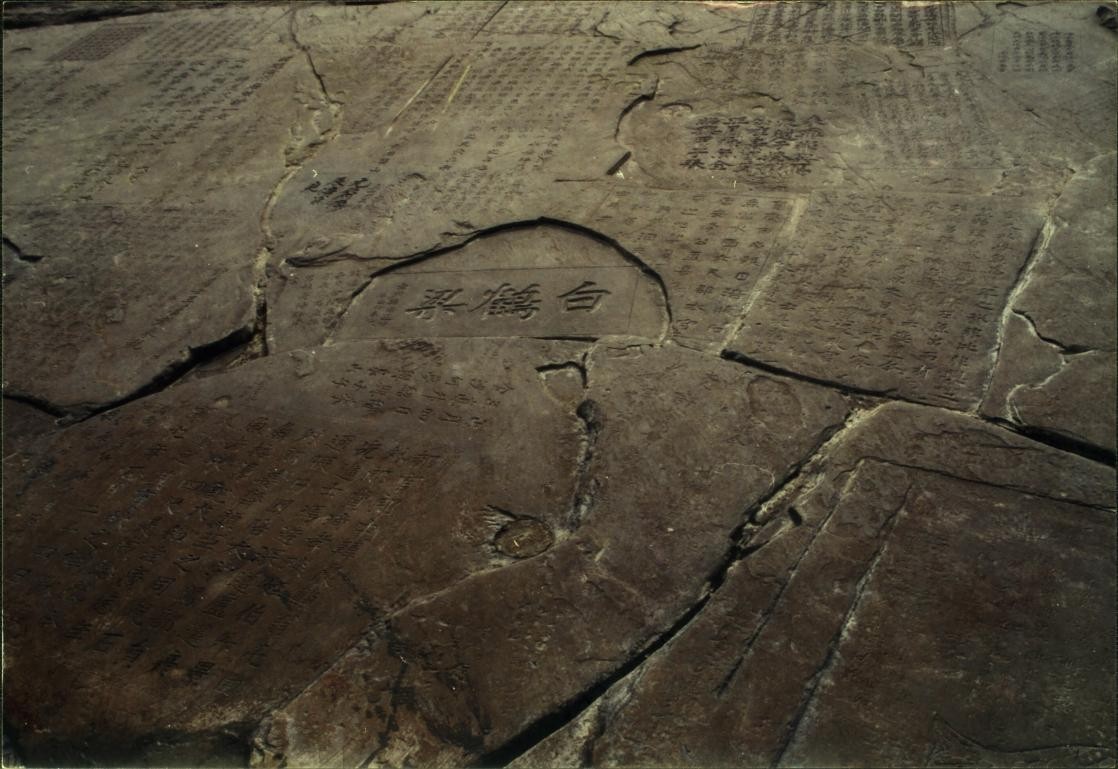
Stone inscriptions on Baiheliang. (Photo: Chongqing Baiheliang Underwater Museum)
According to Jiang Rui, the project's significance extends far beyond a single heritage site. It is expected to generate replicable solutions for the broader protection of underwater cultural heritage.
Planned outcomes include a comprehensive high-definition imaging and 3D deterioration dataset, underwater image enhancement models, deterioration recognition algorithms, and AI-based inscription identification and restoration models. At the systems level, the partners intend to build a digital restoration and knowledge management platform that integrates restoration data, version control, and expert review workflows.
The project also aims to draft Guidelines for Intelligent Data Acquisition and Processing of Immovable Underwater Cultural Heritage, contributing to future industry standards. In addition, high-precision digital archives and comparative visualization reports will support joint World Heritage nomination efforts involving the Baiheliang inscriptions and Egypt's Roda Nilometer, creating a digital bridge for cross-civilizational dialogue.
To support the initiative, the museum will provide approximately 11,000 characters of inscription texts and rubbings for AI training, open the underwater museum as a technical testing and exhibition platform, and engage experts in underwater archaeology, conservation, and historical research throughout the project.
From smart archaeology and digital exhibitions to educational engagement and digital asset development, the collaboration between Baiheliang and Tencent seeks to connect the entire chain of heritage protection, research, presentation, and utilization. More than restoring fragmented characters, the project aims to reconstruct a "submerged forest of stone steles" in the digital realm—allowing a thousand years of hydrological data, calligraphy, and historical memory to be experienced, understood, and passed on to future generations.
By continuing to browse our site you agree to our use of cookies, revised Privacy Policy and Terms of Use. You can change your cookie settings through your browser.
For any inquiries, please email service@ichongqing.info