
Chongqing - Chongqing is accelerating the modernization of urban governance as it manages the complex demands of a rapidly growing inland megacity, officials said on January 28 at a themed press conference held during Chongqing's Two Sessions.
Members of the Sixth Chongqing Municipal Committee of the Chinese People's Political Consultative Conference outlined how the city is leveraging digital systems, integrated management mechanisms, and people-centered public services to improve efficiency, resilience, and quality of life.
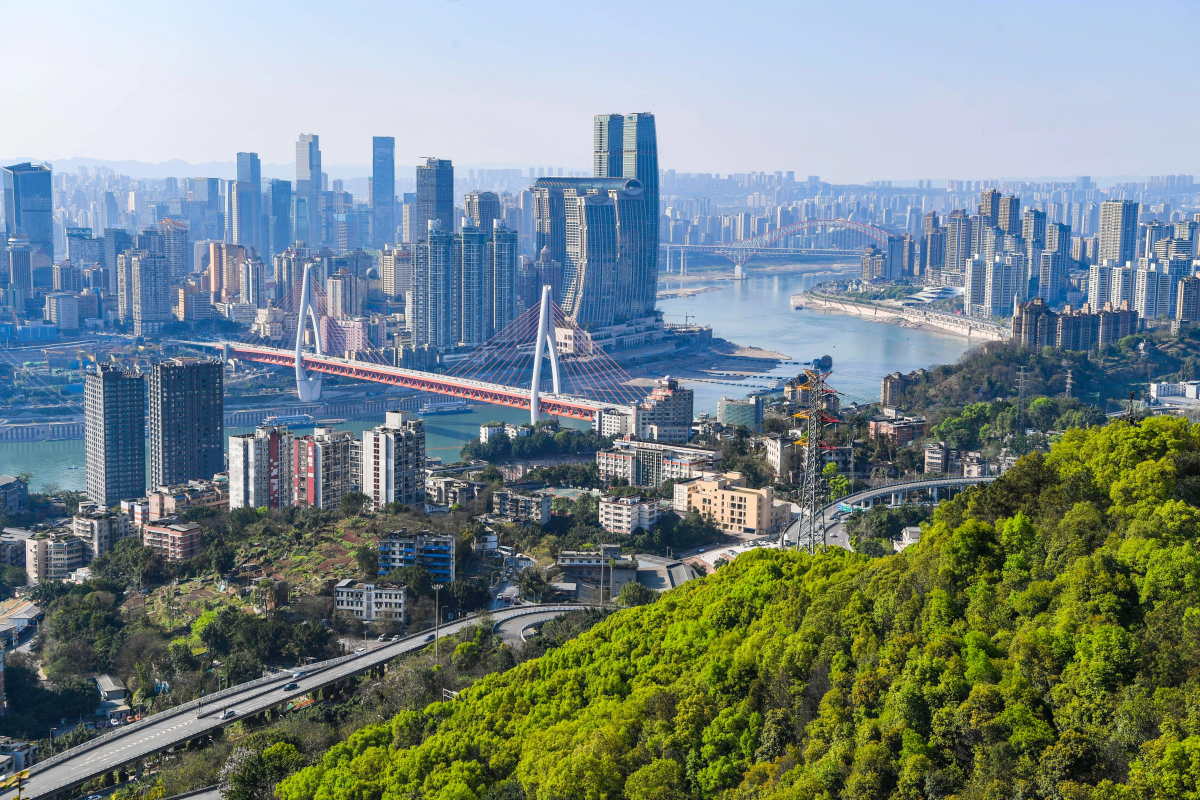
The landscape of Chongqing. (Photo/Chongqing Nan'an District)
Li Changliang, a member of the Chongqing Municipal Committee of the Chinese People's Political Consultative Conference and deputy director of the Chongqing Municipal Urban Management Bureau, outlined progress made over the past year, noting that the city has adopted a dual approach combining digital intelligence empowerment with institutional innovation to strengthen urban governance. He said this strategy has shifted governance from isolated pilot projects to coordinated, system-wide applications across the city.
Li said that Chongqing has optimized its governance framework through the “one committee, one office, one platform” structure. Under this model, city-, district-, and county-level governance bodies operate in an integrated manner, using unified command systems to coordinate emergency response, environmental management, traffic operations, and law enforcement.
Officials said the integrated framework has been nationally recognized as a leading innovative case in administrative reform. Chongqing has also established a unified geographic information system that integrates both 2D and 3D spatial data for urban planning and risk monitoring. The city reported it was the first in China to achieve this level of spatial data integration, enabling urban planners and emergency responders to work from a shared digital map.
Li added that in October 2025, Chongqing hosted the 2025 World Cities Day China Observance, which drew more than 3,000 domestic and international participants. During the event, the city released reports and initiatives aimed at sharing its governance experience with a global audience.
Officials also highlighted the development of Chongqing’s citywide digital resource system, which links municipal, district, county, and subdistrict levels. The system supports a wide range of digital applications used by governance centers at multiple levels, with more than 85 percent of government services now accessible online. Li said the platform enables rapid, real-time responses to citizen requests and urban issues.
Chongqing has further advanced its governance capacity through the launch of an “AI Plus” action plan and a three-year initiative to integrate artificial intelligence into urban management. Initial governance-oriented AI models have been developed, and the city has secured national pilot status for multiple high-quality datasets and trusted data spaces.
Addressing urban resilience, Li said the city has integrated more than 130 categories of monitoring data, including weather, hydrology, and geological risk indicators. More than 30,000 risk points have been identified and are now digitally monitored. He cited the completion of a digital twin system covering over 62,500 kilometers of underground pipelines, which reduced pipeline damage incidents by 70 percent year-on-year in 2025.
Officials reported that Chongqing managed 29 rounds of heavy rainfall and more than 10 heatwave periods last year with fewer major disruptions. Fire safety outcomes also improved, with the city recording zero major accidents for 60 consecutive months following upgrades to its emergency command systems.
The press conference also highlighted efforts to enhance urban livability. In 2025, Chongqing launched 26 urban renewal projects and renovated more than 1,200 older residential communities, benefiting over 300,000 households. Officials said the city ranked first nationwide among pilot cities in urban renewal performance.
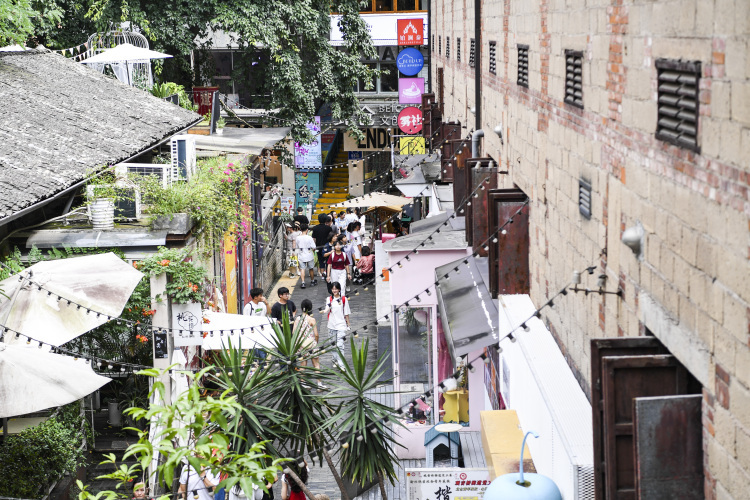
Tourists visit the Beicang Cultural and Creative Street in Chongqing. (Photo/Wang Quanchao)
Transportation upgrades included the optimization of nearly 300 bus routes, the addition of 210,000 parking spaces, and the installation of 12,000 electric-vehicle charging facilities. Peak-hour traffic speeds in central urban areas increased by 3.1 percent, according to Li Changliang.
Environmental monitoring has also been strengthened. Chen Yonglin, a member of the Chongqing Municipal Committee of the Chinese People's Political Consultative Conference and deputy director of the Ecological Environment Monitoring Division of the Chongqing Ecology and Environment Bureau, said the city now operates 177 air-quality monitoring stations, supported by satellites, drones, and mobile monitoring equipment.
Chen noted that Chongqing has recorded more than 325 days of good air quality annually for six consecutive years, with PM2.5 concentrations down 20 percent compared with the previous five-year period.
Looking ahead, he said the city aims to further reduce PM2.5 levels to below 30 micrograms per cubic meter during the 15th Five-Year Plan period, highlighting the role of enhanced monitoring in enabling more precise and effective pollution control.
By continuing to browse our site you agree to our use of cookies, revised Privacy Policy and Terms of Use. You can change your cookie settings through your browser.
For any inquiries, please email service@ichongqing.info