Chongqing - Chongqing is set to add 162 new neighborhood sports facilities by transforming underused spaces beneath urban bridges, as the city moves to bring fitness amenities closer to residents and make better use of limited urban land.
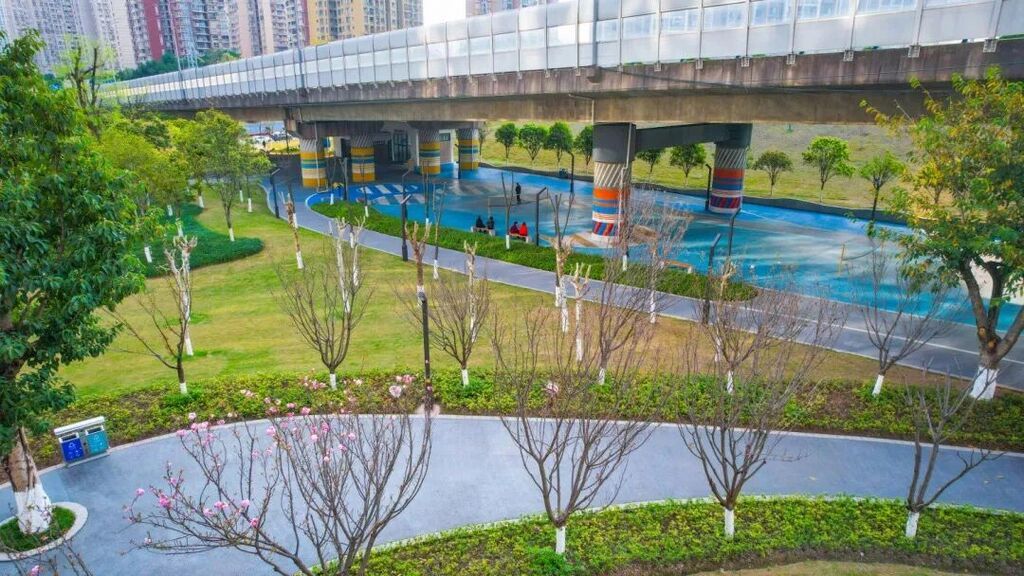
Residents exercise and work out at a park beneath the Yulu Elevated Bridge. (Photo/Chongqing Municipal Sports Bureau)
The initiative comes as Chongqing steps up efforts to develop both mass participation sports and competitive athletics. According to the 2026 work report of Chongqing Municipal People’s Government, the year marks the start of the 15th Five-Year Plan period (2026-2030), with public fitness identified as a key priority. Against this backdrop, city authorities are exploring new ways to integrate sports infrastructure into everyday urban life.
Known as China’s “Bridge Capital,” Chongqing’s dense network of river crossings, overpasses and elevated roads has created large areas of idle space beneath them. These once-overlooked areas are now being reimagined as community sports venues.
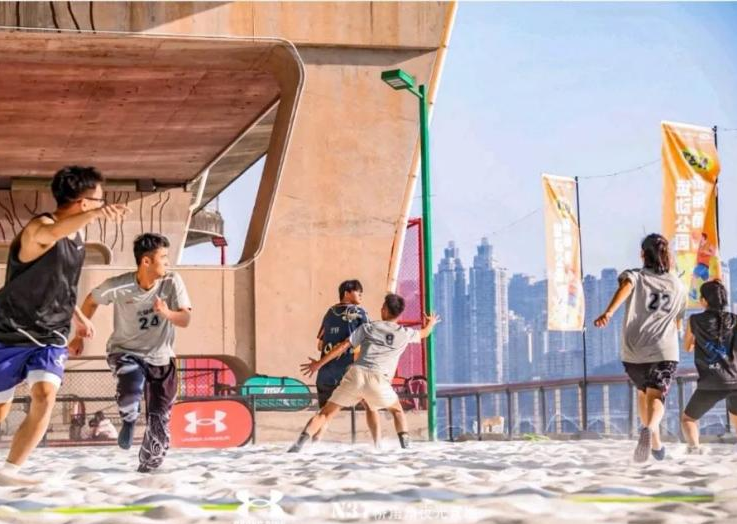
An example of under-bridge space utilization at the Yurenwan Wharf section of Beibin First Road in Liangjiang New Area. (Photo/Chongqing Municipal Sports Bureau)
Recently, the Chongqing Municipal Sports Bureau, with support from several related departments, including urban management, planning and transport authorities, released a guideline for the planning and construction of sports facilities under bridges in downtown Chongqing. The document aims to tap into under-bridge resources to meet residents’ demand for convenient, nearby fitness options while improving the efficiency of urban space use.
Under the plan, suitable spaces beneath five types of bridges—including river-crossing bridges, overpasses, and rail transit bridges—will be developed for sports use. The guideline emphasizes six core principles: safety, environmental sustainability, public convenience, phased implementation, diversified investment and quality improvement. Facilities will be designed to serve all age groups, with tailored solutions for ball courts, fitness trails, and exercise equipment based on each site's specific conditions.
A total of 162 sites have been identified across the city’s central districts, covering older neighborhoods and newly developed areas that currently lack sufficient sports facilities. Construction will be rolled out in stages from 2025 to 2030, with all sites scheduled for completion during the 15th Five-Year Plan period.
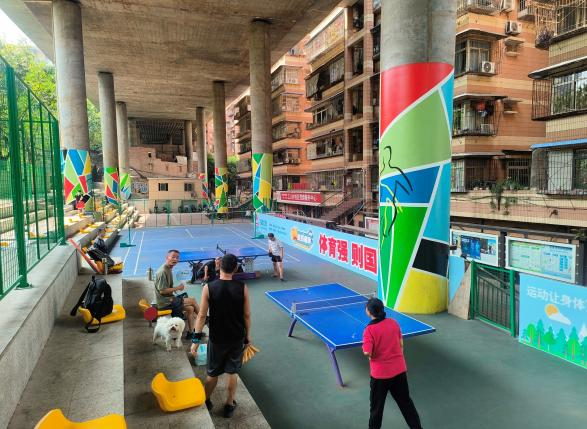
An example of under-bridge space utilization at the Longquan Road interchange in Shapingba District. (Photo/Chongqing Municipal Sports Bureau)
In the near term, 12 pilot projects will be launched in Beibei District, Liangjiang New Area, Jiulongpo District and Shapingba District. Covering a combined area of about 34,760 square meters, these projects will focus on family-friendly sports spaces and compact community sports parks, with the latter to be expanded citywide.
The guideline also encourages participation from diverse market players and emphasizes government guidance and public involvement in use and maintenance. Projects that meet relevant standards after evaluation may qualify for construction subsidies under existing policies, helping ensure sustainable operation.
Officials say the program provides a clear roadmap to revitalize idle urban spaces and expand Chongqing’s public fitness network. By turning neglected corners into vibrant community sports grounds, the city aims to make physical activity a natural part of daily life—and ensure that urban development truly serves residents’ well-being.
By continuing to browse our site you agree to our use of cookies, revised Privacy Policy and Terms of Use. You can change your cookie settings through your browser.
For any inquiries, please email service@ichongqing.info