
Chongqing - Across Chongqing, former landmarks, aging factories, and overlooked alleyways are being brought back to life.
A once-quiet sports complex with a vacancy rate above 30 percent is preparing for a comeback. An abandoned industrial plant now hums with startups and coffee shops. A neglected factory road has turned into a lively night market for young entrepreneurs.
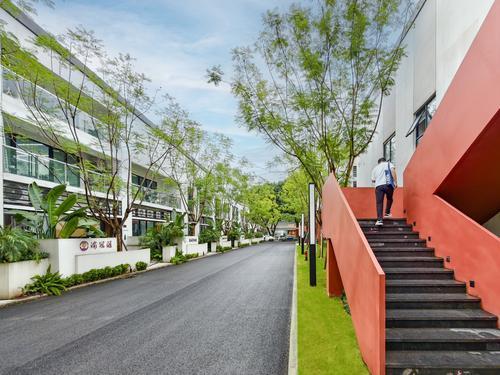
In the Liangjiang New Area, the former abandoned industrial plant has been reborn as Sanlang Park No.6. (Photo/Liu Li, Visual Chongqing)
These transformations are part of Chongqing's broader urban renewal drive, where underused assets are being converted into public service hubs, mixed-use living spaces, and new economic engines. According to the Chongqing Municipal Commission of Housing and Urban and Rural Development, the city plans to revitalize another 9 million square meters of idle space this year alone.
Once one of Chongqing's earliest large-scale sports venues, the 69,000-square-meter Lifan Yanghe Sports City opened in 2006 and quickly became a fitness landmark. Over time, however, aging facilities, high operating costs, and shifting consumer habits took their toll. After the bankruptcy of its original owner, the complex’s vacancy rate climbed above 30 percent, and the once-vibrant venue fell into decline.
In 2021, the site was taken over for renewal and reintroduced as "Yanghe No.6." The challenge, project leaders say, was twofold: preserving the emotional memory many residents associated with the place—especially badminton—and repositioning it within a highly competitive commercial district.
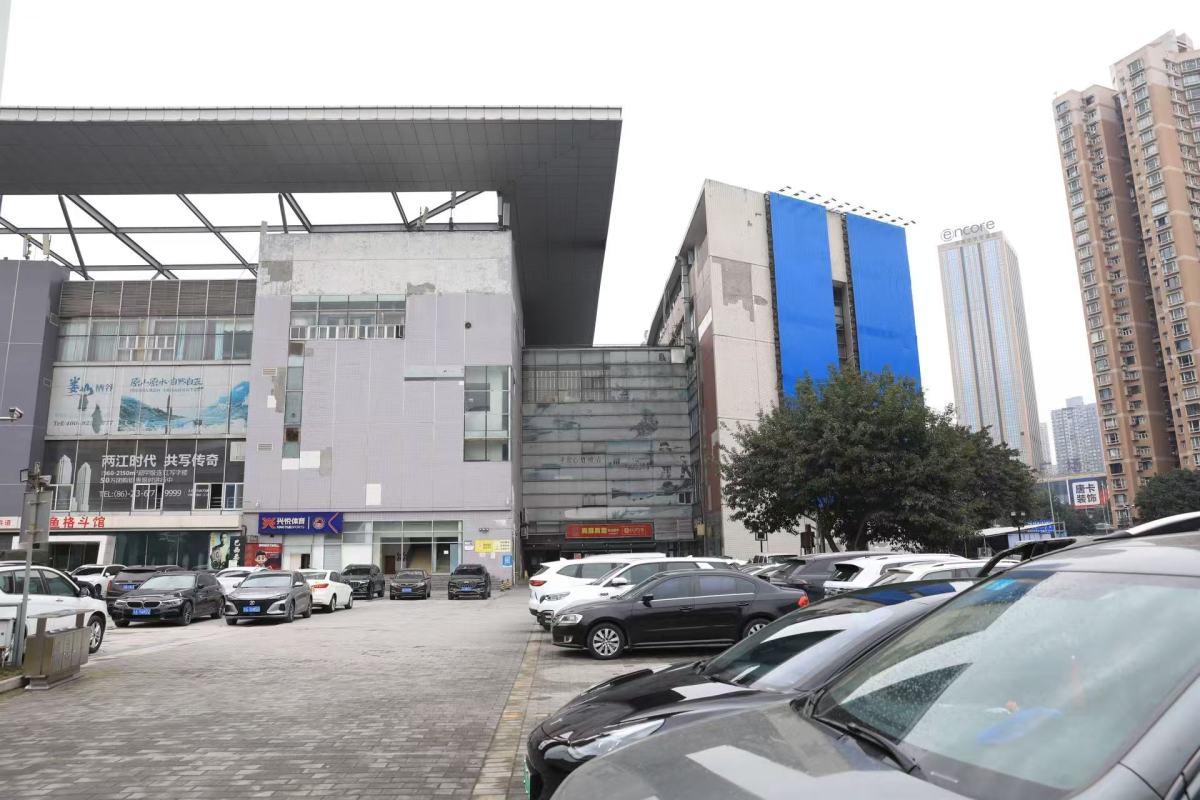
Yanghe Sports City before renovation. (Photo provided by the interviewee)
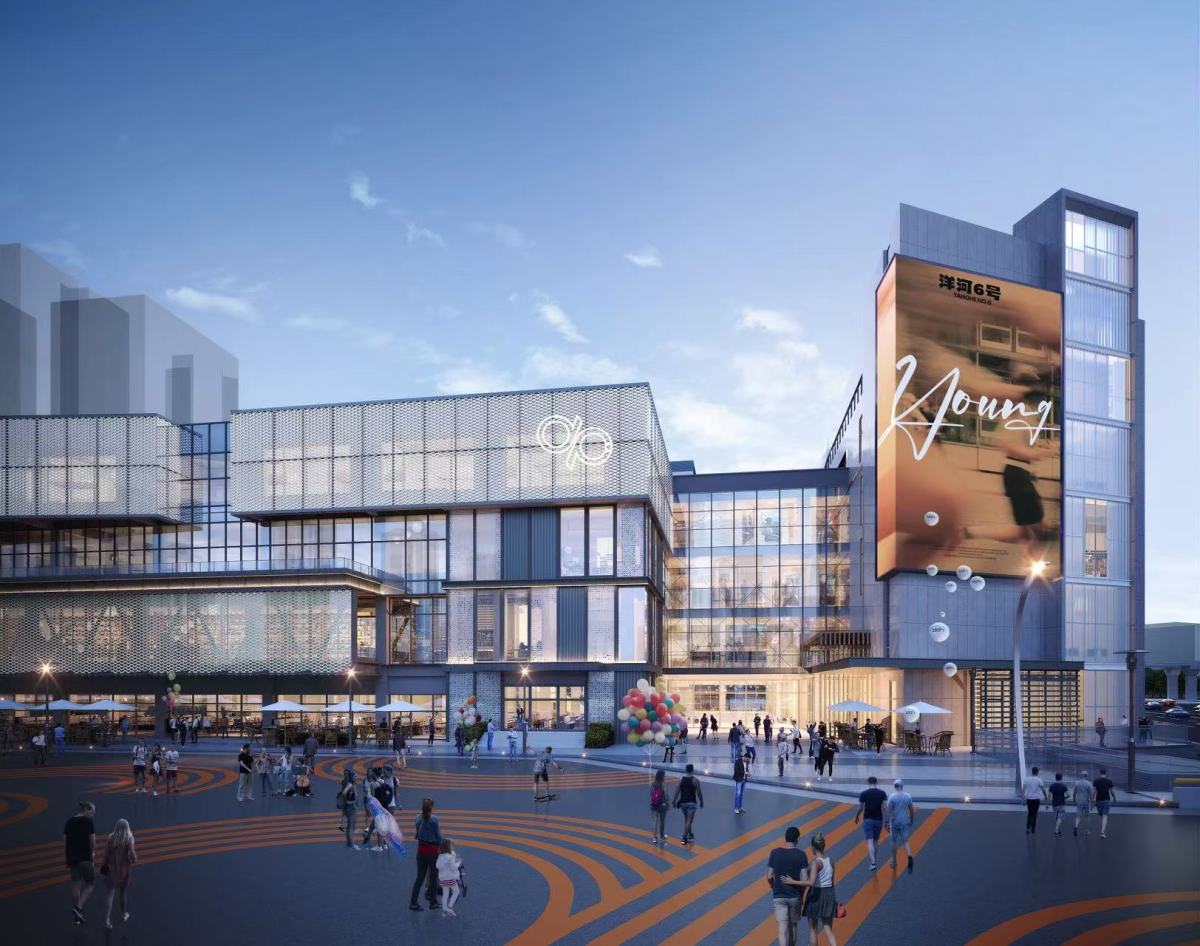
Rendering of the renewed "Yanghe No.6." (Photo provided by the interviewee)
The answer was not to compete as a conventional mall, but to rebuild around its sporting DNA. The redevelopment includes a 4,000-square-meter badminton center, upgraded in partnership with Olympic champion Li Xuerui, as well as swimming, skateboarding, fencing, boxing, and fitness facilities for younger users. A cinema, supermarket, and family-friendly public areas were also retained or added in response to neighborhood feedback.
About 60 percent of the renovation and leasing work is now complete, with a full reopening expected by the end of the year. The project is Chongqing's first systematic urban renewal effort centered on a "sports + commerce" model.
In the Liangjiang New Area, the former Naide Industrial Plant has been reborn as Sanlang Park No.6, a leafy office park where the scent of coffee has replaced that of machine oil.
Rather than demolishing and rebuilding, operators adopted a “protective renovation” approach, preserving the industrial structure while introducing light corridors, lawns, and waterside landscaping. The site’s 45 century-old trees and proximity to rail transit became defining assets. Coffee shops and tea spaces were added to foster a “work + life” community atmosphere.
A key innovation was separating ownership from operations: the property remains owned by the original enterprise, while a professional team leases and runs the park. Despite constraints such as limited parking—typical of older factory layouts—the park now hosts more than 140 companies in technology, design, and livestreaming, maintains a 95 percent occupancy rate, and generates nearly 1.2 billion yuan (about 173 million USD) in annual output.
Elsewhere in Chongqing, similar projects are unfolding. Former factories have become cultural and creative hubs, drawing bookstores, studios and sports venues into once-silent industrial shells.
Large complexes may reshape urban functions, but it is the renewal of tiny, overlooked plots that most directly affects daily life.
In Shapingba District, a 300-meter lane known as Yixin Lane was once little more than a leftover factory road lined with aging apartments and idle land. In late 2024, it was included in Chongqing’s pilot program for “15-minute high-quality living circles.”
Overhead cables were reorganized, the road widened and pedestrian-vehicle separation introduced. More importantly, a neglected open lot was transformed into a 220-square-meter “public living room” that combines a smart community center, teahouse, and activity space. Affordable after-school care is now available to local children there each day.
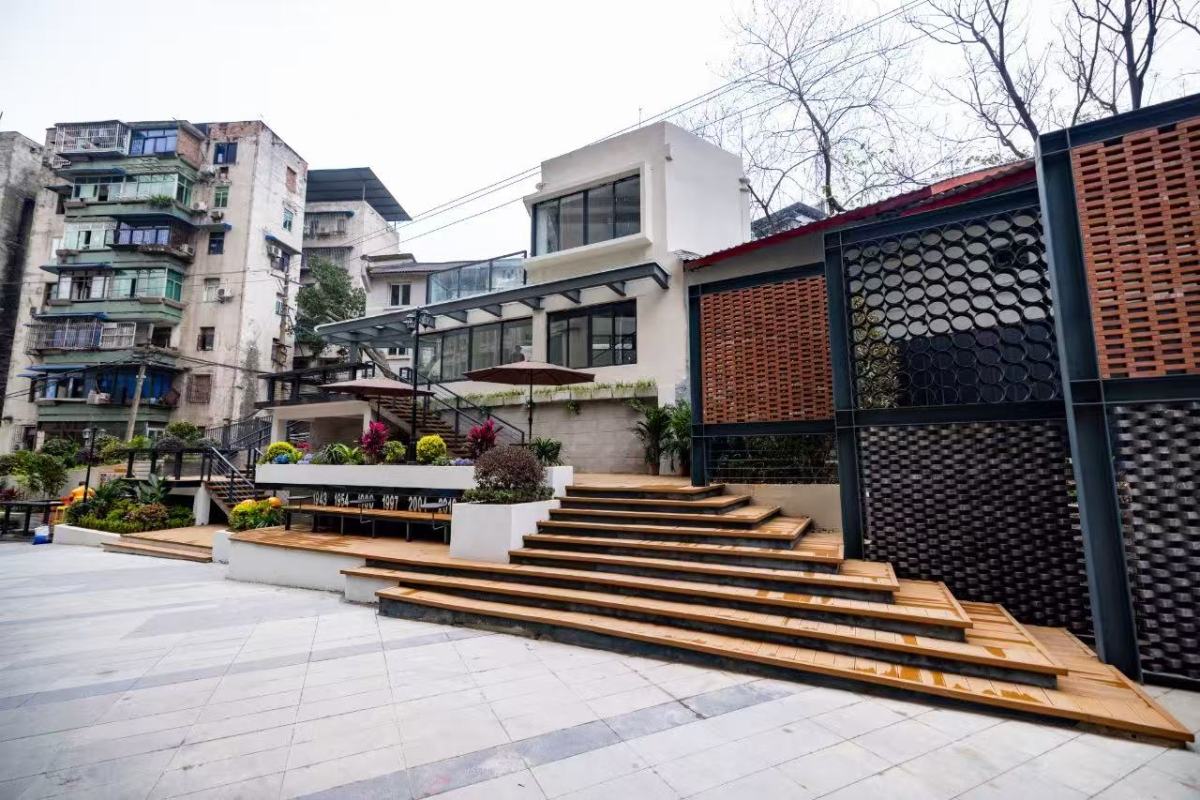
Yixin Lane. (Photo/Chongqing Municipal Commission of Housing and Urban-Rural Development)
In May last year, the upgraded lane reopened, hosting a 100-meter youth night market with 70 stalls. Beyond drawing crowds, it created flexible jobs for residents, including one woman supporting her family after her husband suffered a stroke.
Coffee shops, creative studios and children’s reading spaces have since moved in. Vacancies have dropped, rents have stabilized, and a virtuous cycle of foot traffic, commerce, and community life has taken shape.
From preserving sporting memories to cultivating creative industry in old factories, and from fixing a troublesome road to building a warm community street, these projects together illustrate Chongqing’s evolving approach to urban renewal: not large-scale demolition, but careful activation of what already exists.
By continuing to browse our site you agree to our use of cookies, revised Privacy Policy and Terms of Use. You can change your cookie settings through your browser.
For any inquiries, please email service@ichongqing.info