
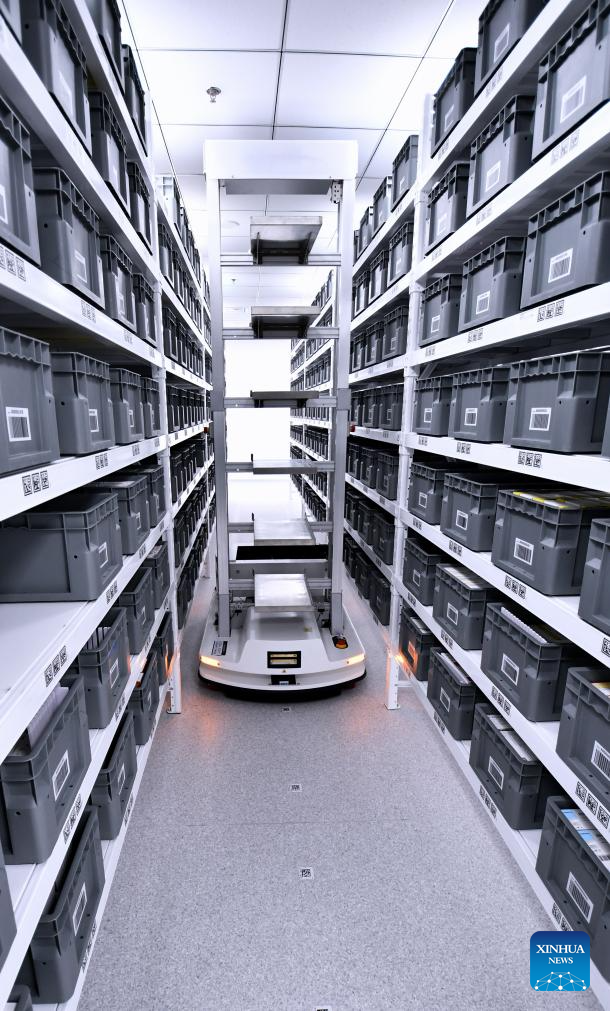
A robot transports medicines to the fully automated dispensing machines in the smart pharmacy at the Tongzhou branch of Beijing Anzhen Hospital in Beijing, capital of China, Feb. 3, 2026. Beijing Anzhen Hospital, designated by the Beijing municipal government as the city's first demonstration unit for "robots plus medical" applications, currently has 25 types of medical robots undergoing clinical trials. These robots are deployed across various departments, including outpatient clinics, pharmacies, wards, operating rooms, and catheterization rooms. Serving as intelligent assistants to doctors, these robotic "staff members" are becoming a driving force in the hospital's smart transformation and upgrade. (Xinhua/Li Xin)
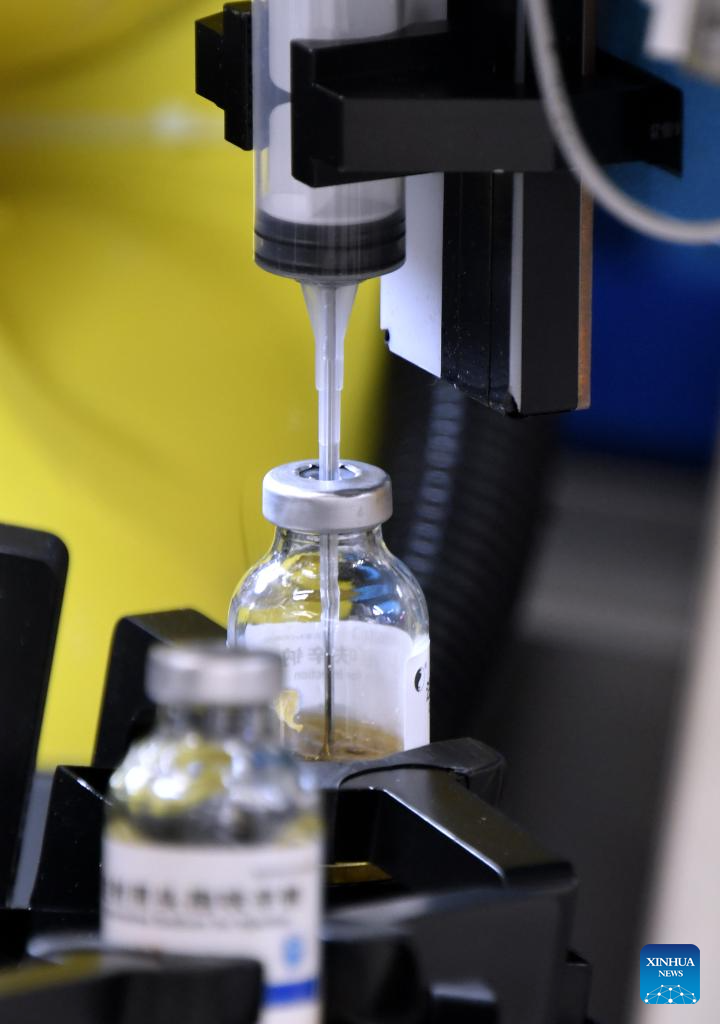
An automatic intelligent intravenous drug compounding robot system works at the Tongzhou branch of Beijing Anzhen Hospital in Beijing, capital of China, Feb. 3, 2026. Beijing Anzhen Hospital, designated by the Beijing municipal government as the city's first demonstration unit for "robots plus medical" applications, currently has 25 types of medical robots undergoing clinical trials. These robots are deployed across various departments, including outpatient clinics, pharmacies, wards, operating rooms, and catheterization rooms. Serving as intelligent assistants to doctors, these robotic "staff members" are becoming a driving force in the hospital's smart transformation and upgrade. (Xinhua/Li Xin)
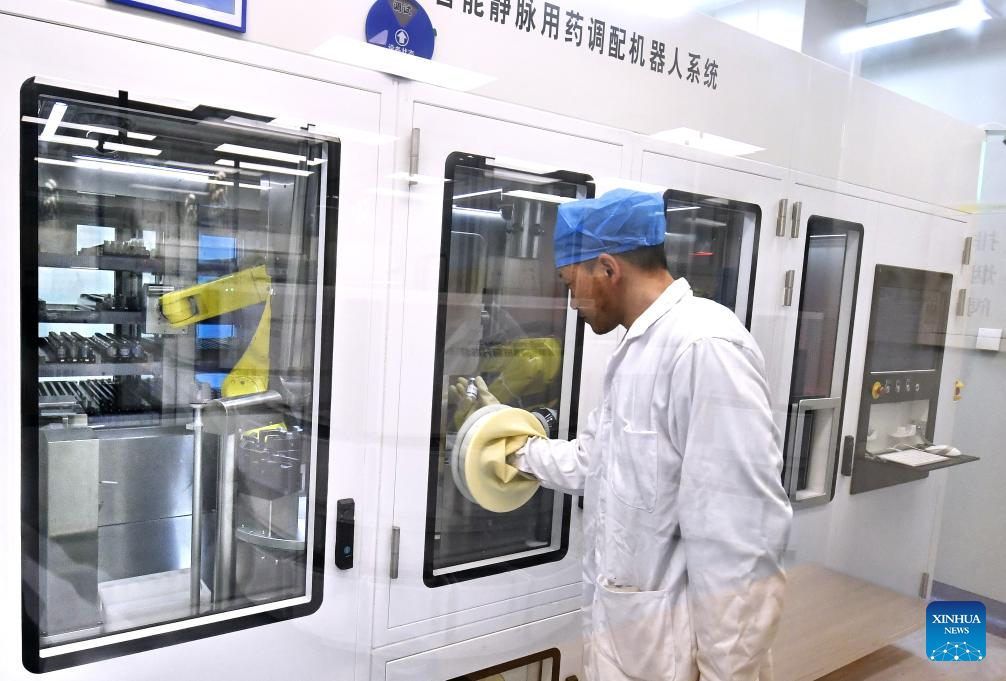
This photo shows an automatic intelligent intravenous drug compounding robot system at the Tongzhou branch of Beijing Anzhen Hospital in Beijing, capital of China, Feb. 3, 2026. Beijing Anzhen Hospital, designated by the Beijing municipal government as the city's first demonstration unit for "robots plus medical" applications, currently has 25 types of medical robots undergoing clinical trials. These robots are deployed across various departments, including outpatient clinics, pharmacies, wards, operating rooms, and catheterization rooms. Serving as intelligent assistants to doctors, these robotic "staff members" are becoming a driving force in the hospital's smart transformation and upgrade. (Xinhua/Li Xin)
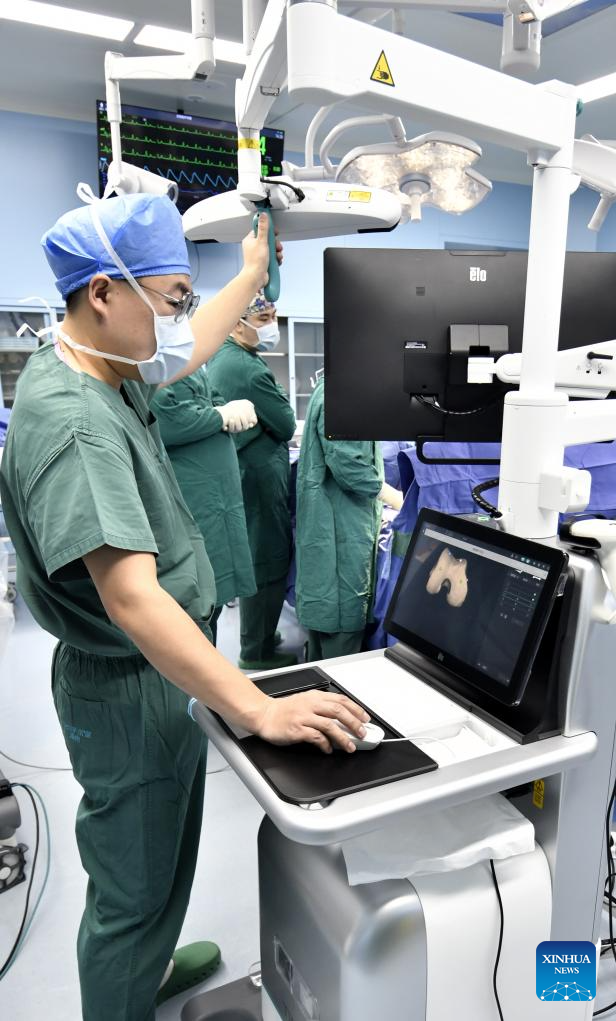
Experts perform orthopedic surgery using a robotic system at the Tongzhou branch of Beijing Anzhen Hospital in Beijing, capital of China, Feb. 3, 2026. Beijing Anzhen Hospital, designated by the Beijing municipal government as the city's first demonstration unit for "robots plus medical" applications, currently has 25 types of medical robots undergoing clinical trials. These robots are deployed across various departments, including outpatient clinics, pharmacies, wards, operating rooms, and catheterization rooms. Serving as intelligent assistants to doctors, these robotic "staff members" are becoming a driving force in the hospital's smart transformation and upgrade. (Xinhua/Li Xin)
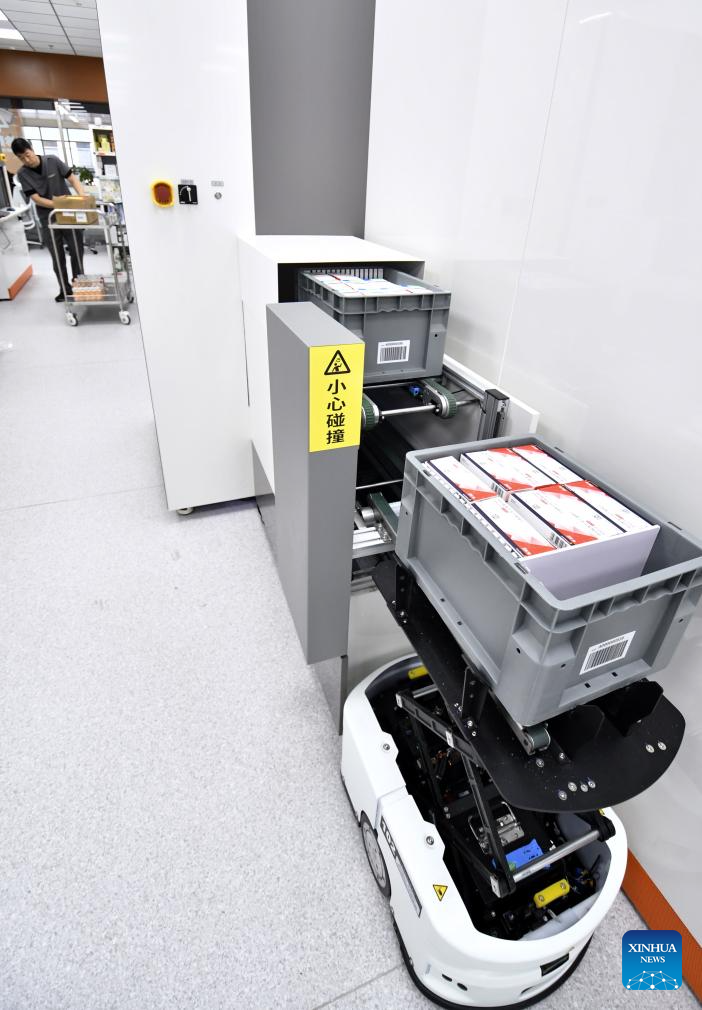
A robot transports medicines to the fully automated dispensing machines in the smart pharmacy at the Tongzhou branch of Beijing Anzhen Hospital in Beijing, capital of China, Feb. 3, 2026. Beijing Anzhen Hospital, designated by the Beijing municipal government as the city's first demonstration unit for "robots plus medical" applications, currently has 25 types of medical robots undergoing clinical trials. These robots are deployed across various departments, including outpatient clinics, pharmacies, wards, operating rooms, and catheterization rooms. Serving as intelligent assistants to doctors, these robotic "staff members" are becoming a driving force in the hospital's smart transformation and upgrade. (Xinhua/Li Xin)
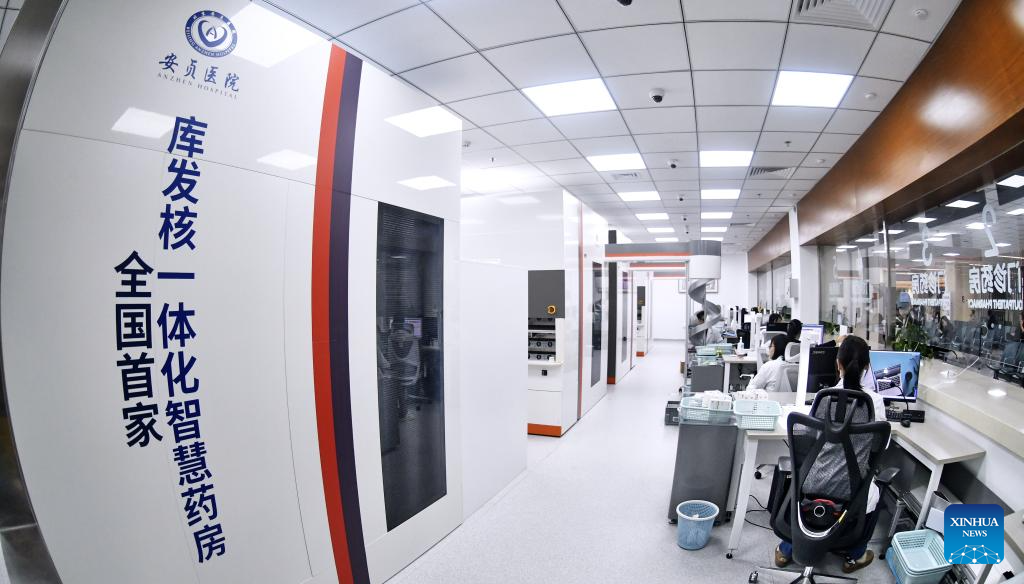
This photo shows the smart pharmacy at the Tongzhou branch of Beijing Anzhen Hospital in Beijing, capital of China, Feb. 3, 2026. Beijing Anzhen Hospital, designated by the Beijing municipal government as the city's first demonstration unit for "robots plus medical" applications, currently has 25 types of medical robots undergoing clinical trials. These robots are deployed across various departments, including outpatient clinics, pharmacies, wards, operating rooms, and catheterization rooms. Serving as intelligent assistants to doctors, these robotic "staff members" are becoming a driving force in the hospital's smart transformation and upgrade. (Xinhua/Li Xin)
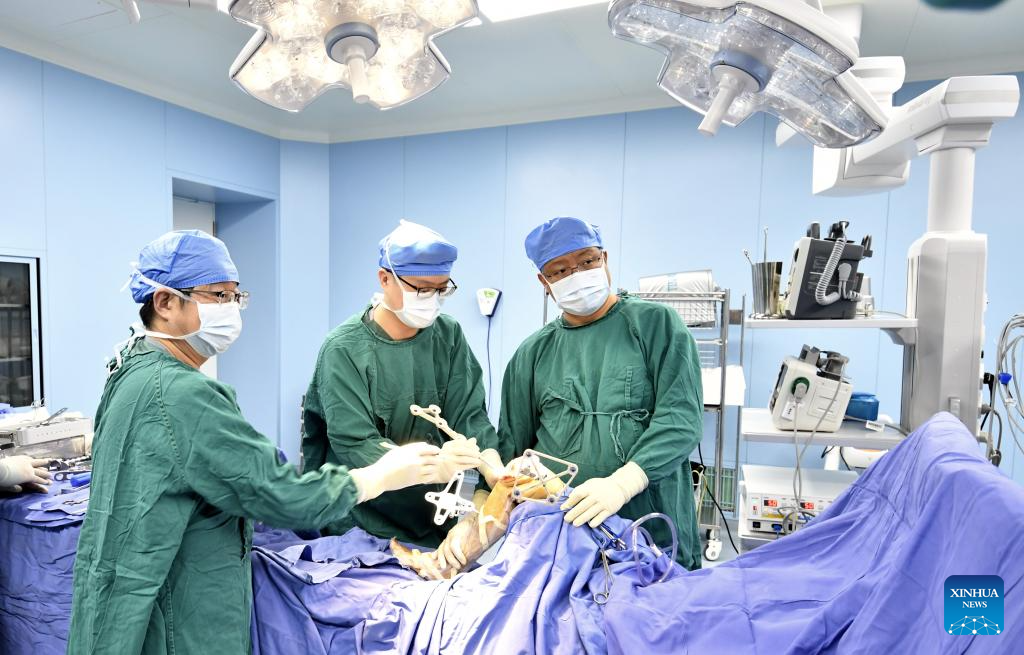
Experts perform orthopedic surgery using a robotic system at the Tongzhou branch of Beijing Anzhen Hospital in Beijing, capital of China, Feb. 3, 2026. Beijing Anzhen Hospital, designated by the Beijing municipal government as the city's first demonstration unit for "robots plus medical" applications, currently has 25 types of medical robots undergoing clinical trials. These robots are deployed across various departments, including outpatient clinics, pharmacies, wards, operating rooms, and catheterization rooms. Serving as intelligent assistants to doctors, these robotic "staff members" are becoming a driving force in the hospital's smart transformation and upgrade. (Xinhua/Li Xin)
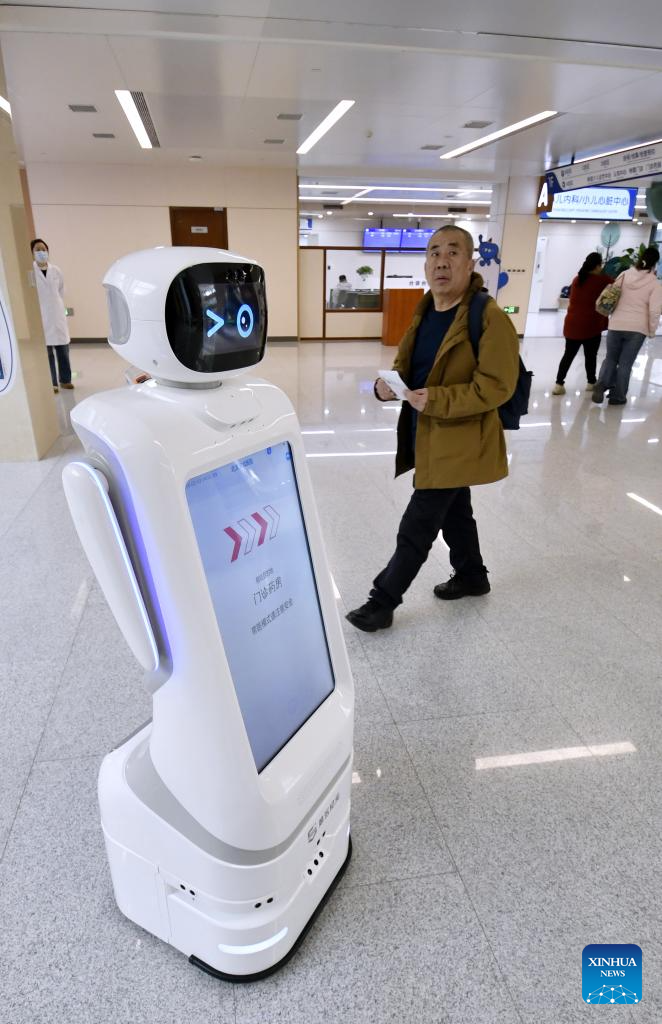
A robotic guide operates in the outpatient hall at the Tongzhou branch of Beijing Anzhen Hospital in Beijing, capital of China, Feb. 3, 2026. Beijing Anzhen Hospital, designated by the Beijing municipal government as the city's first demonstration unit for "robots plus medical" applications, currently has 25 types of medical robots undergoing clinical trials. These robots are deployed across various departments, including outpatient clinics, pharmacies, wards, operating rooms, and catheterization rooms. Serving as intelligent assistants to doctors, these robotic "staff members" are becoming a driving force in the hospital's smart transformation and upgrade. (Xinhua/Li Xin)
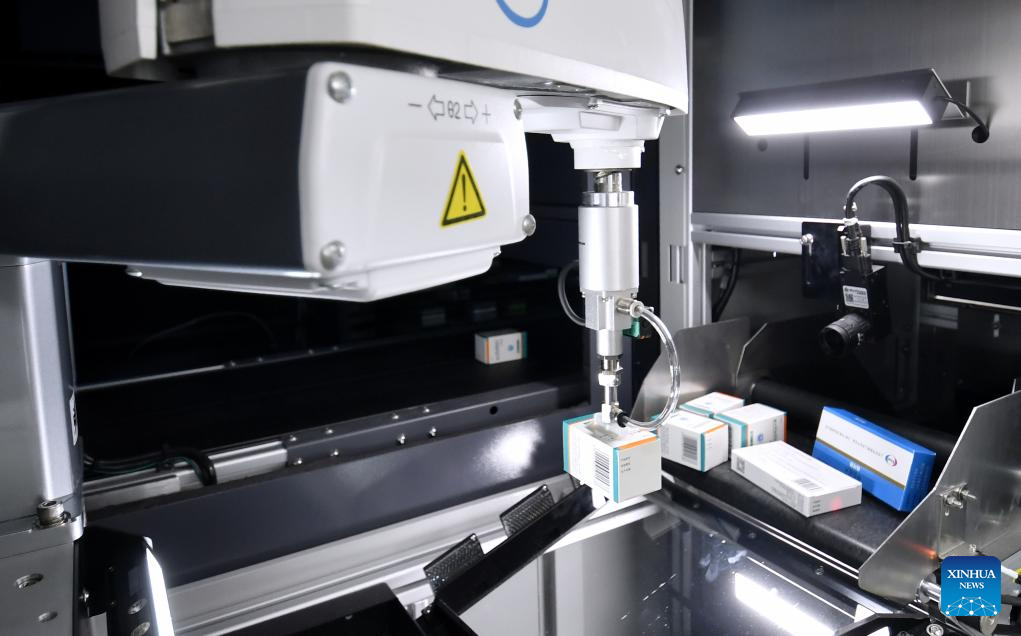
A medication sorting robot operates in the pharmacy of the Tongzhou branch of Beijing Anzhen Hospital in Beijing, capital of China, Feb. 3, 2026. Beijing Anzhen Hospital, designated by the Beijing municipal government as the city's first demonstration unit for "robots plus medical" applications, currently has 25 types of medical robots undergoing clinical trials. These robots are deployed across various departments including outpatient clinics, pharmacies, wards, operating rooms, and catheterization rooms. Serving as intelligent assistants to doctors, these robotic "staff members" are becoming a driving force in the hospital's smart transformation and upgrade. (Xinhua/Li Xin)
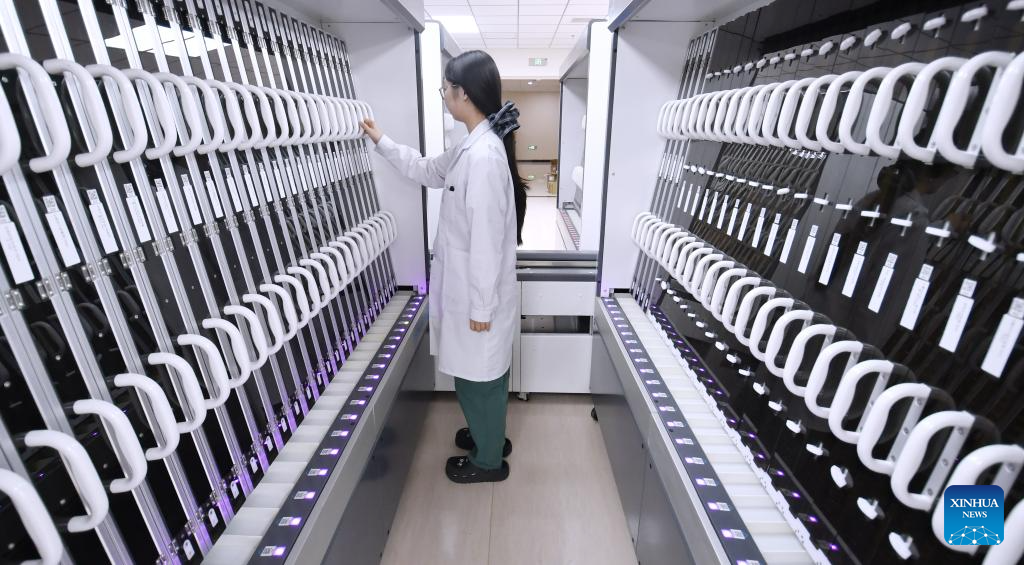
A medical worker inspects an injection solution dispensing robot system at the Tongzhou branch of Beijing Anzhen Hospital in Beijing, capital of China, Feb. 3, 2026. Beijing Anzhen Hospital, designated by the Beijing municipal government as the city's first demonstration unit for "robots plus medical" applications, currently has 25 types of medical robots undergoing clinical trials. These robots are deployed across various departments, including outpatient clinics, pharmacies, wards, operating rooms, and catheterization rooms. Serving as intelligent assistants to doctors, these robotic "staff members" are becoming a driving force in the hospital's smart transformation and upgrade. (Xinhua/Li Xin)
By continuing to browse our site you agree to our use of cookies, revised Privacy Policy and Terms of Use. You can change your cookie settings through your browser.
For any inquiries, please email service@ichongqing.info