
Chongqing - On January 23, as he returned from a routine patrol to his station in Nanchuan District, Li Zongming noticed his phone buzzing with congratulatory messages. Colleagues were celebrating the news: the veteran forest police officer had been named a recipient of the national "China Good Person" honor.
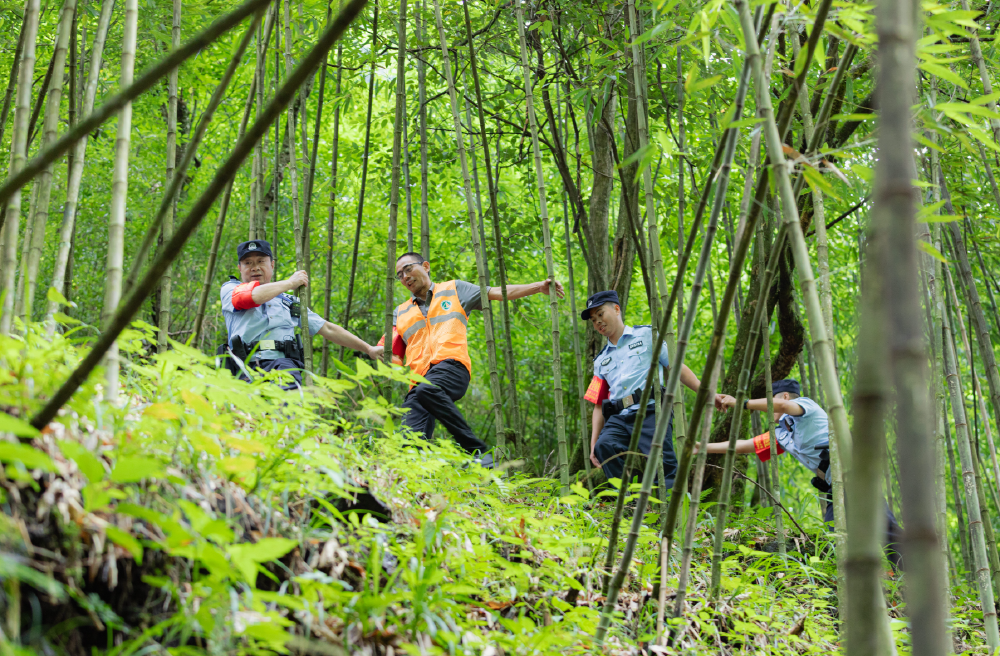
Li Zongming (first from left) hikes through the bamboo shoot forest of Jinfo Mountain on patrol with colleagues and village volunteers. (Photo/Nanchuan District)
"I've simply done my job," Li said. "All my life, I've focused on one thing—guarding these mountains."
A member of the Food, Drug and Environmental Crime Investigation Team of the Nanchuan Public Security Bureau and the ecological police officer of Jinfo Mountain, Li has spent 36 years walking the same ridgelines and valleys. More than 3,000 patrols have left him with 290,000 kilometers underfoot—enough to circle the Earth seven times.
Li joined the forest police in 1989 after leaving the army. At first, he knew little about wildlife. On patrol, he would pepper colleagues with questions about trees and birds. Later, with access to a computer, he began studying field guides and cross-checking what he had learned in the forest.
Over time, he became a "living map." He could name hundreds of species and navigate every bamboo grove and ravine from memory.
But Li’s patrols were never just about fire risks or illegal logging and poaching. They were also about people.
During bamboo shoot season, more than 10,000 farmers work deep in the mountains, with over 3,000 makeshift huts scattered across the forest. Disputes over a few shoots or a patch of land are common. Li would sit inside the huts, help sort shoots, and chat at length until tensions eased.
"You have to arrive in person, walk the ground, and speak from the heart," he said. "Only then can you untie the knots in people's minds."
His patrol became a mobile mediation station and a roving classroom for legal awareness.
Guarding the forest also means facing real danger. Li once found himself surrounded by more than 30 wild boars, pressed against a tree trunk as they passed within earshot. Another time, he slipped down a steep slope in heavy rain, slicing his arm open. He wrapped the wound with a strip of cloth and finished his investigation before heading down the mountain.
New forms of ecological crime posed even greater challenges. Several years ago, pine wilt disease—often called the "cancer of pine trees"—spread near Nanchuan. Highly contagious and deadly, it can wipe out entire forests if not contained.
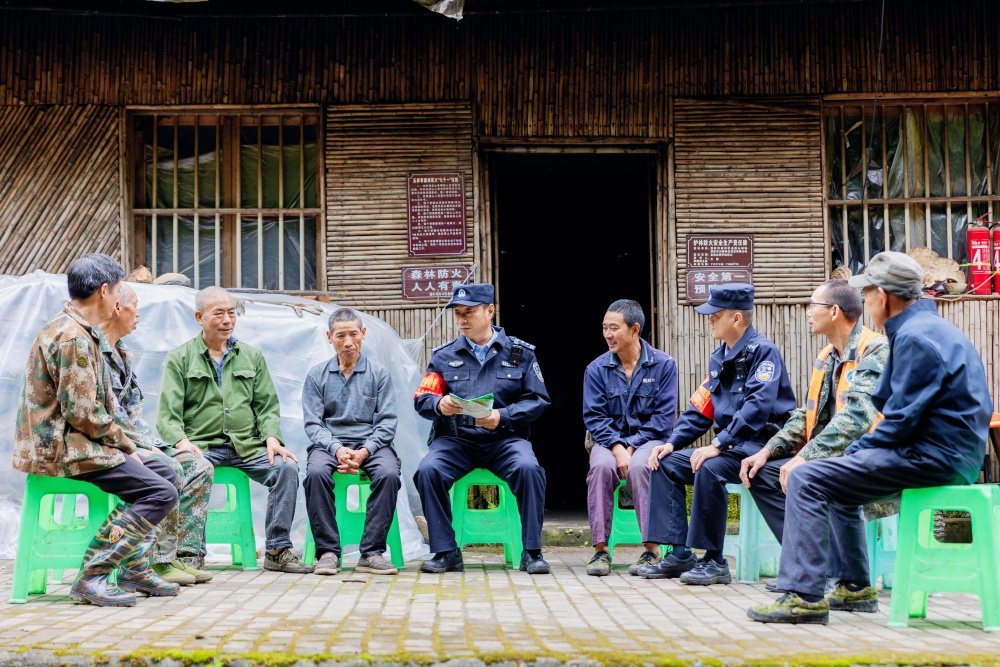
Li Zongming (fifth from left) conducts a safety awareness session at a bamboo shoot hut. (Photo/Nanchuan District)
Li led round-the-clock inspections at checkpoints. In one case, his team intercepted a truck carrying infected timber. At the time, there was no established investigative model for such cases in China. Li and his colleagues pored over forestry laws, consulted experts, and compiled more than 600 pages of evidence over seven days. The case became the country’s first prosecution for obstructing plant epidemic prevention and quarantine, and was later cited as a nationwide model.
Over 36 years, Li has helped handle more than 1,900 forest-related cases and rescued over 220 wild animals. His method—meticulous scene inspection, in-depth interviews, and sustained tracking—has become a template for younger officers.
On patrol, Li is greeted like family. Farmers invite him in for tea and share news of their children’s successes. Years ago, when patrol conditions were harsh, he often spent nights in bamboo huts, eating simple meals and helping with chores. Those shared moments built lasting trust.
Now in his sixties and set to retire in December, Li is focused on mentoring. He teaches recruits how to identify tree species and animal tracks, but also the "heart method": treat villagers like family, and they will speak honestly.
He has also proposed more than 20 measures—on sand and gravel oversight, illegal fishing control, and wastewater discharge inspections—that have been incorporated into Nanchuan’s ecological protection plans. He helped establish a 60-member volunteer "eco-police" team, turning forest protection from a one-man mission into a collective effort.
The mountains and trails remain the same, and Li's patrol continues. Even after retirement, he says he will not leave the forests he has walked for half a lifetime. Instead, he plans to apply his knowledge to promoting the cultivation of medicinal herbs, continuing, in his own way, the story of guarding the mountains.
By continuing to browse our site you agree to our use of cookies, revised Privacy Policy and Terms of Use. You can change your cookie settings through your browser.
For any inquiries, please email service@ichongqing.info