
Chongqing – Data from travel platforms reveals that in the two weeks leading up to the 2026 Chinese New Year, international flight bookings to China surged by more than 400% year-on-year. While Thailand and South Korea remained major source markets, bookings from several European countries also doubled. China's National Immigration Administration forecast that daily cross-border passenger flows during the holiday would exceed 2.05 million, a 14.1% increase from last year.
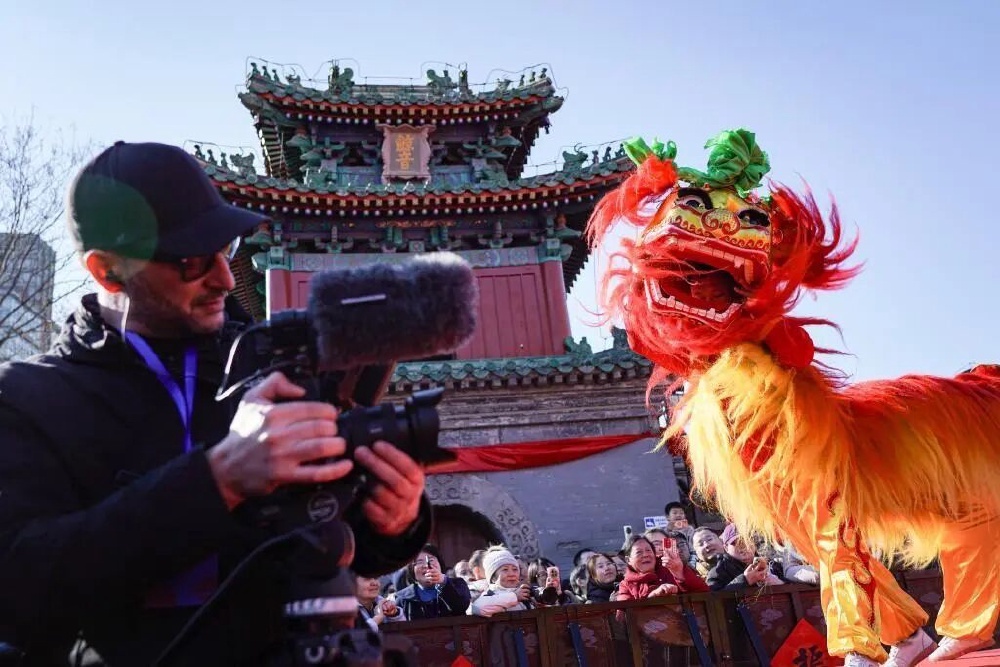
On February 17, a lion dance performance at the Dongyue Temple fair in Beijing attracts a foreign photographer. (Photo/Chen Zhonghao, Xinhua)
This surge in travel has been met with increasing global attention. Online topics such as "China travel" and "Becoming Chinese" have trended, while short videos of foreign visitors celebrating the holiday in China have garnered over 5 billion views. For many international audiences, the Spring Festival is no longer a distant spectacle but a living, participatory cultural experience.
Observers point to what some are calling the "2.0" shift behind the festival’s rising global appeal.
First, the very nature of China travel is evolving. Foreign visitors are increasingly seeking everyday experiences beyond just visiting landmarks — exploring neighborhoods, joining local festivities, and immersing themselves in ordinary life. This cultural curiosity is drawing more people to the Spring Festival.
Second, the holiday’s cultural recognition has deepened. This year marked the second Spring Festival since it was inscribed on UNESCO’s Representative List of the Intangible Cultural Heritage of Humanity. Overseas search interest in the festival has increased by more than 50% compared to pre-inscription levels, reinforcing the holiday’s status as a window into Chinese culture.
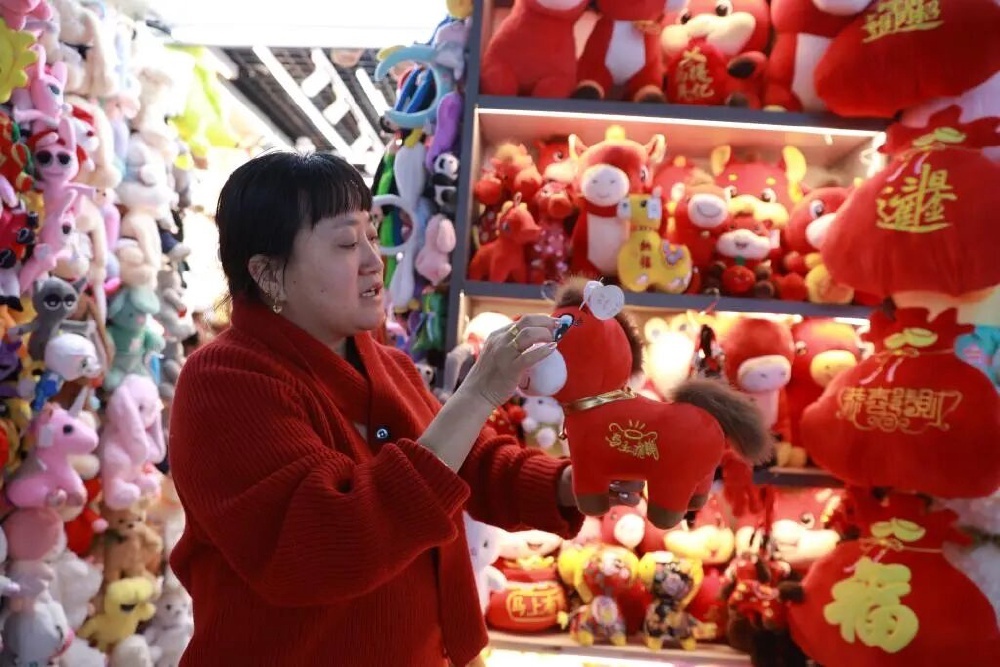
A shop owner, Zhang Huoqing, in Yiwu, Zhejiang Province, displays best-selling Year of the Horse plush toys. (Photo/He Yanjie, Xinhua)
For visitors, the New Year is a sensory and participatory experience: paper cuttings, lanterns, and festive clothing fill the streets with vibrant color; dumplings and rice cakes symbolize wishes for renewal and prosperity; hands-on activities — from pounding rice cakes in Chongqing to lion dancing in Foshan or ceramic-making in Jingdezhen — invite foreigners to join in. Even imperfect calligraphy or misshapen dumplings shared online often receive enthusiastic support from Chinese netizens.
A French photographer summed up the experience: "I thought I was exploring China, but in the end, China entered my heart."
At the same time, Spring Festival celebrations abroad have expanded both in scale and creativity. From humanoid robots joining parades in Paris to double-decker buses themed "Hello! China" in London, festive symbols have now entered global cityscapes. Cultural events focusing on Chinese cuisine and traditions have launched in cities like Sydney and New York.
Today, Spring Festival customs are observed in nearly 200 countries and regions, with around 20 countries officially recognizing the holiday as a public celebration. Roughly one-fifth of the world’s population now celebrates the Chinese Lunar New Year.
The economic impact is equally visible. Changes in China’s holiday production schedules and consumption patterns have global effects, influencing supply chains and logistics while creating new business opportunities. Chinese cultural merchandise is gaining popularity overseas, international brands are placing greater emphasis on China-focused campaigns, and Chinese companies expanding abroad are finding receptive markets.
Policy openness and infrastructure improvements are key drivers behind the trend.
Expanded visa-free entry programs, increased flight capacity, and the world’s largest high-speed rail and highway networks have made travel more convenient. Mobile payments, instant tax refunds for departing visitors, and solutions enabling international bank cards to link with domestic payment platforms have lowered barriers for foreign tourists.
Policy initiatives continue to enhance the experience, with China recently introducing measures to boost holiday consumption. Local governments have produced multilingual festival guides, designed interactive cultural activities, and improved digital services for inbound travelers.
China’s market diversity also plays a role. Some visitors are drawn by experiences that are difficult to access at home — affordable medical services, traditional crafts available in wholesale hubs like Yiwu, and easy access to emerging technologies such as foldable smartphones, drones, and smart electric vehicles.
At a deeper level, the cultural appeal is significant. Most civilizations celebrate the new year in some form, and the Spring Festival’s themes — renewal, gratitude, family, and social connection — resonate universally. In a world marked by division, its emphasis on harmony and coexistence offers a sense of shared warmth.
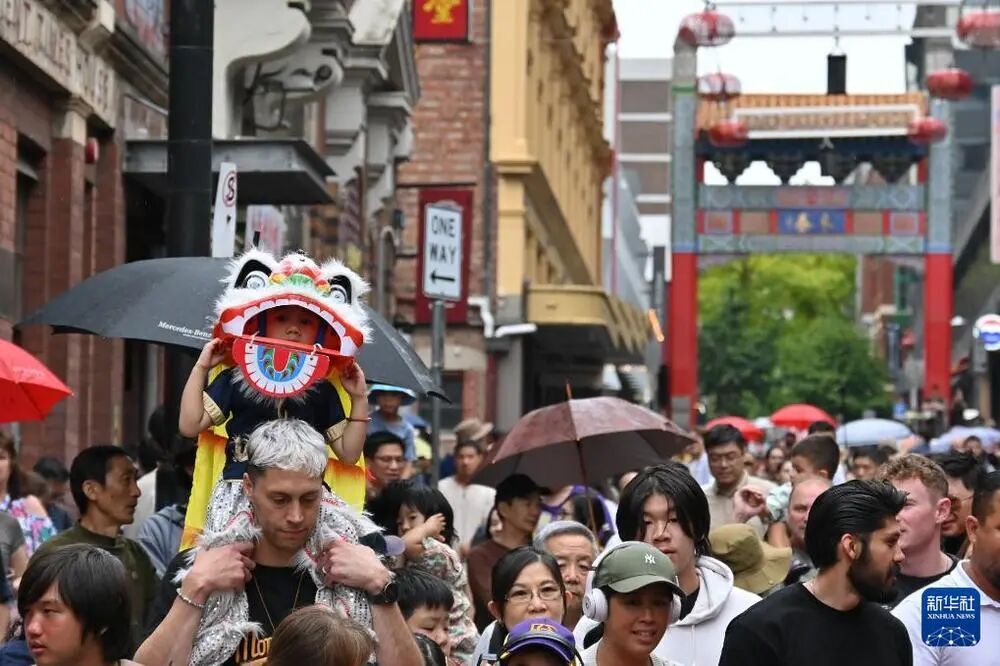
On February 22, in Melbourne's Chinatown, Australia, a child dressed in a lion dance costume takes part in Year of the Horse Spring Festival celebrations. (Photo/Xu Haijing, Xinhua)
The 2026 holiday may have ended, but its global momentum signals a new phase in how the world engages with China.
International visitors are becoming more diverse, including both group and independent travelers from culturally close Asian countries as well as North America and Europe. Their feedback highlights areas for improvement, from translation and payment accessibility to more tailored cultural products.
Ultimately, the Spring Festival’s global reach is less about cultural export than cultural exchange. It demonstrates how shared human desires — warmth, reunion, and hope — can bridge differences.
The holiday passes each year, but its message endures: across borders and cultures, people continue to find common ground in celebrating new beginnings together.
By continuing to browse our site you agree to our use of cookies, revised Privacy Policy and Terms of Use. You can change your cookie settings through your browser.
For any inquiries, please email service@ichongqing.info