
Chongqing — Fields of rapeseed flowers ripple like waves of gold along the Qiongjiang River, while plum blossoms blanket hillsides, and city parks burst into color across Chongqing as spring arrives.
The seasonal bloom is drawing growing numbers of visitors and giving fresh momentum to what tourism planners increasingly describe as the city’s expanding "flower economy."
From the rapeseed fields of Tongnan District to plum blossoms in Beibei and cherry blossoms in Dianjiang County, flower-viewing tourism has become one of the main drivers of Chongqing's spring travel season. Local governments and tourism operators are increasingly combining natural scenery with cultural events, food experiences, and rural tourism in an effort to expand spending beyond traditional sightseeing.
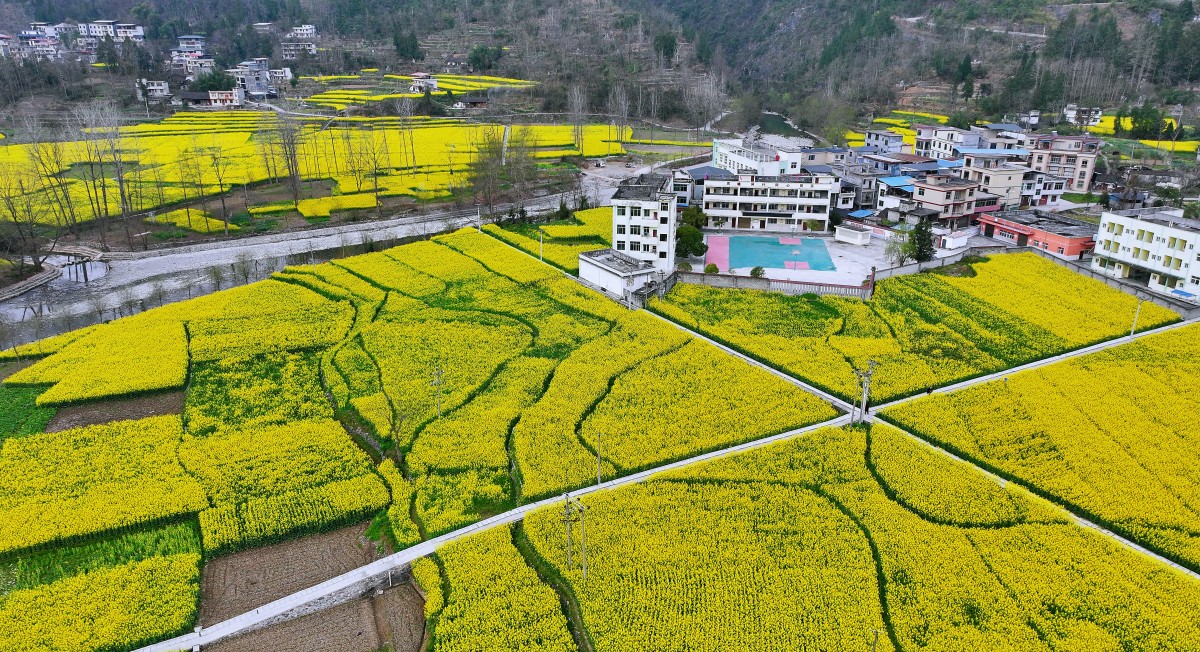
Rapeseed flowers are in bloom across fields in Tongxi Village, Chongqing. (Photo/Shi Jiali)
One of the most popular destinations this spring is Chongkan Scenic Spot in Tongnan District, where vast rapeseed fields stretch along the banks of the Qiongjiang River. Visitors stroll through paths lined with yellow blossoms, ride sightseeing trains through the fields, and stop at viewing platforms to capture photos of the landscape.
"This endless sea of flowers really makes you feel the arrival of spring," said visitor Zhang Yuxi, who traveled to Tongnan with friends for a weekend trip.
Local tourism operators say the site has upgraded visitor facilities this year, adding new family-friendly attractions while maintaining traditional ways to view the flower fields. Since opening for the season on Feb. 25, the scenic area has received more than 40,000 visitors per day on average, according to site management.
Other destinations across Chongqing are also seeing strong visitor interest.
In Tongjing Town in Beibei District, the Yinhe Plum Blossom Tourism Area features nearly 20,000 mu (about 1,333 hectares) of plum blossoms spread across three villages, creating a landscape that from a distance resembles snow-covered hills.
Nearby, Yungui Mountain is home to one of China’s largest clusters of wild cherry blossoms, including some trees more than 200 years old.
Additional spring destinations include Dianjiang Peony & Sakura World, known for its large variety of flowering plants, and Yunlin Tianxiang Scenic Spot in Banan District, where rapeseed flowers stretch along the lakeshore.
Urban parks are also part of the seasonal attraction. According to the Chongqing Municipal Urban Management Bureau, the city recently released its 2026 Spring Flower Viewing Map, highlighting locations across 176 urban parks where visitors can see 77 varieties of spring flowers, including magnolias, peach blossoms, and rapeseed flowers.
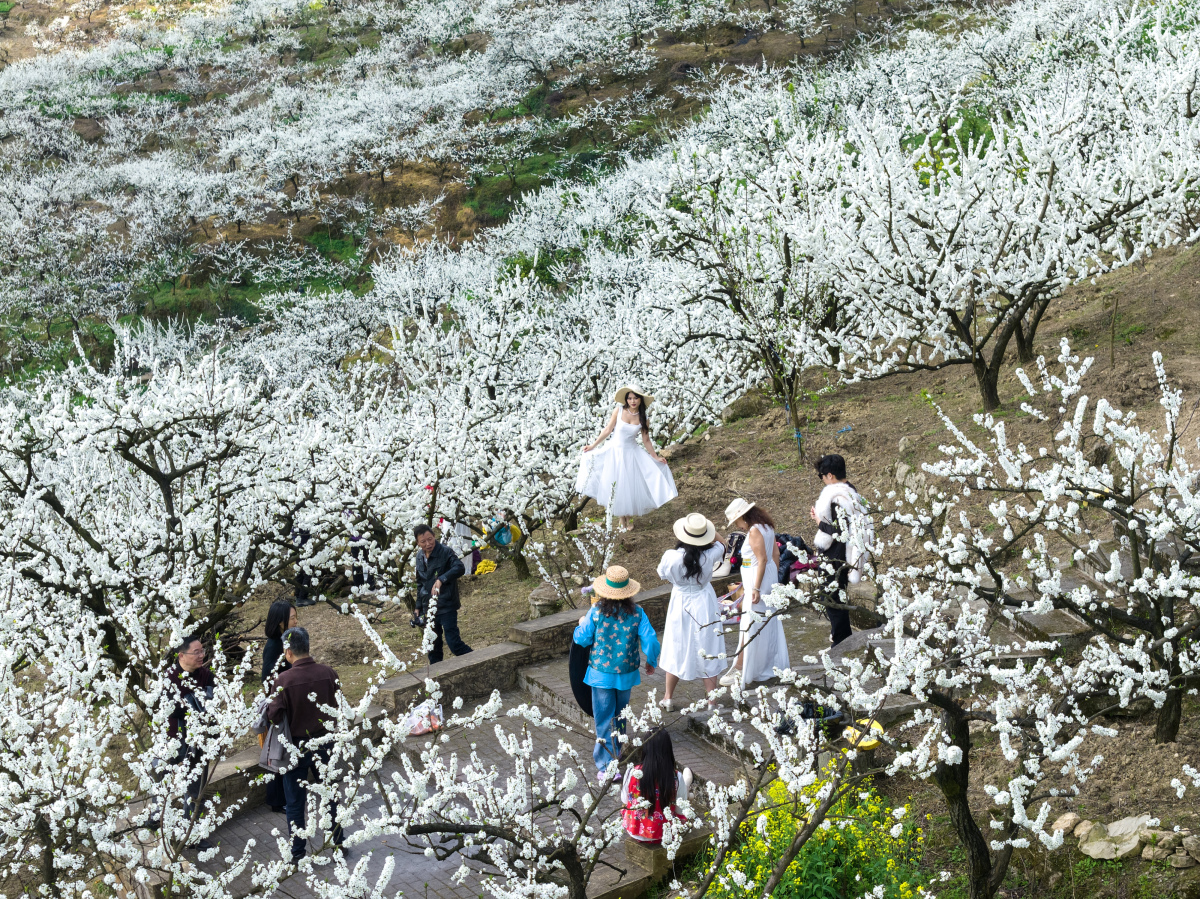
Visitors view plum blossoms at the Yinhe Plum Blossom Tourism Area in Chongqing. (Photo/Qin Tingfu)
Tourism platforms say Chongqing’s spring flower season has started earlier this year and is attracting strong demand.
Data from several online travel agencies (OTAs) show that travel demand remained strong after the Spring Festival holiday, with flower-viewing tourism helping sustain the market's momentum. Ticket orders for related scenic spots have increased more than 40 percent year-on-year, according to industry data. A representative from Tongcheng Travel said the market is evolving as visitors seek more immersive travel experiences.
"Compared with previous years, this year’s flower-viewing season began earlier and the level of interest is higher," the representative said. "Tourists are no longer satisfied with simply viewing flowers but want more diverse experiences around them."
Travel agencies report that one- to two-day trips to nearby destinations remain the most popular option.
According to China Travel Service Chongqing, inquiries for short flower-viewing tours began rising in early February, roughly a week earlier than last year. Bookings for mid-March trips have already exceeded 60 percent, with some weekend tours approaching full capacity. Tourism planners say the next stage of development lies in integrating flower viewing with a wider range of cultural and leisure activities.
Beibei District, known for its ecological landscapes, has launched 13 flower-viewing locations this spring featuring cherry blossoms, plum blossoms, peach blossoms, pear blossoms, tulips, and rapeseed flowers. The district has also introduced themed travel routes linking blossom sites with mountain scenery, historic towns, and local cuisine.
Experts say the goal is to transform seasonal sightseeing into a broader tourism experience.
Luo Zibai, chief expert at the Yangtze River Tourism Research Base of the China Tourism Academy and director of the Chongqing Tourism Development Research Center, said developing diversified tourism products will be key to sustaining the sector’s growth.
"Destinations should build integrated tourism products centered on flower viewing while offering flexible itineraries and customized experiences," Luo said. "This can attract families, young travelers, and photography enthusiasts, turning flower viewing into a deeper travel experience."
Digital promotion is also playing a growing role in boosting tourism visibility.
Zhang Dawei, regional general manager for government affairs at Trip.com Group, said social media and short-video platforms have helped many destinations gain attention through online exposure.
"Digital promotion can help transform scenic resources into lasting tourism value," Zhang said.
As spring unfolds across Chongqing, millions of blossoms are once again drawing visitors outdoors — turning the city's seasonal landscapes into an increasingly important engine for its cultural and tourism economy.
By continuing to browse our site you agree to our use of cookies, revised Privacy Policy and Terms of Use. You can change your cookie settings through your browser.
For any inquiries, please email service@ichongqing.info