
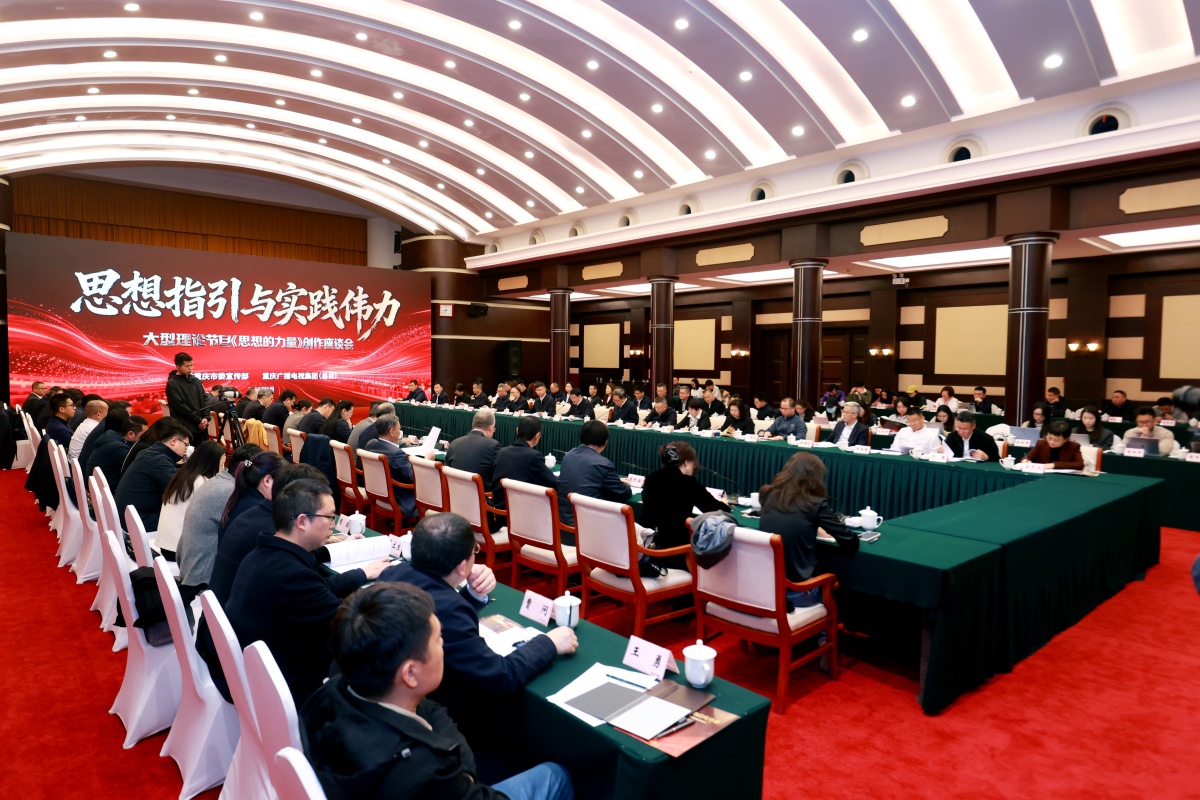
Approximately 90 representatives, experts, and scholars from relevant central departments, major news organizations, universities, and research institutions attended the symposium. (Photo/Chongqing TV)
Chongqing — On March 22, 2026, a production symposium for the major theoretical TV program The Power of Thought was held in Chongqing, reviewing its development since its premiere and exploring ways to further expand its reach and impact.
The Power of Thought debuted in late 2024 as China’s first regularly scheduled theoretical television program interpreting the Communist Party of China’s innovative theories in the context of the country’s modernization.
To date, the program has aired 19 episodes across three seasons, with a fourth season currently underway. Through cross-platform distribution on television and online networks, it has reached more than 700 million viewers, with 42.87% aged 15 to 44. It ranks first in prime-time satellite TV viewership in Chongqing.
Around 90 representatives, experts, and scholars from central departments, major news organizations, universities, and research institutions attended the event. Participants included scholars from the Party School of the Central Committee of the CPC, the Chinese Academy of Social Sciences, Tsinghua University, Renmin University of China, and Fudan University.
Leng Song, from the Institute of Journalism and Communication Studies at the Chinese Academy of Social Sciences, suggested that the program could adopt a more “problem-driven approach.”
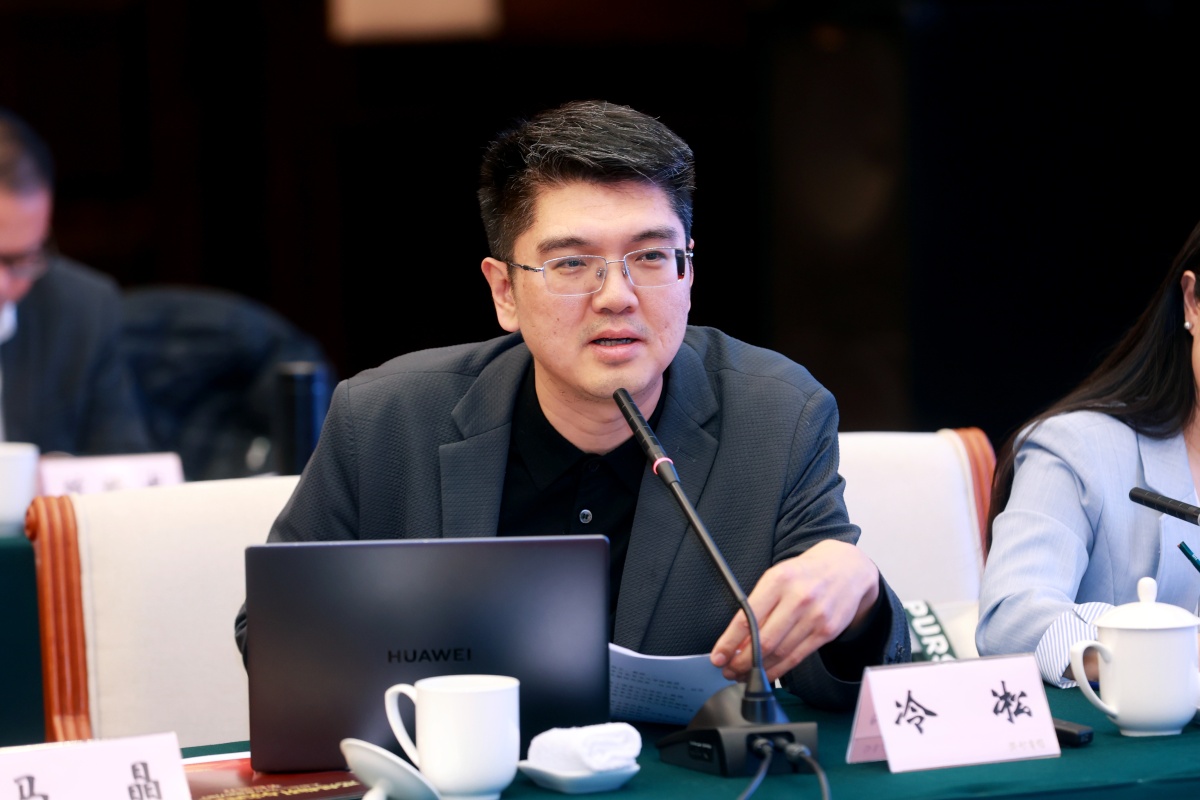
Leng Song, from the Institute of Journalism and Communication Studies at the Chinese Academy of Social Sciences, spoke at the symposium. (Photo/Chongqing TV)
“Instead of directly presenting achievements, the program should first lay out problems and challenges,” Leng said, allowing young people to become the protagonists in raising questions. He cited examples such as workplace issues, entrepreneurial challenges, emotional crises, decisions to return to one’s hometown, interpersonal relationships, and physical and mental health—topics that could be naturally explored through theoretical responses.
Zheng Changzhong, a professor at the School of International Relations and Public Affairs, Fudan University, has long participated in the program’s recording. He noted, “For a theoretical program, whether the masses can grasp the theory and harness its force in life depends on the interpreters.”
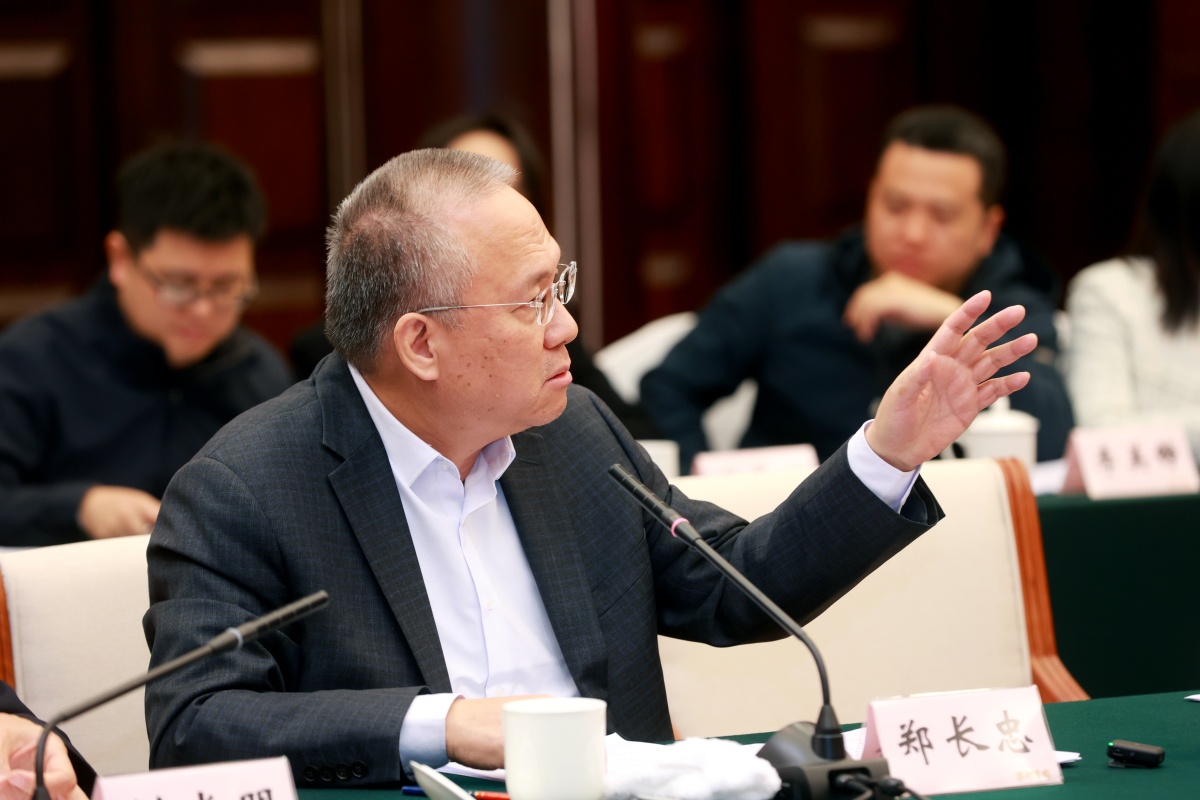
Zheng Changzhong, a professor at Fudan University's School of International Relations and Public Affairs, spoke at the symposium. (Photo/Chongqing TV)
Zheng cited how a 17-minute interview clip of his garnered high viewership on Bilibili and overseas platforms, demonstrating that “it would be simplistic to assume young people only like fragmented content; in-depth interpretation is also welcomed.”
Ma Jing, from the China Federation of Radio and Television Associations, suggested building an ecosystem of “big screen + small screen + offline + publishing,” reaching younger audiences through lightweight formats such as micro-interviews and quick Q&As, while also promoting open classes on campuses and in communities to bring theoretical dissemination into everyday life.
Looking ahead, the program will incorporate expert feedback, continue refining its content formats, expand its multimedia distribution, and further enhance its influence and reach.
By continuing to browse our site you agree to our use of cookies, revised Privacy Policy and Terms of Use. You can change your cookie settings through your browser.
For any inquiries, please email service@ichongqing.info