
Chongqing — For 21 years, Wei Wei has monitored the health of the Yangtze River in the Three Gorges Reservoir area. As a specialist at the environmental monitoring station in Wushan, Chongqing, he has traveled more than 80,000 kilometers along the river and its six tributaries to ensure water quality standards are met.
The Yangtze River supports hundreds of millions of people and runs through some of China’s most populated and industrial areas. Ongoing long-term monitoring helps officials spot problems early, track changes over time, and protect both drinking water and the river’s ecosystem.
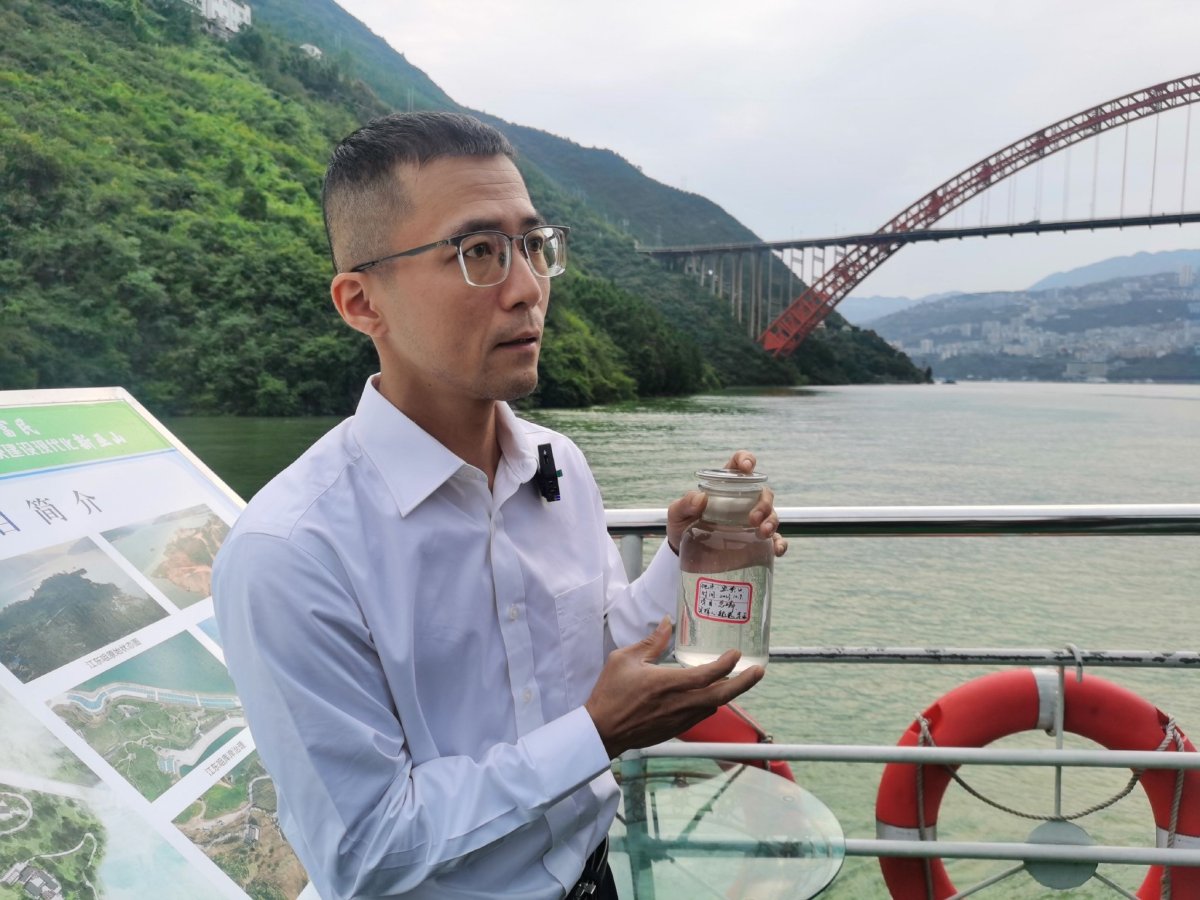
Wei Wei shows the tested water samples to reporters. (Photo/Chongqing Daily)
When Wei began his career in 2005, his work primarily involved manual water collection. Today, the process has shifted toward digital management. He helped implement a digital system for 43 major sewage outfalls, using smart sensors to build a real-time data network.
This allows his team to trace pollutants such as total phosphorus—an important nutrient that can trigger algal blooms and limit overall water quality improvement—back to specific sources.
In the Yangtze basin, phosphorus often comes from agricultural runoff, including fertilizers and livestock waste, industrial and urban wastewater discharge, and sediment disturbance, and continuous monitoring helps identify patterns, upstream–downstream impacts, and the origins of these inputs to support targeted pollution control.
Wei’s role as a “gatekeeper” of ecological safety has also been tested by environmental emergencies. In 2014, a mining leak threatened the drinking water at the Qianzhangyan Reservoir. Because the pollutant was rare and lacked standard testing protocols, Wei and his team spent 40 days in a makeshift laboratory developing an original analysis method.
To ensure data accuracy during other incidents, he has frequently traveled on foot to roadless areas, wading through deep mud to collect undisturbed samples.
Long-term monitoring data reflect a significant environmental shift. In 2017, the Chongqing section of the Yangtze mainstream reached Class II water quality for the first time.
As national priorities move from “pollution control” to “ecological restoration,” Wei’s work has expanded to include biodiversity monitoring. He now uses environmental DNA (eDNA) technology to track fish populations and aquatic life by analyzing biological traces in water samples.
With 147 kilometers of sewage networks and nine 24-hour automated monitoring stations now in place, the Yangtze in Wushan has seen measurable recovery. The restoration of the river’s ecosystem has also supported the growth of the local eco-tourism industry, marking a shift from crisis management to long-term ecological sustainability.
By continuing to browse our site you agree to our use of cookies, revised Privacy Policy and Terms of Use. You can change your cookie settings through your browser.
For any inquiries, please email service@ichongqing.info