
Chongqing — Amid a nationwide boom in micro-short dramas, the southwestern megacity of Chongqing is emerging as a pivotal hub for this fast-growing digital entertainment format, leveraging policy support, unique urban landscapes, and technological innovation to shape the industry's future.
Once considered a niche format, micro-short dramas—mobile-first, vertical-viewing episodes—have become a focal point of local government policy nationwide. Provinces and municipalities, including Henan, Zhejiang, Shanxi, and Chongqing, included the sector in their 2025 government work reports, signaling strong institutional support.
This coordinated push reflects the industry’s shift from rapid, unregulated growth toward higher-quality development.
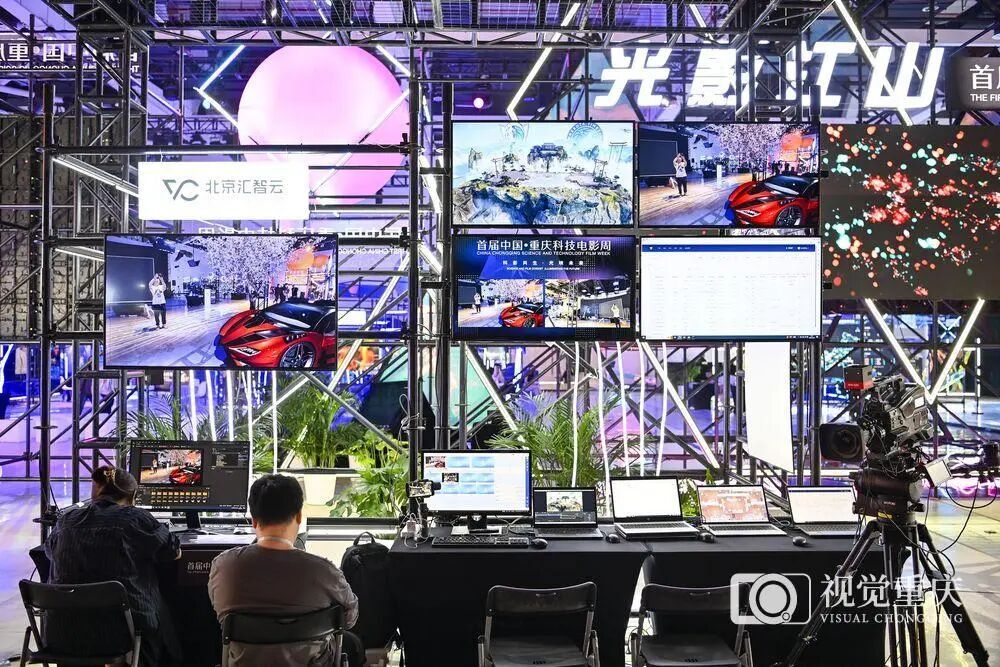
At the Science and Technology Film Week in Chongqing, an exhibition showcases film production equipment and technology. (Photo/Visual Chongqing)
In 2025 alone, China released approximately 33,000 micro-short dramas, attracting nearly 700 million domestic viewers and generating over 100 billion yuan (about $14 billion) in market revenue. These figures position micro-short dramas as one of the fastest-growing sectors in China’s cultural and entertainment industry.
Policymakers are targeting not only the online audience but also the sector’s multiplier effect on the wider economy. With fast production cycles and relatively low barriers to entry, micro-short dramas link digital content creation with offline industries including equipment rental, performance training, tourism, and hospitality.
The sector also supports employment. Zhengzhou, one of China’s three major micro-short drama hubs, hosts more than 800 production companies and nearly 40,000 workers, demonstrating how the format can activate idle assets and expand job opportunities at relatively low social cost.
Internationally, Chinese micro-short dramas are gaining traction, generating more than $2.3 billion in overseas revenue in 2025—more than double the previous year—underscoring the format’s potential for cultural export.
Yet rapid growth has exposed challenges. Some productions rely heavily on formulaic storytelling, such as dominant CEO or revenge plotlines, prompting concerns about repetitive content and the need for stronger industry guidance.
Chongqing was among China’s earliest cities to seize the short drama trend and has leveraged policy support, infrastructure, and cultural assets to establish a competitive edge.
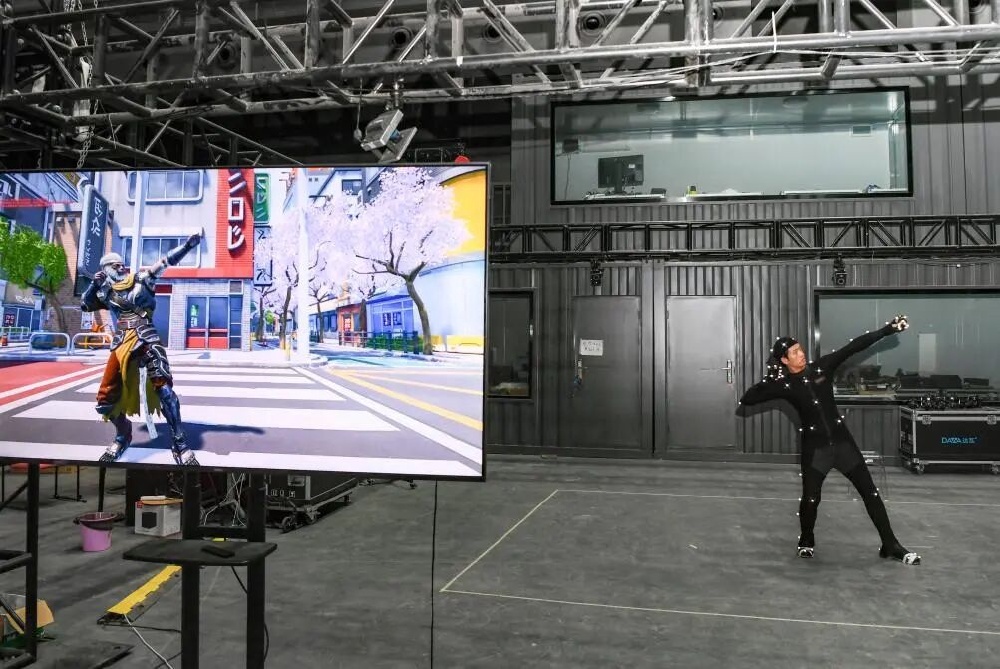
A live demonstration of motion capture technology during filming at the Yongchuan Sci-Tech Film Studio in Chongqing. (Photo/Xinhua)
A cornerstone of the city’s strategy is the Liangjiang Film and Television Animation Cultural and Creative Park. Designed specifically for vertical-format content, it functions as a one-stop production base for filming, post-production, and editing. Industry insiders have dubbed it Vertical Hengdian, referencing Hengdian World Studios, China’s largest film production complex.
The city is also advancing projects such as the Western Creative Industry Cluster and the Western Science and Technology Film City, creating an ecosystem to support long-term growth in digital and short-form content.
Chongqing’s dramatic landscape and urban scenery provide a natural filming advantage. Iconic locations include Hongyadong, the Dazu Rock Carvings, a UNESCO World Heritage Site, the Wujiang River, and Baidi City. The city hosts more than 300 production crews annually, establishing itself as a natural film set for both domestic and international projects.
Chongqing’s universities, including Chongqing University and the Sichuan Fine Arts Institute, along with private training institutions, supply a continuous stream of writers, directors, and post-production professionals.
Technology is also reshaping production. AI-generated short dramas and animation have gained traction, with local productions such as "Xue Tao: A Leaf of Lotus Before the Wind" reaching millions of views online. A new AI film production platform, Xianzhi AI · Manju Planet Southwest Operations Center, recently partnered with Chongqing to integrate technology into the city’s digital media ecosystem.
At the 9th Pingyao International Film Festival, Chongqing productions "Baojian" and "Go, Taxi Uncle!" won awards, marking the city’s debut on the international festival stage.
Still, experts note the city must address industry pain points, including repetitive storylines and incomplete production infrastructure. Improving access to equipment rental, location coordination, logistical support, and ensemble actors will strengthen the local production environment.
The next step is to develop a full industrial chain—from script incubation and copyright trading to marketing and derivative content—while encouraging small and medium-sized studios to enter the market.
For Chongqing, the goal is not merely scale, but distinction. Success will depend on producing original, culturally rooted stories that resonate both domestically and internationally, establishing a recognizable “Chongqing flavor” in micro-short dramas.
If successful, Chongqing will not just ride the wave of micro-short dramas—it could define where the sector goes next.
By continuing to browse our site you agree to our use of cookies, revised Privacy Policy and Terms of Use. You can change your cookie settings through your browser.
For any inquiries, please email service@ichongqing.info