
Chongqing - More than 15,000 runners took to the streets of Chongqing on March 29 for the AITO Chongqing Women's Half Marathon 2026, a race that blended elite athletic achievement with a striking display of urban management capabilities.
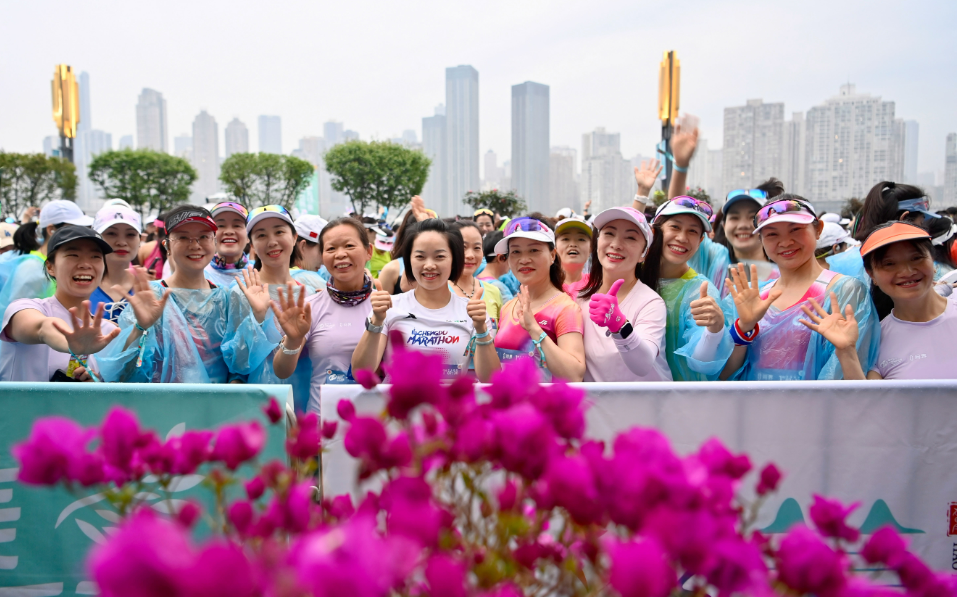
Before the start, runners warmed up on a flower-lined riverside promenade. (Photo/Qi Lansen)
The certified Class A1 event, held along the Beibin Road in the Liangjiang New Area, began at 7:30 a.m. with runners setting off in four waves. The course traced the banks of the Jialing River, offering a scenic route through the city’s spring landscape.
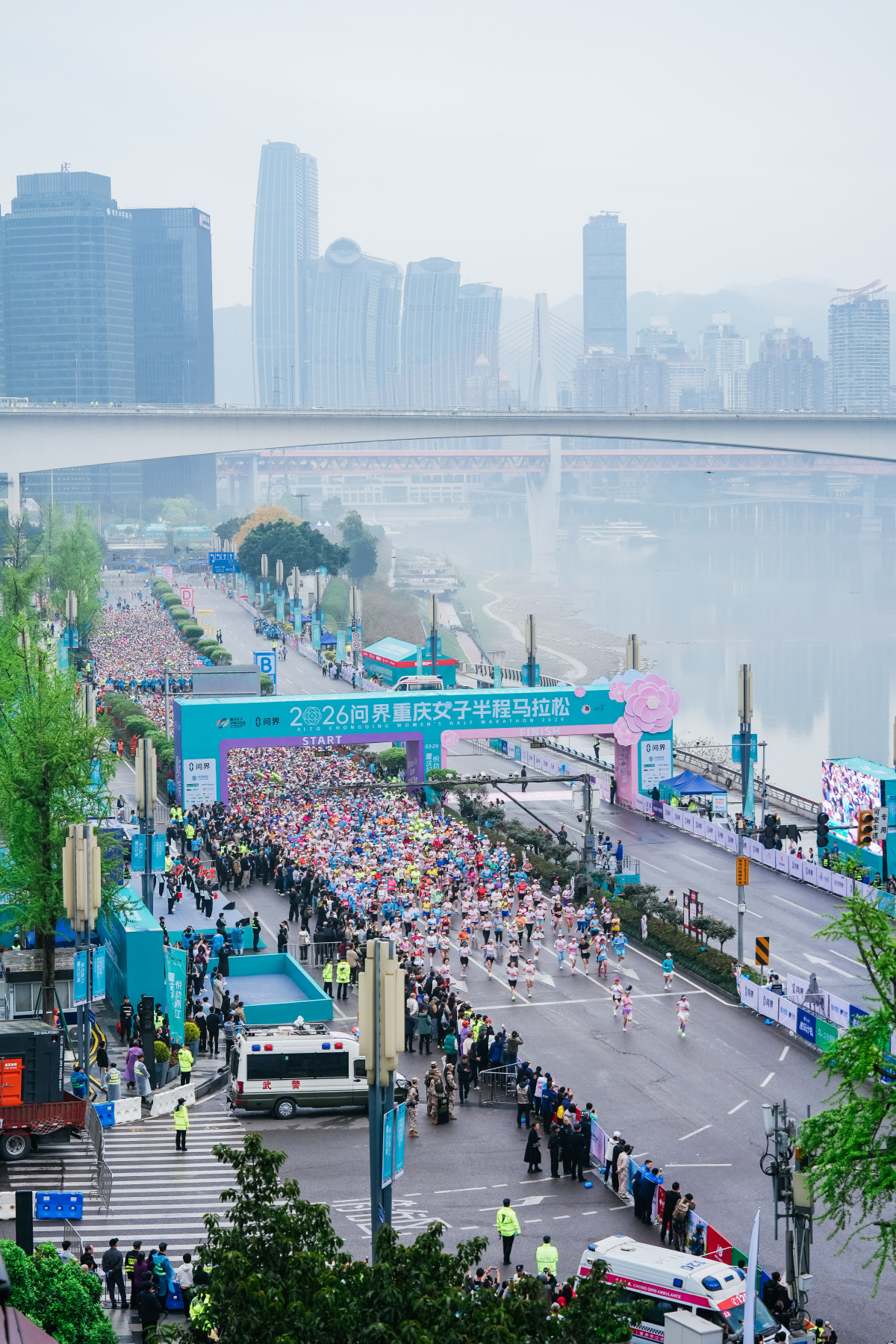
15,000 female runners gathered at the AITO Chongqing Women's Half Marathon 2026. (Photo/The Organizer)
Tang Xiaofang claimed the half marathon title in 1 hour, 11 minutes and 55 seconds, setting a new record for Chinese athletes in the event and delivering the second-fastest time in the race's history. Her performance improved the previous national record by seven minutes and 26 seconds. Liu Junhui finished second in 1:14:39, followed by Li Chunxia in third with a time of 1:17:02.
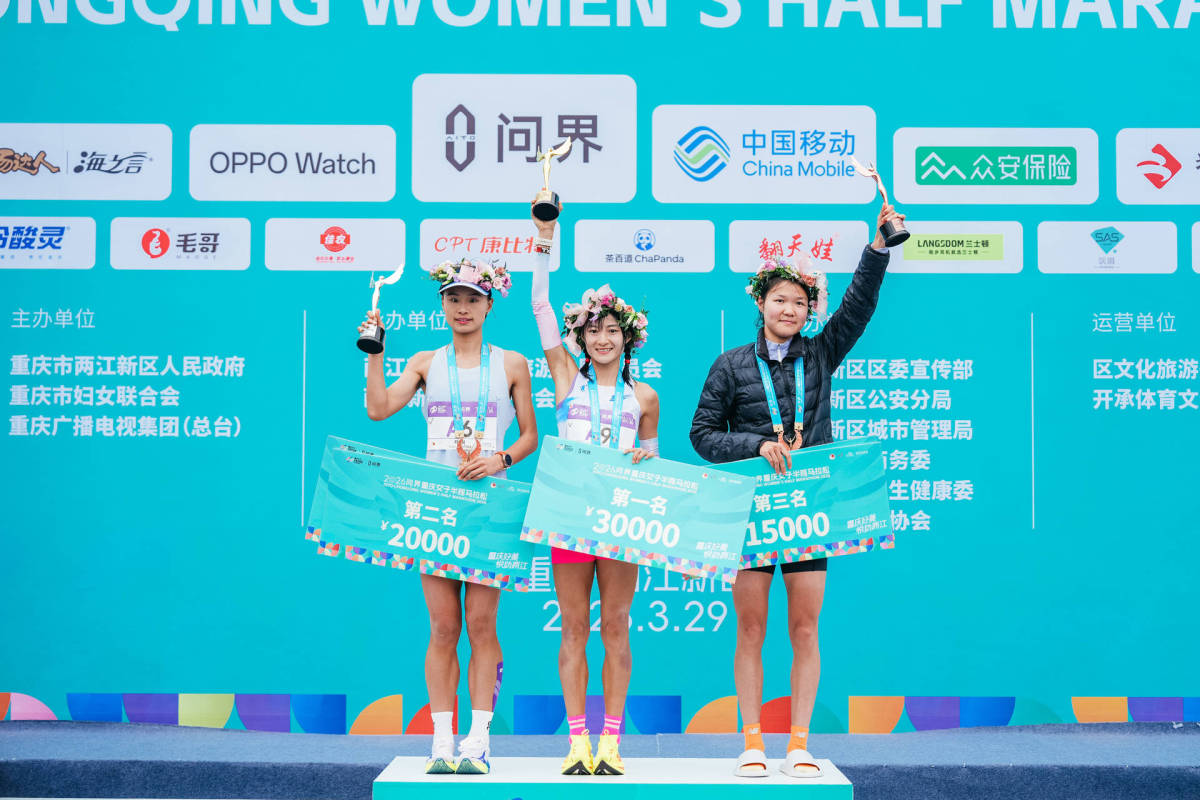
Liu Junhui, Tang Xiaofang and Li Chunxia. (Photo/The Organizer)
Six Chinese runners surpassed the event's previous national record, reflecting both the quality of the field and the race's growing competitiveness. Organizers had introduced new awards for top performances and increased the prize purse ahead of this year’s edition.
"The Beibin Road course is flat and well designed - it felt great to run here," Tang said after the race. "The atmosphere along the way also gave me a lot of support."
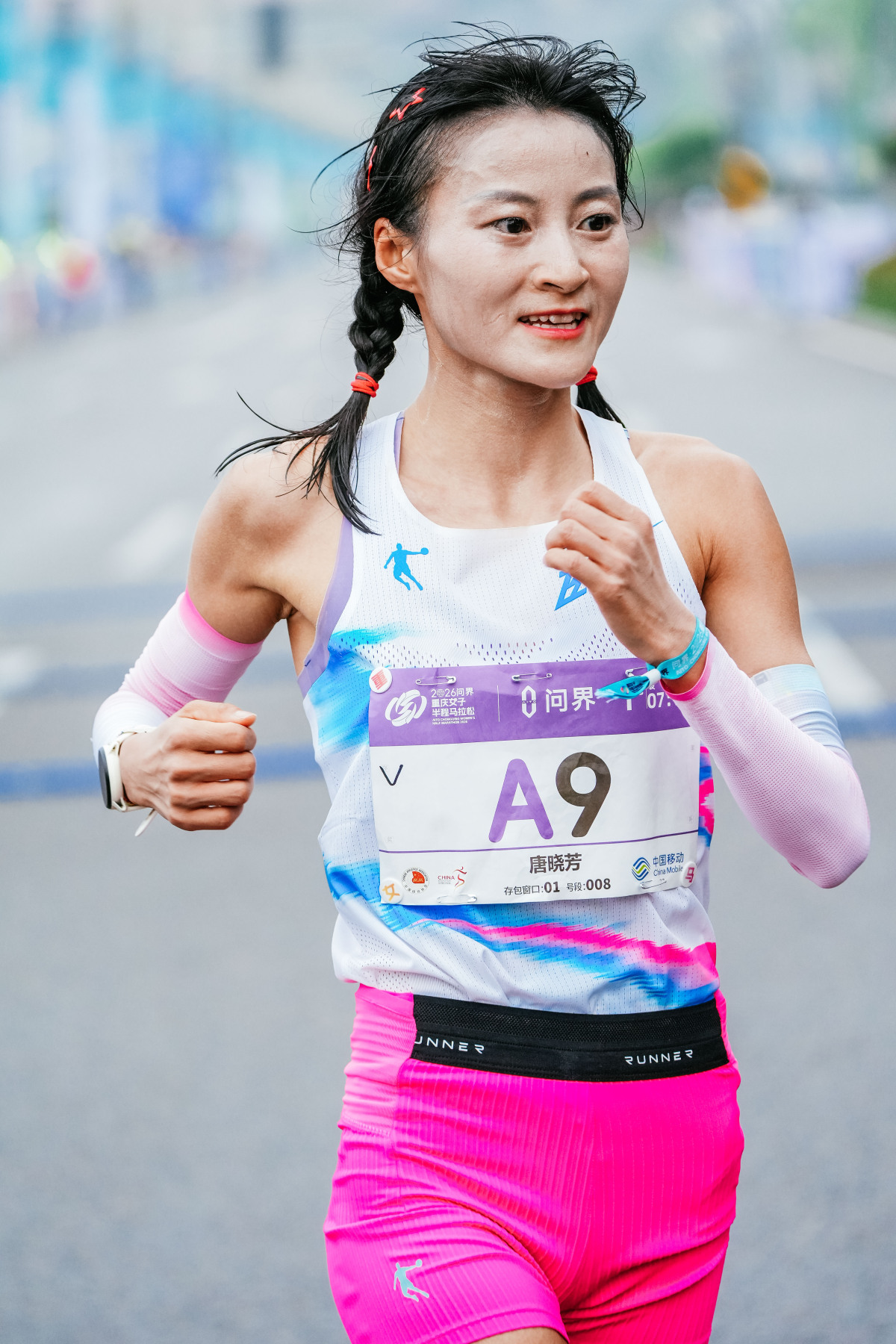
Tang Xiaofang claimed the half marathon title in 1 hour, 11 minutes and 55 seconds, setting a new record for Chinese athletes in the event and delivering the second-fastest time in the race's history. (Photo/The Organizer)
The event doubled as a high-profile test of coordination across multiple municipal departments, including public security, health, transport and urban management. Officials described the effort as an example of the "flower-power governance" approach that Chongqing has pursued as a mega-city.
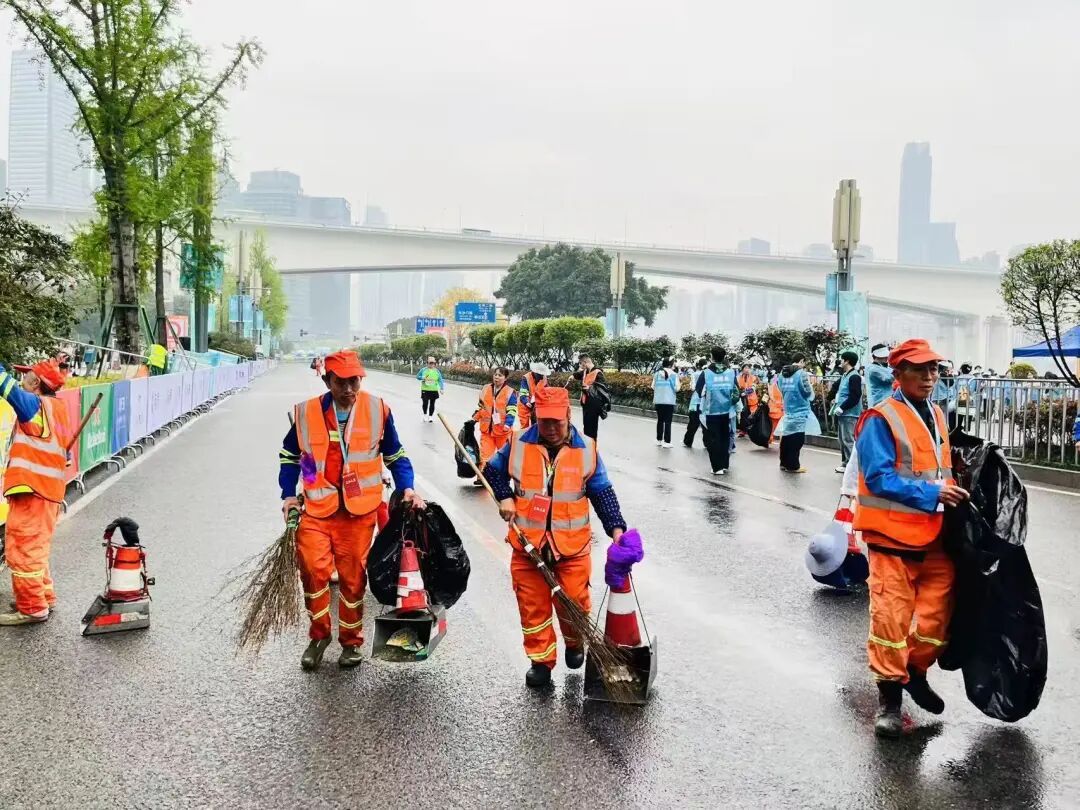
Urban management authorities carried out comprehensive cleaning of the racecourse and surrounding areas, mobilizing a total of 1,827 personnel dispatches.
Ahead of the race, urban management teams fine-tuned landscaping along the route, adjusting the bloom cycles of roses and rejuvenating cherry blossom trees to create what organizers called an immersive running experience.
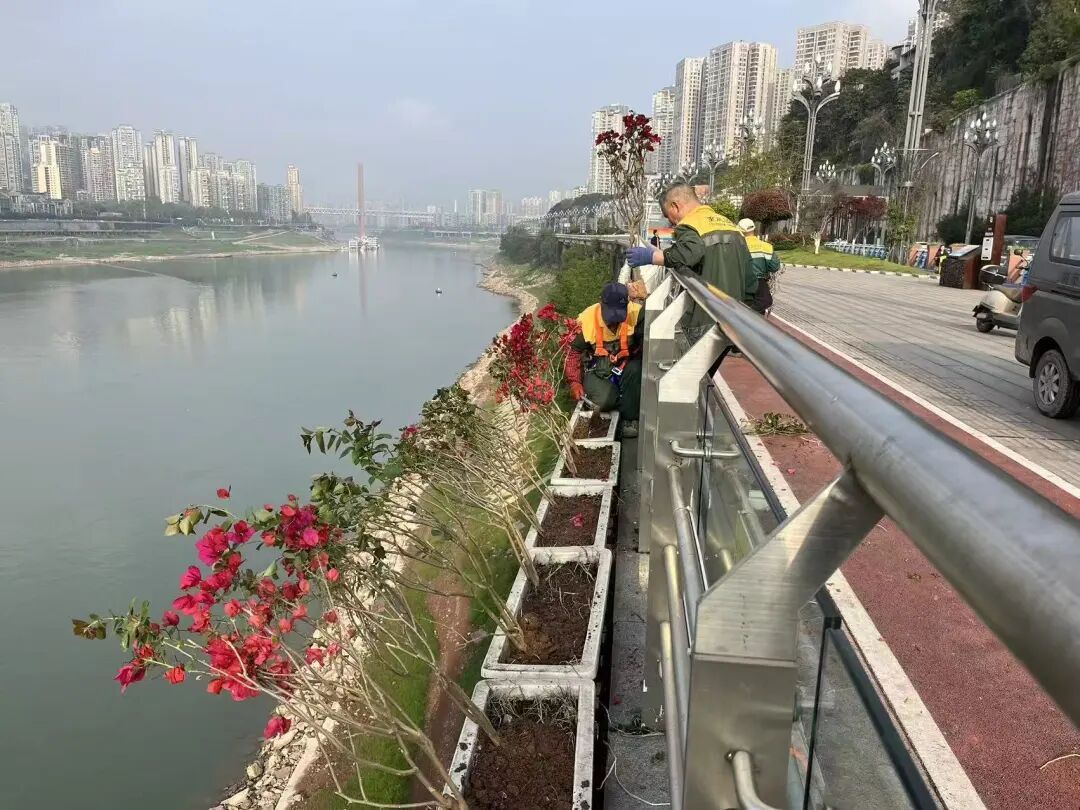
Urban management authorities systematically organized and upgraded the greenery along the racecourse, creating a scenic backdrop.
More than 400 support staff remained on standby during the event under a management system that assigned specific responsibilities to designated segments of the course. After the race finished, crews cleared the route and restored traffic flow in less than two hours, a pace that local authorities said minimized disruption for residents and businesses.
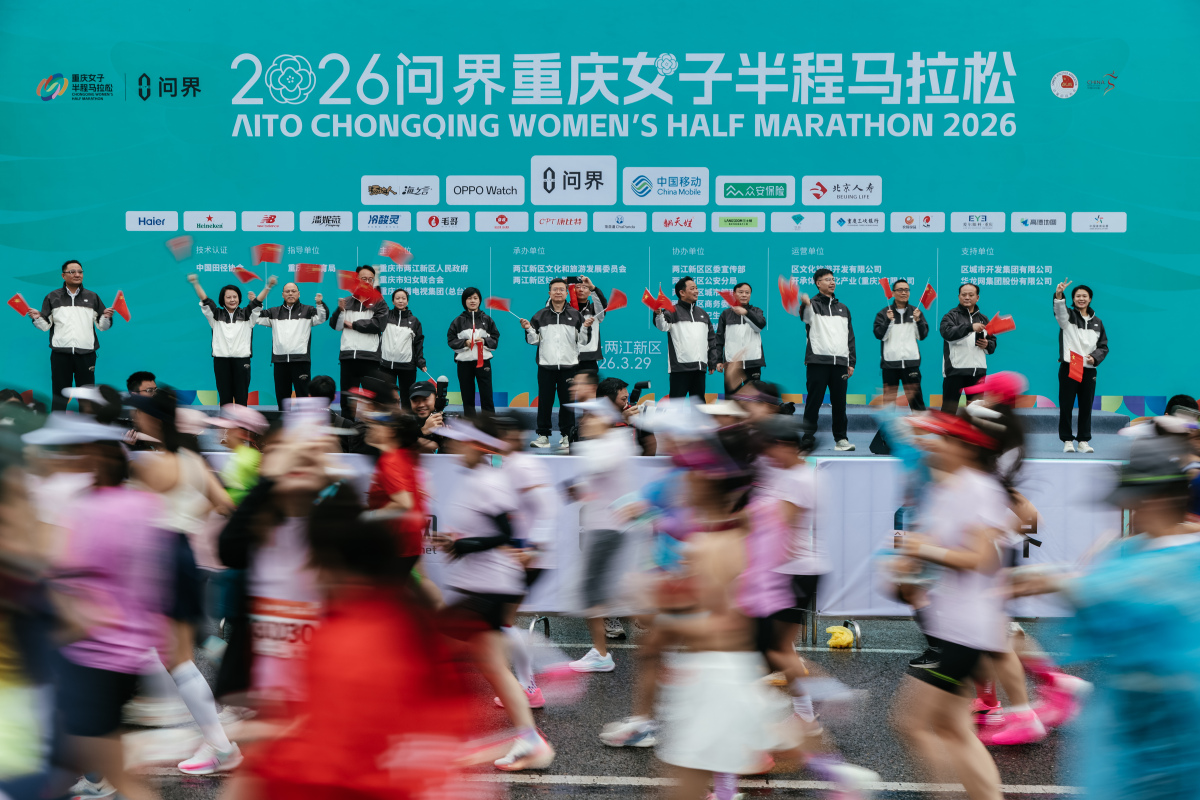
Support staffs cheered on the runners. (Photo/The Organizer)
Public security officials deployed more than 400 officers and implemented a three-tier control structure that included a tightly secured core area, a wider perimeter and traffic diversions at outer intersections. Barriers were installed to separate runners from vehicle traffic, and dedicated emergency passages were kept open to accommodate residents' needs.
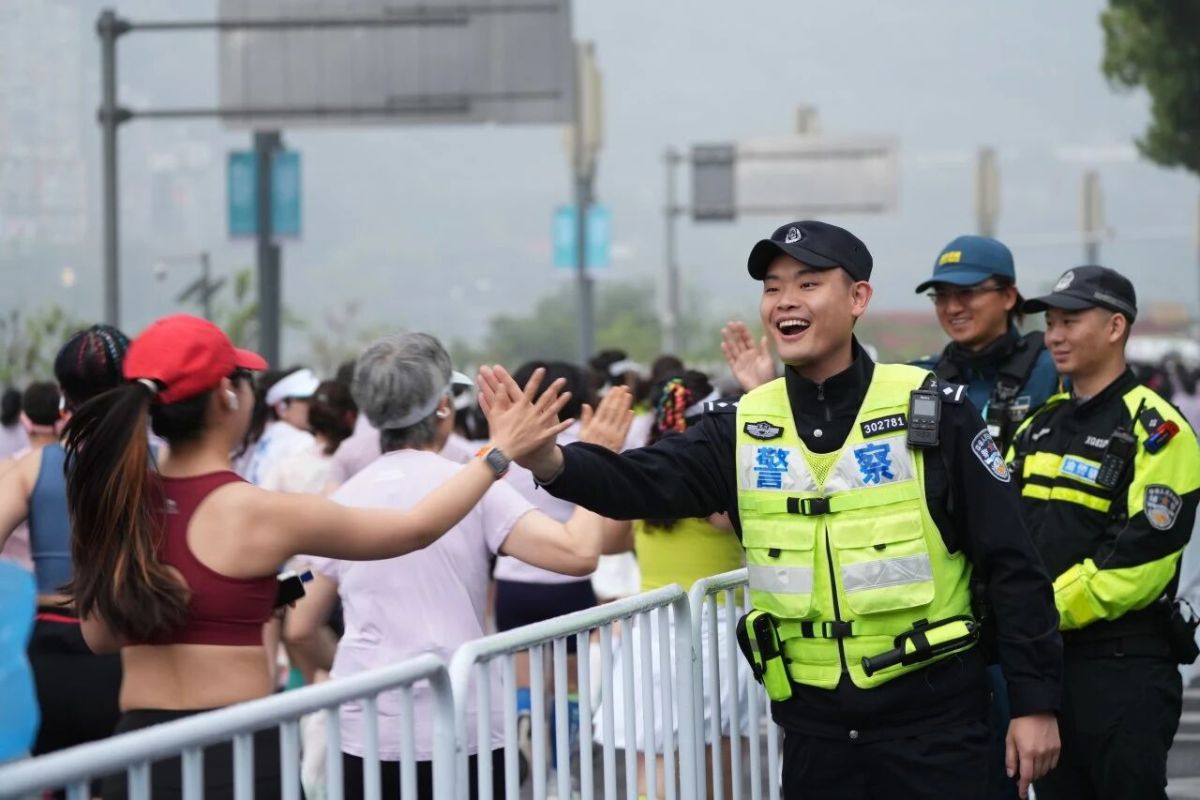
Deployed officers made their way through the crowds, high-fiving runners along the course.
Officers also used big data and artificial intelligence to monitor crowd flows and adjust traffic management in real time. No major incidents were reported, and traffic remained largely fluid throughout the day.
The race was also part of a broader push to integrate sports, culture, tourism and commerce in the Liangjiang New Area. Organizers worked with local businesses and community groups to set up dozens of cheering stations along the course, and a package of discounts was offered to participants at four scenic spots, 17 hotels and 34 merchants.
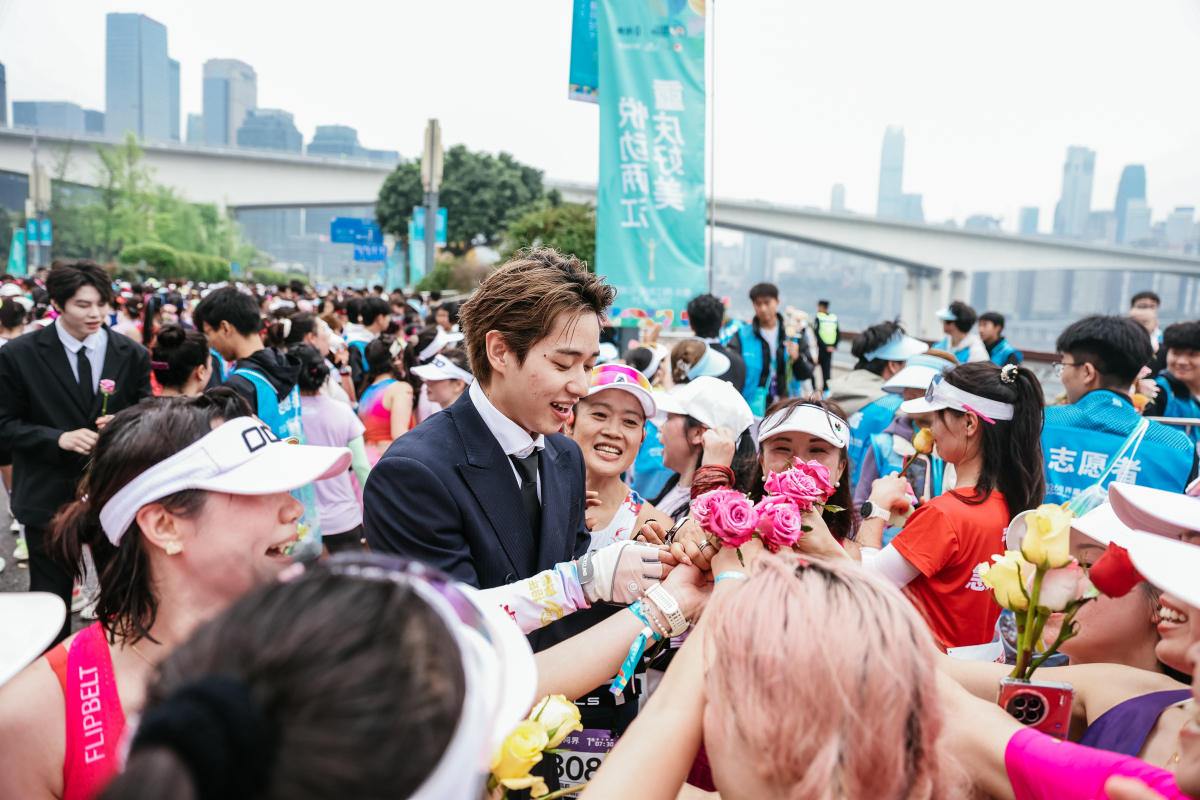
At the finish line, 15,000 flowers awaited every participant who completed the race. (Photo/The Organizer)
To help runners get to the starting line, the city's metro Line 9 began operating at 6 a.m., an hour earlier than usual. After the race, participants could download personalized photos and AI-generated video clips captured by cameras positioned along the route, with footage available free of charge within an hour of finishing.
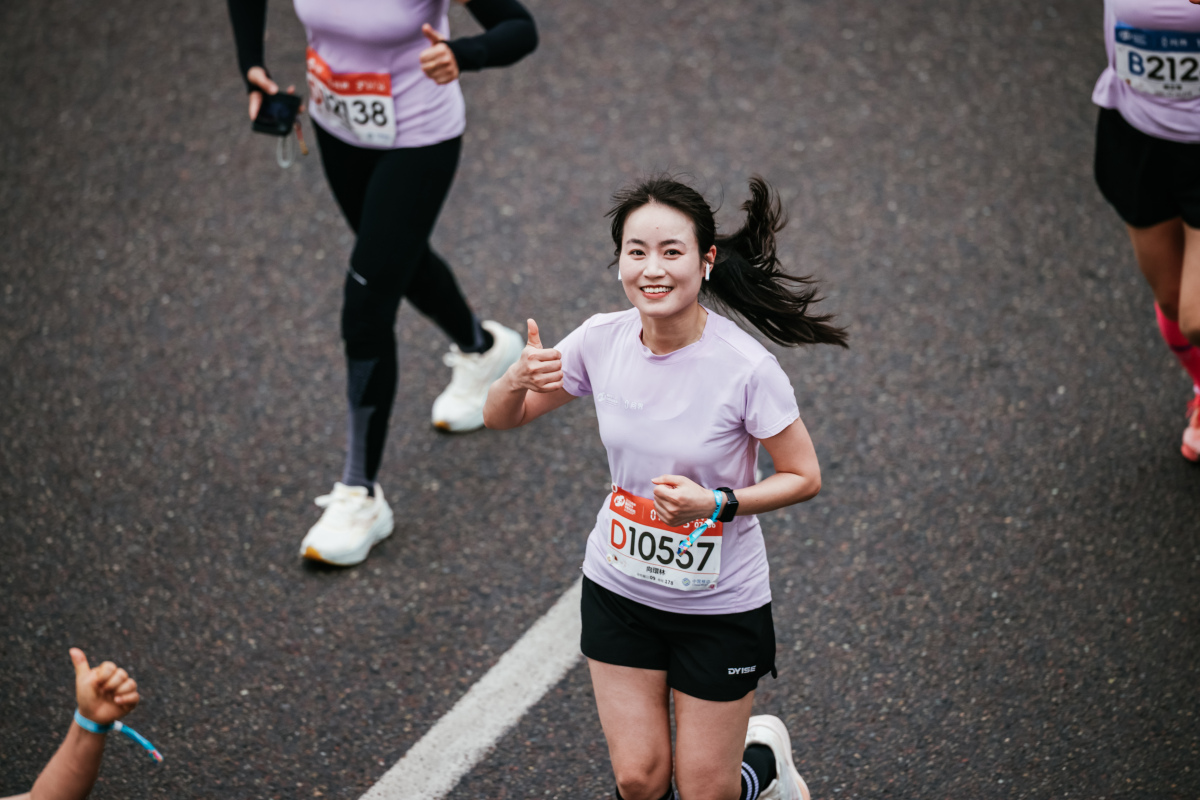
Runners enjoying the race. (Photo/The Organizer)
Each runner received a finisher's medal featuring a pink and gold feathered wing design. Those who completed the course in under one hour and 45 minutes were also awarded a separate commemorative medal.
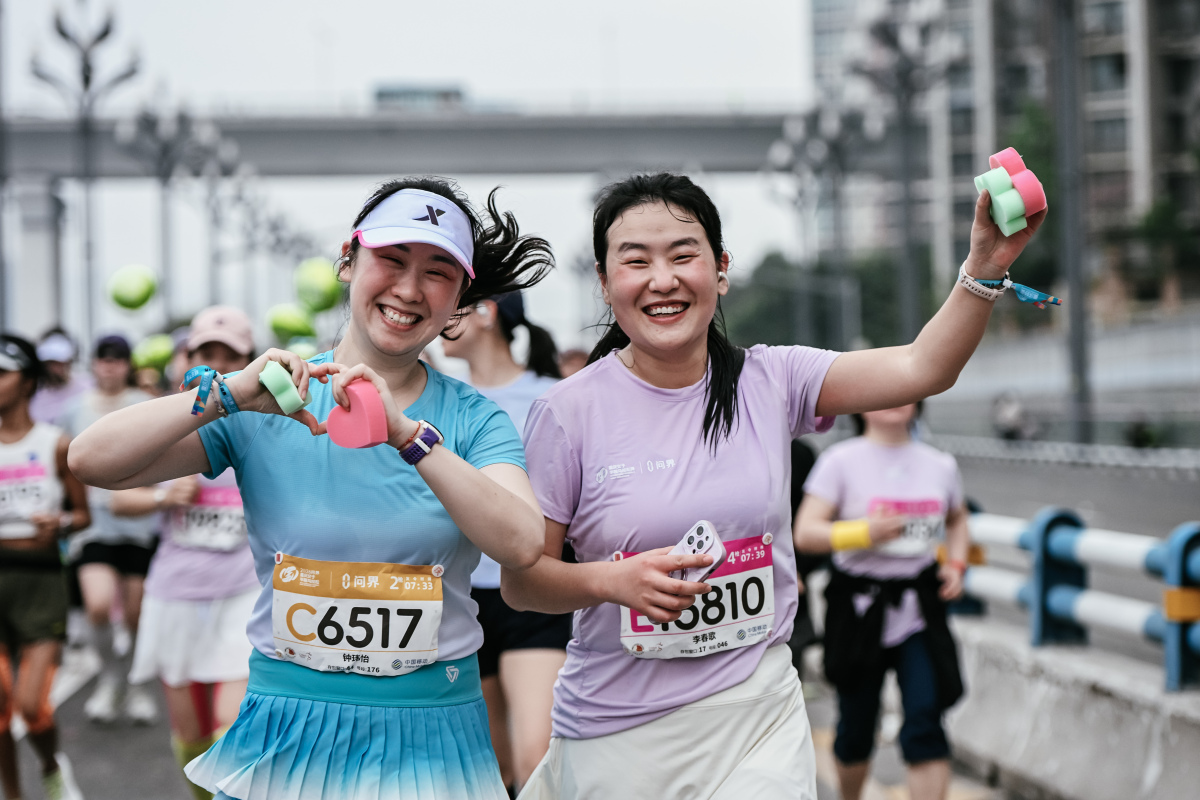
Runners enjoying the race. (Photo/The Organizer)
The 2026 edition built on the event's previous reputation among runners. Several participants said they had returned for a second time, citing the organization and the course conditions.
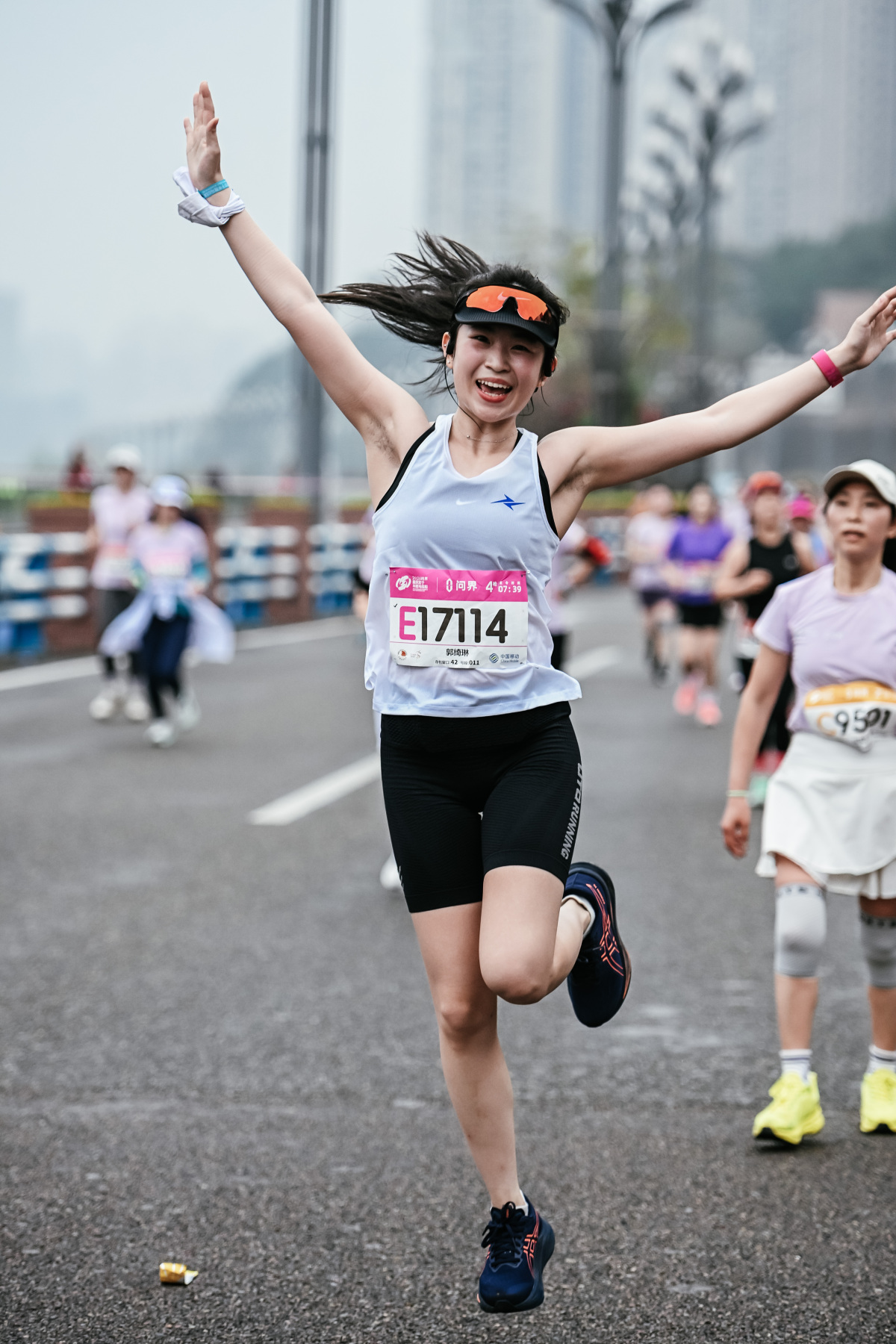
Runners enjoying the race. (Photo/The Organizer)
The race concluded by late morning, with regular traffic patterns resuming shortly afterward. Officials said the event provided a template for how large-scale gatherings can be managed in densely populated urban centers while maintaining public services and minimizing disruption.
By continuing to browse our site you agree to our use of cookies, revised Privacy Policy and Terms of Use. You can change your cookie settings through your browser.
For any inquiries, please email service@ichongqing.info