
Chongqing - Chinese home appliance maker Changhong announced on March 30 a strategic partnership with European brand Grundig, reflecting a broader push by Chinese manufacturers to expand overseas through licensing deals, acquisitions, and joint ventures.
Under the agreement, Changhong will obtain a brand license for Grundig across several product categories, including consumer electronics, large home appliances, air conditioners, and selected small domestic appliances. The licensed markets include Europe, excluding Türkiye, as well as the Asia-Pacific region, the Commonwealth of Independent States, and China.
Changhong said it will oversee product development, design, manufacturing, sales, logistics, and customer service for the brand’s international operations.
Founded in 1945 and headquartered in Nuremberg, Germany, Grundig is a long-established European home-appliance brand operating in over 55 markets. Changhong said its mid-to-high-end positioning will complement its CHiQ brand, which targets younger and broader consumer groups in Europe, as part of a multi-brand global strategy.
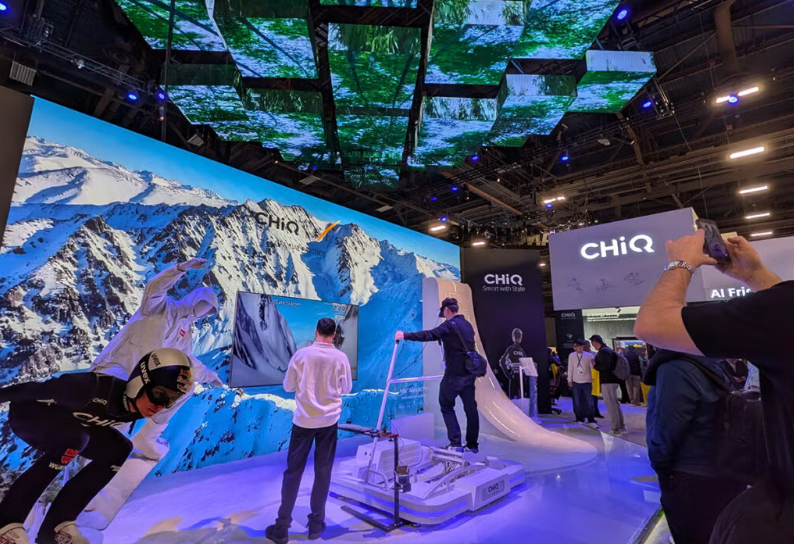
The CHiQ booth at CES 2026. (Photo/CHiQ)
The deal comes amid mounting pressure in the global TV market, where shipments edged down 0.1% year on year to 264 million units in 2025 even as competition intensifies.
Samsung led for a 20th consecutive year with 35.3 million units shipped, followed by TCL with 30.4 million, Hisense with 29.9 million and Xiaomi with 9.8 million, meaning Chinese brands took three of the global top five spots, while growth was seen in North America, emerging Asia-Pacific, Latin America and the Middle East and Africa, contrasted by declines in China and some mature markets.
With regional markets diverging, overseas sales are increasingly vital for Chinese TV makers, as TCL Electronics and Skyworth Group reported on March 27 that international TV revenue drove growth in 2025; TCL’s annual revenue rose 15.4% to HK$114.58 billion, with overseas TV sales up 15.7% to HK$47.50 billion, while Skyworth’s overseas TV revenue grew 21.8% year on year to 9.89 billion yuan.
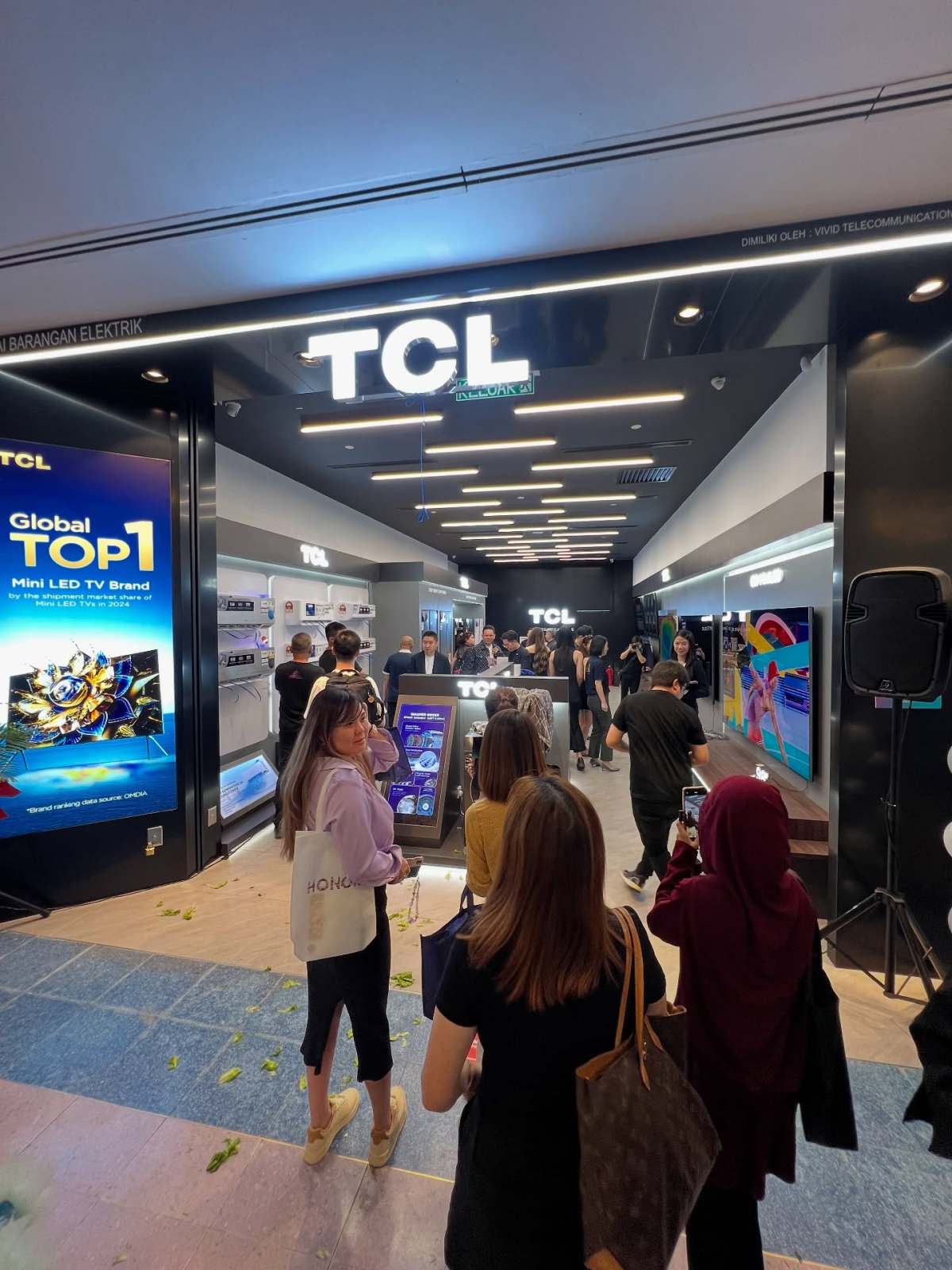
TCL's first branded store in Malaysia opened at Sunway Pyramid on May 30, 2025. (Photo/TCL)
The picture in China is different. RUNTO said China's TV market shipped 32.9 million units in 2025, down 8.5% from a year earlier and marking the lowest level in at least 16 years. Among the leading brands, only Haier recorded shipment growth, and that increase was less than 5%, while all other major brands declined.
Today's TV partnerships differ from the model foreign companies used to enter China 30 years ago. In the 1990s, automakers such as Volkswagen and General Motors entered China through joint ventures often described as "market for technology." Foreign companies gained access to China's fast-growing consumer market, while China gained manufacturing know-how and industrial upgrading.
The new TV deals work differently: Chinese companies are using their manufacturing scale, supply-chain control, and technology to run or expand established international brands.
TCL's proposed partnership with Sony is a clear example of that shift. TCL Electronics signed a memorandum with Sony in January to explore a joint venture for Sony's home entertainment business, including TVs and home audio. TCL would hold 51% and Sony 49%.
Sony shipped about 4.1 million TVs in 2025, but the brand still has strong recognition in premium segments in Europe and North America, especially for picture and audio technology. In this structure, TCL provides manufacturing, supply chain, and sales strength, while Sony brings brand value and core technology.
TCL's overseas system helps explain why it can pursue that model. The materials say that by the end of 2025, TCL had 38 manufacturing bases and 46 research and development centers overseas, covering more than 160 countries and regions, including Vietnam, India, and Mexico. That network spans research, production and sales, giving TCL a full-chain operating system.
Chinese manufacturer Haier has long pursued global expansion through acquisitions and localization. Its 2016 5.58 billion U.S. dollars purchase of GE Appliances gave it a leading North American presence, where GE Appliances is now the top major home appliance brand.
Haier’s international portfolio—including Haier, Casarte, Leader, GE Appliances, Fisher & Paykel, AQUA, and Candy—is supported by 10 R&D centers, 35 industrial parks, 163 factories, and over 230,000 sales outlets worldwide. In Europe, its X11 washing machine series, using 70% less energy than the new Class A standard, sold over 800,000 units in more than 20 countries.
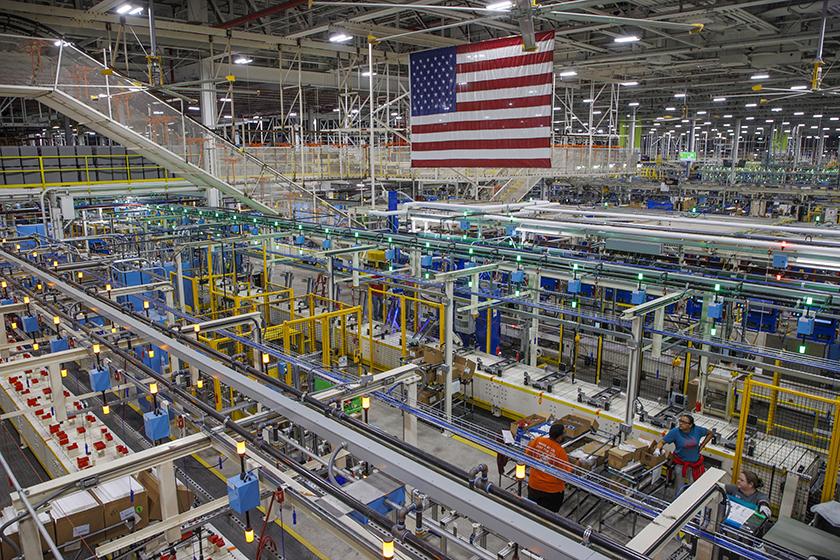
A dishwasher assembly line at GE Appliances' headquarters in Louisville, Kentucky, U.S. (Photo/GE Appliances)
Skyworth has previously acquired German premium brand Metz and Austrian electronics company Strong, while it will take over Panasonic's TV sales, marketing, and logistics operations in North America and Europe from April 2026. Hisense acquired Toshiba's TV business in 2017, while Midea acquired Toshiba's home appliance business in 2016.
Together, these deals show how Chinese manufacturers are combining domestic industrial scale with international brands that already have distribution networks and consumer recognition overseas.
The timing may also matter. Analysts said 2026 will be a major year for global sports events, including the Winter Olympics, the FIFA World Cup, and the Asian Games. Television remains a core viewing device for large live events, so the industry could see stronger demand and tougher competition.
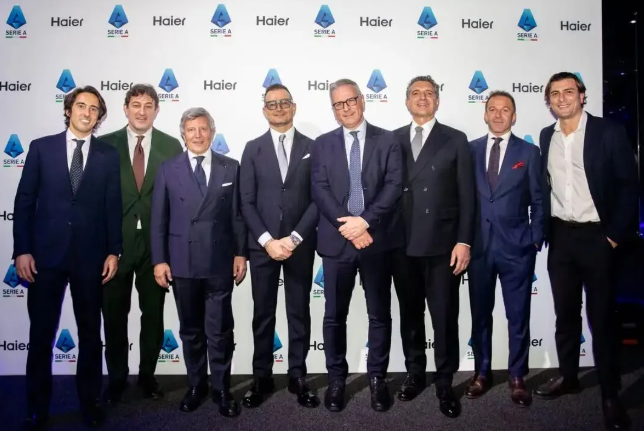
On February 5, 2026, Haier officially announced its partnership with Lega Serie A. (Photo/Haier)
Industry observers say Chinese brands are no longer competing only on volume. Matthew Rubin, chief analyst for TV sets at Omdia, said: "Chinese brands have shown strong flexibility in growth strategy over the past year. Entering the US market is now more challenging, but TCL and Hisense have adjusted their supply chains to meet the new requirements. This flexibility comes with rising costs, and profitability is becoming even more important, especially as component costs such as memory increase."
Yang Fan, a veteran media commentator, said Chinese TV brands had gained a firm foothold in the global market after years of catching up and were continuing to invest in technologies, including Micro LED and OLED.
By continuing to browse our site you agree to our use of cookies, revised Privacy Policy and Terms of Use. You can change your cookie settings through your browser.
For any inquiries, please email service@ichongqing.info