
Chongqing - Thai tapioca exporters are increasingly targeting southwest China, with Chongqing emerging as a key hub for tapioca starch import, logistics, and distribution, as highlighted by a business matching event on April 8 where 12 Thai companies and industry groups met with local firms to strengthen trade and supply chain cooperation.
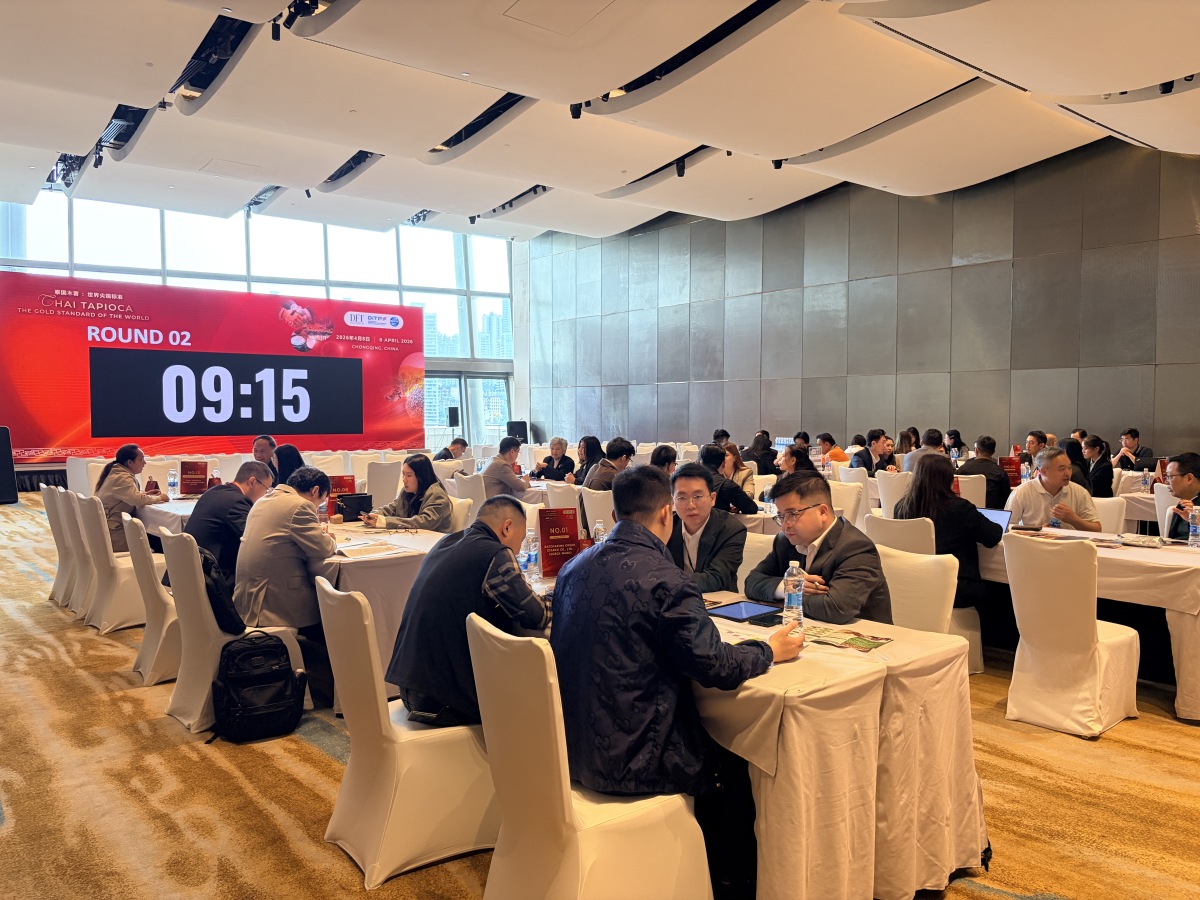
Participants attend a China-Thailand tapioca business matching event in Chongqing. (Photo/Zheng Ran)
The event reflects rapidly strengthening economic ties between Chongqing and Thailand. Official data show that bilateral trade reached 341.49 billion yuan (about 49.8 billion U.S. dollars) in 2025, up 55.2% year-over-year. Meanwhile, trade in the first two months of 2026 totaled 5.3 billion yuan, representing a 64% increase.
Yang Xuchao, vice chairman of the China Council for the Promotion of International Trade Chongqing Committee, said Chongqing and southwest China represent a significant and growing market for Thai tapioca products. He noted that food processing is one of the city's key industries, with products such as rice noodles, baked goods, beverages, and prepared meals driving demand for higher-quality tapioca starch.
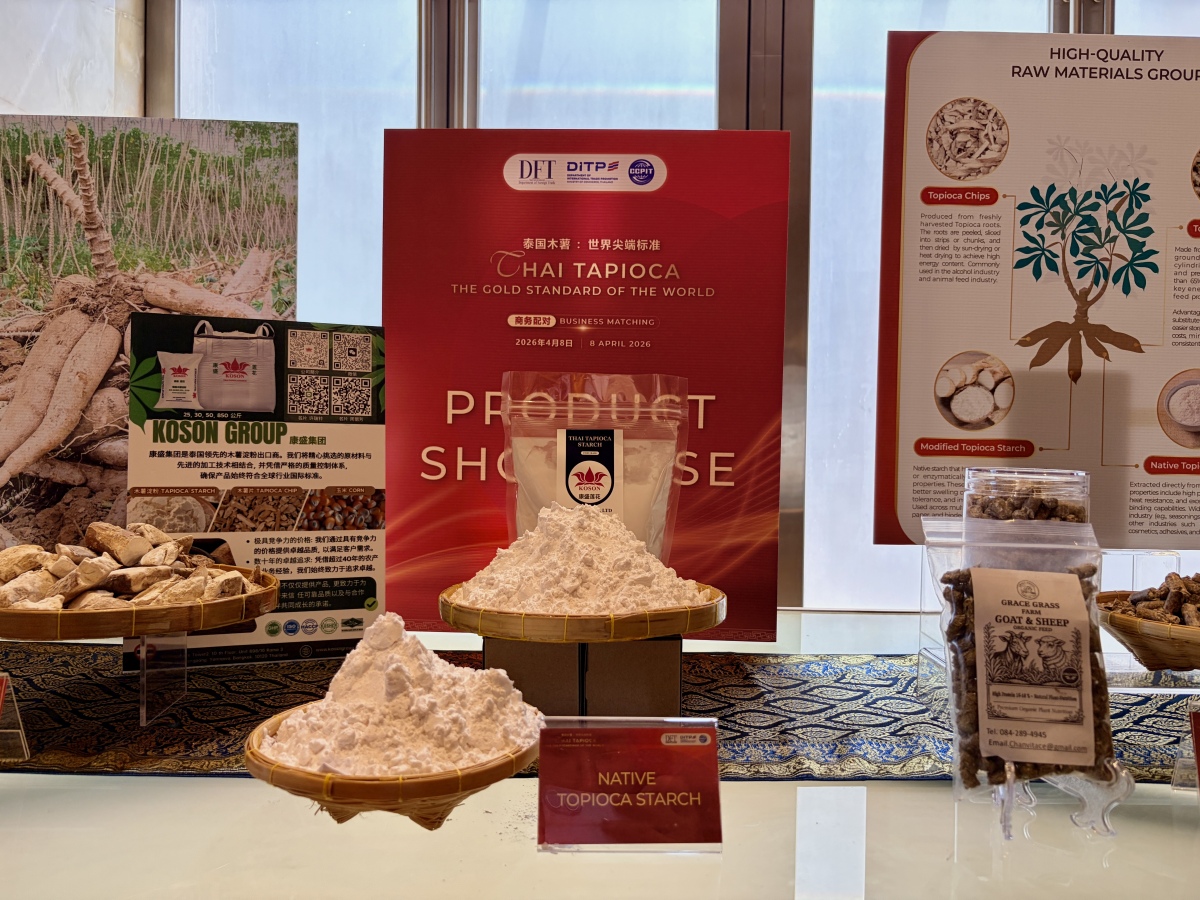
Thai tapioca starch products are displayed at the event venue. (Photo/Zheng Ran)
In the animal feed sector, Yang said the continued shift toward large-scale and industrialized farming in southwest China is sustaining stable demand for tapioca-based feed ingredients. He also highlighted emerging opportunities in bioenergy, stating that tapioca, as a raw material for fuel ethanol, is seeing annual growth of around 15% under China's carbon reduction policies, creating new market potential for Thai exporters.
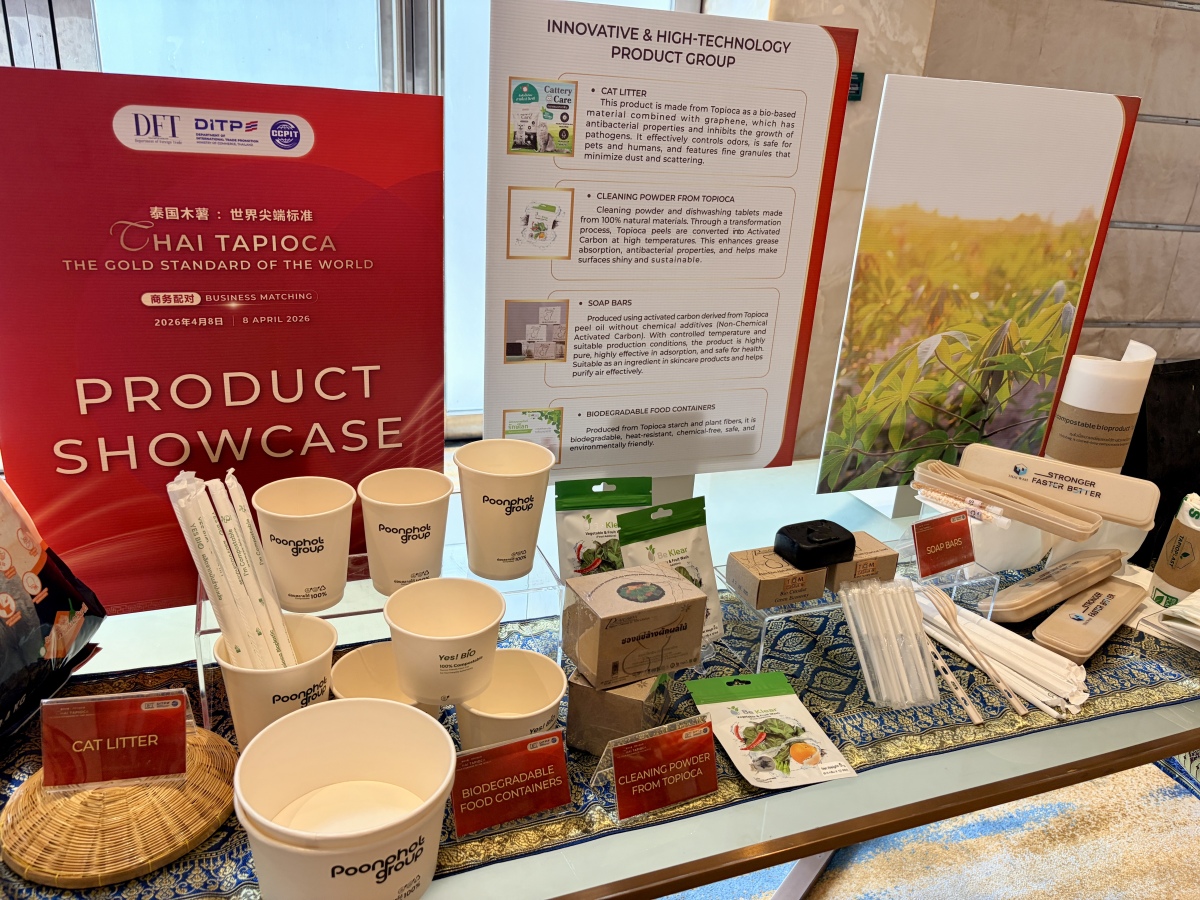
Processed products made from tapioca are showcased during the business matching session. (Photo/Zheng Ran)
Unlike tropical Southeast Asia, Chongqing does not produce tapioca due to its colder winters, making large-scale cultivation unfeasible. The city relies almost entirely on imports and has instead developed into a regional hub for importing, bonded storage, redistribution, and primary processing, supported by logistics networks such as the New International Land-Sea Trade Corridor (ILSTC) and rail links with Southeast Asia.
In 2025, Chongqing's tapioca and tapioca starch trade volume reached 60,330 tons, a 215.4% increase year-on-year. In the first two months of 2026, volumes totaled 17,430 tons, up 5%.
For Thai exporters, Chongqing remains a relatively new market compared with China's coastal regions. Jeff Tsen, a sales and marketing executive at Chok Yuenyong Industry Co., Ltd., said his company has operated in the sector for more than 20 years, runs four plants in Thailand, and has a production capacity of 3,000 tons per day. He said China already accounts for a major share of the company's exports, but Chongqing is still quite new compared with coastal port markets such as Qingdao and Shanghai.
After meeting local companies, Tsen said the level of interest is high, but added that Thai tapioca starch still has a relatively limited presence in Chongqing. He said local demand appears to come mainly from food products such as noodles, as well as some interest from paper industry participants and distributors. He also said local companies still need more awareness of the differences between Thai starch and competing products from Laos and Vietnam.
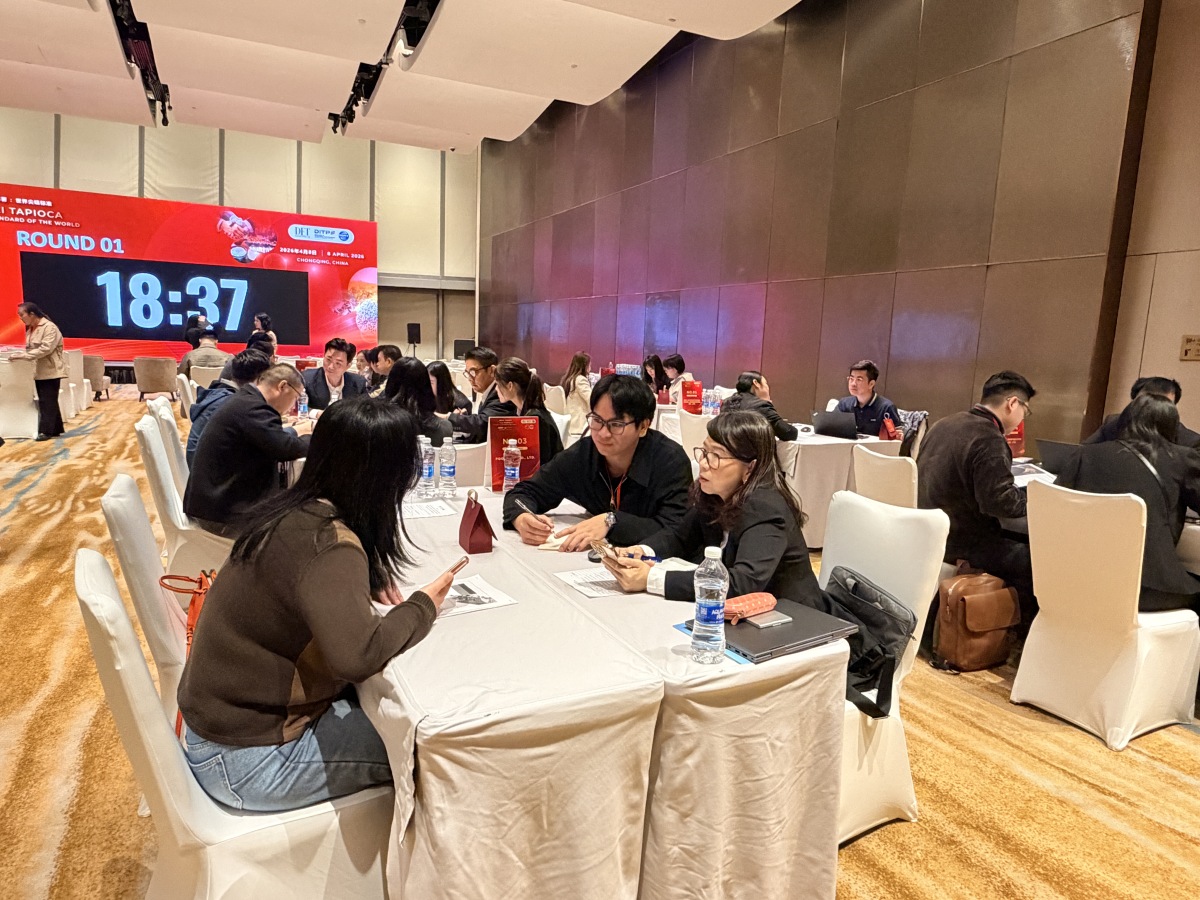
Dr. Kuakoon Piyachomkwan (right) explains business cooperation details to company representatives during the matchmaking session. (Photo/Zheng Ran)
Dr. Kuakoon Piyachomkwan, executive vice president for innovation and technology-agriculture at Poon Phol Co., Ltd., said her company exports native starch to China in large volumes and is also promoting modified starch. After speaking with about four companies at the event, she said they were very interested in importing Thai tapioca starch, mainly because of its quality, especially for food use. She said the company's strength lies in providing technical support and customizing starch for different applications.
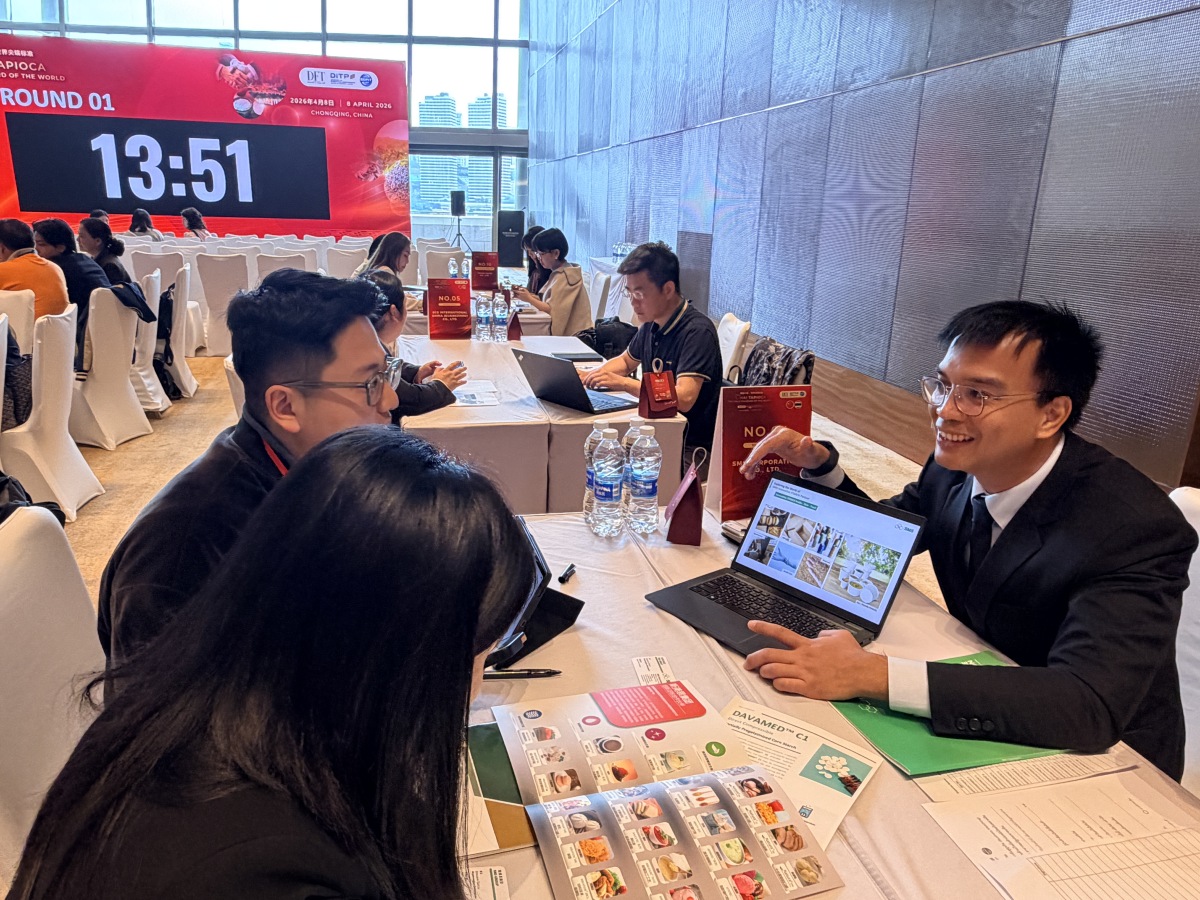
A representative of the Thai company SMS Corporation presents tapioca products to business representatives from Chongqing during the event. (Photo/Zheng Ran)
Thai Wah Public Company Limited, another major Thai producer, also sees China as its core market. Siwan Bunyasup, senior officer for international sales at Thai Wah Public Company Limited, said her company exports to around 27 countries and regions, and that China accounts for roughly 75% to 80% of its export share. But she said Chengdu and Chongqing are still newly developing markets for the company.
Bunyasup also said the market is being shaped by rising costs. She said international developments, especially the Middle East conflict, have driven up oil prices, increasing transport costs and, in turn, tapioca starch prices. She added that buyers may switch to alternatives such as corn starch if tapioca prices rise too much.
Zhang Hongjuan, tapioca starch project manager at Land Port Hub (Chongqing) Economic and Trade Co., Ltd., said her company entered the sector only last year but has already handled around 100,000 tons of tapioca-related business, including about 60,000 tons of imports.
She said the company currently imports mainly from Laos and Vietnam because those products are better aligned with the price-sensitive demand of southwest China, where downstream users are concentrated in sectors such as vermicelli production and fireworks manufacturing.
Still, Chongqing's policy and logistics advantages are drawing increasing attention. Yang said the ILSTC linking 127 countries and 586 ports, and that regular China-Laos-Thailand rail services can bring Thai goods to Chongqing in five days, more than 20 days faster than river-sea transport and at around half the cost of road shipping. He also said the city wants to encourage Thai companies to invest in processing in Chongqing and support Chongqing firms investing in cultivation and processing in Thailand.
By continuing to browse our site you agree to our use of cookies, revised Privacy Policy and Terms of Use. You can change your cookie settings through your browser.
For any inquiries, please email service@ichongqing.info