
Chongqing - Thousands of students across Chongqing have just completed the city's first official "spring break," a new policy that aligns with the Tomb Sweeping Day holiday (the Qingming Festival). The combined five-day break has become what educators call a "living social studies lesson," with schools and parents organizing activities that blend history, culture, and the outdoors.
For many students, the holiday began with a long walk.
On April 3, more than 1,200 teachers and students from Nanchuan Middle School hiked 11 miles (17.8 kilometers) to the Nanchuan District Martyrs' Cemetery. The route included rest stops dubbed "mobile classrooms," where students heard stories about heroes.
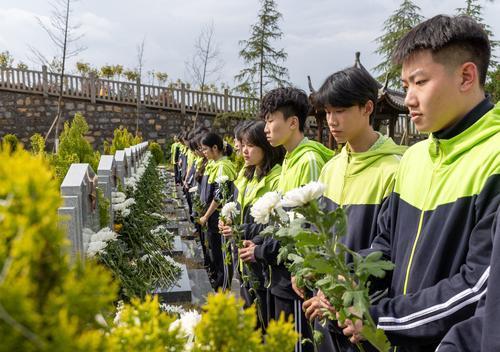
On April 3, at the Martyrs' Cemetery in Nanchuan District, teachers and students from Nanchuan Middle School laid flowers at the martyrs' graves. (Photo/Luo Chuan)
This year marks the 90th anniversary of the victory of the Red Army's Long March (1934–1936). Upon reaching the cemetery, students laid flowers, listened to heroic stories, and cleaned the tombstones — transforming textbook history into a direct emotional experience.
After the 11-mile hike and the cemetery visit, each student received a certificate of completion. "It is not just proof of perseverance," the school said. "It is a badge of growth."
Similar commemorative hikes were organized across the city, including at Yongchuan Middle School, Jianshan Middle School, and Fengdu No. 2 Middle School.
Not all activities were solemn. At a community center in the High-tech Zone, children gathered to make qingtuan, a traditional green glutinous rice ball eaten during the Qingming Festival.
"Do you know why we eat qingtuan during Qingming?" a social worker asked a group of children, using pictures and stories to explain the festival's origins. "It is for remembering our ancestors, welcoming spring, and wishing for safety and health."
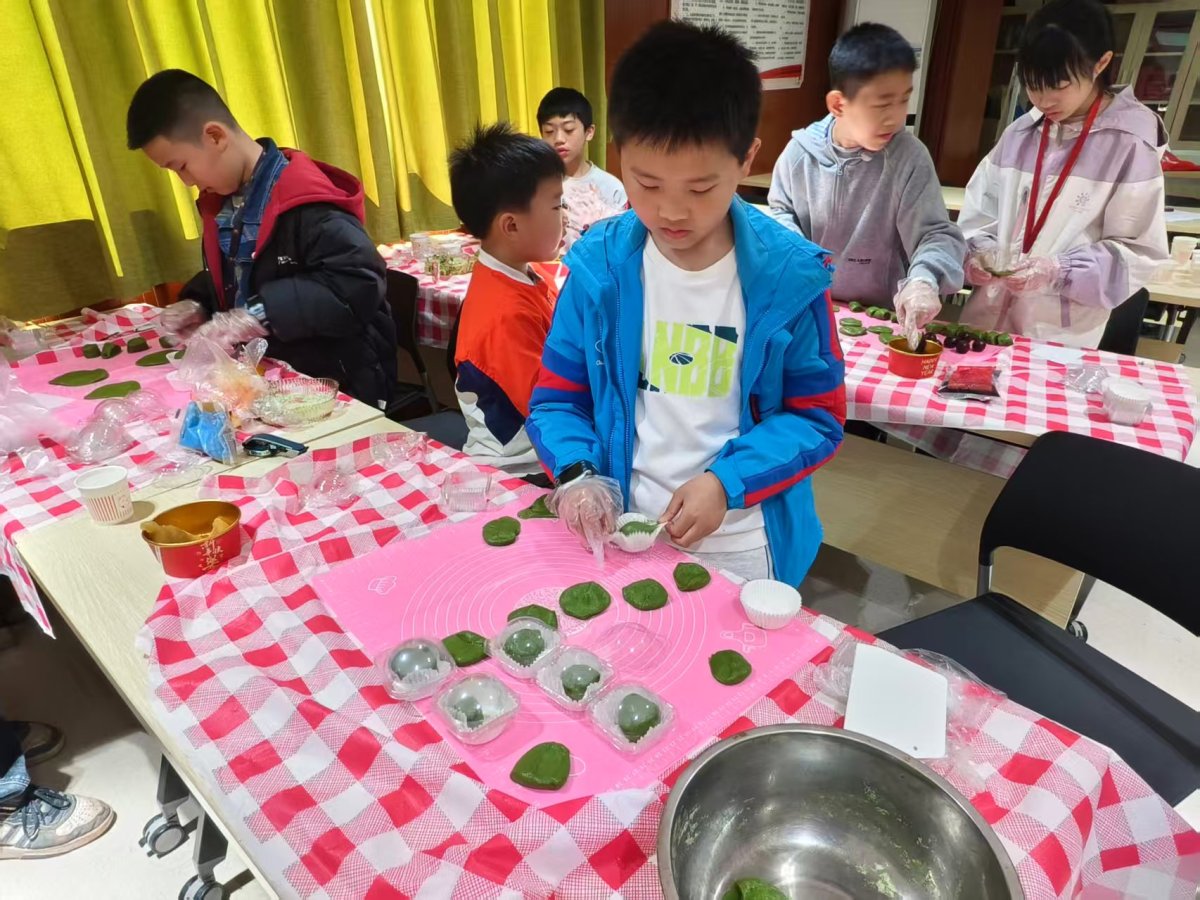
At a community center in the High-tech Zone, children gathered to make qingtuan. (Photo provided by interviewee)
Under guidance, the children kneaded dough, filled it with red bean paste, and shaped the dumplings by hand. One sixth-grader held up her creation and said, "Look, my little qingtuan is so cute. I'm taking it home for my parents to taste."
"Labor is not just about doing things - it is also about passing on culture," a community leader said.
Many families also painted eggs, made kites, and hung wind chimes - reviving customs passed down for generations.
The holiday also drew families into the countryside. In the suburbs of Chongqing, children harvested bamboo shoots, foraged in fields, picnicked by streams, and observed aquatic life in local creeks.
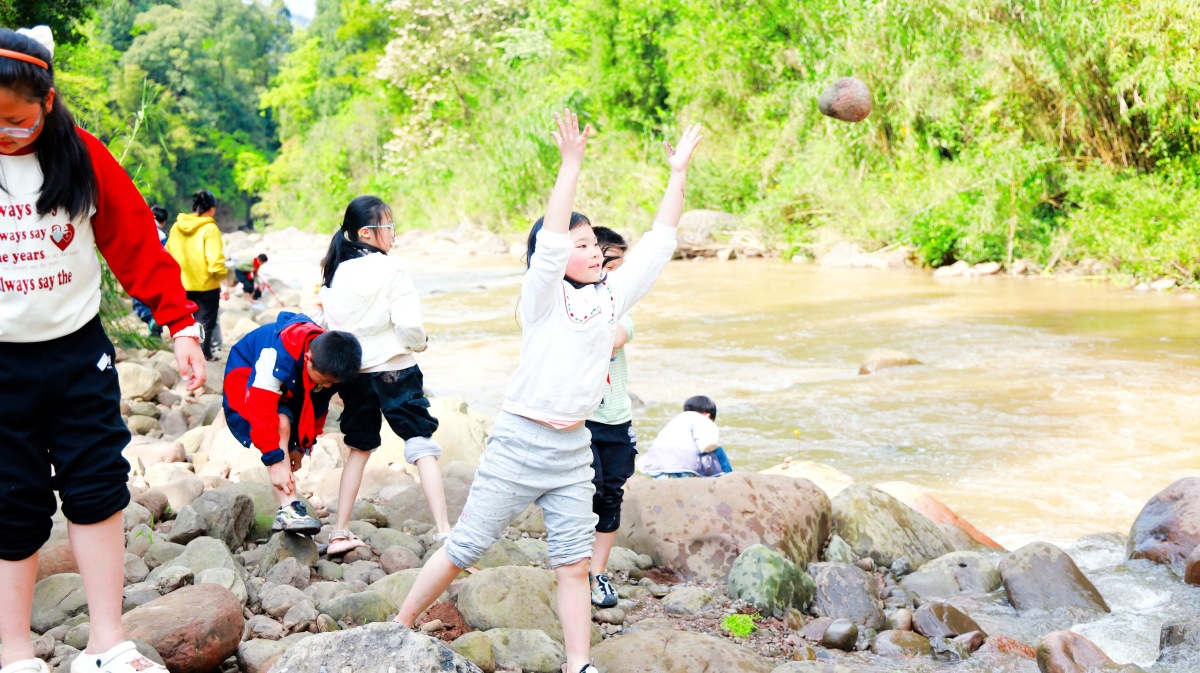
The holiday also drew families into the countryside. (Photo provided by interviewee)
"Getting close to nature" has become a popular holiday choice, and the city's education authorities have encouraged such outdoor activities to extend learning beyond the classroom. Several districts launched special spring hiking routes for families.
Chongqing's spring break policy was formally introduced in March 2026. Each school year now includes one spring break and one autumn break, each lasting two to three days, which can be combined with weekends and public holidays. The policy prohibits written homework, immediate post-break exams, and any form of remedial classes during the break. Schools may offer free on-campus childcare for families with demonstrated needs.
The break has also boosted local tourism. According to travel platform Ctrip, during the spring break period, travel orders and spending among parent-child travelers in pilot cities increased more than 300% year-on-year - roughly five times the growth rate of non-parent-child travelers. In Chongqing, local entertainment consumption rose 106%, ticket revenue at scenic areas increased 50%, and hotel bookings grew 48%.
Local attractions reported a surge in family visitors. One major theme park welcomed nearly 75,000 visitors between April 2 and 7, with family groups accounting for 66%. Another park in Yongchuan recorded 128,000 visitors, 80% of whom were family groups, while an ocean park saw youth attendance double compared to the same period last year.
For parents still at work during the break, community centers and schools stepped in with free activities. At one community in Yuzhong District, children learned to make traditional hairpins. In another subdistrict, a community micro-palace hosted a session where children designed their own crafts.
At one experimental school, a two-day free camp offered sports, calligraphy, pottery, tie-dye, and farm activities. Students built scarecrows at the school’s nature classroom and spent time with farm animals.
(Dong Baoxu, as an intern, also contributed to this article.)
By continuing to browse our site you agree to our use of cookies, revised Privacy Policy and Terms of Use. You can change your cookie settings through your browser.
For any inquiries, please email service@ichongqing.info