
Chongqing - China has completed excavation on all 56 mainline tunnels of the Chongqing-Wanzhou High-Speed Railway, a major infrastructure project in the country's southwest, marking a significant step toward the line's planned opening.
The milestone was reached at around 8 a.m. on April 12, when construction crews completed tunneling on the Changlinggang Tunnel, the project's final and most technically challenging section, according to Yuwan Railway Co., Ltd.
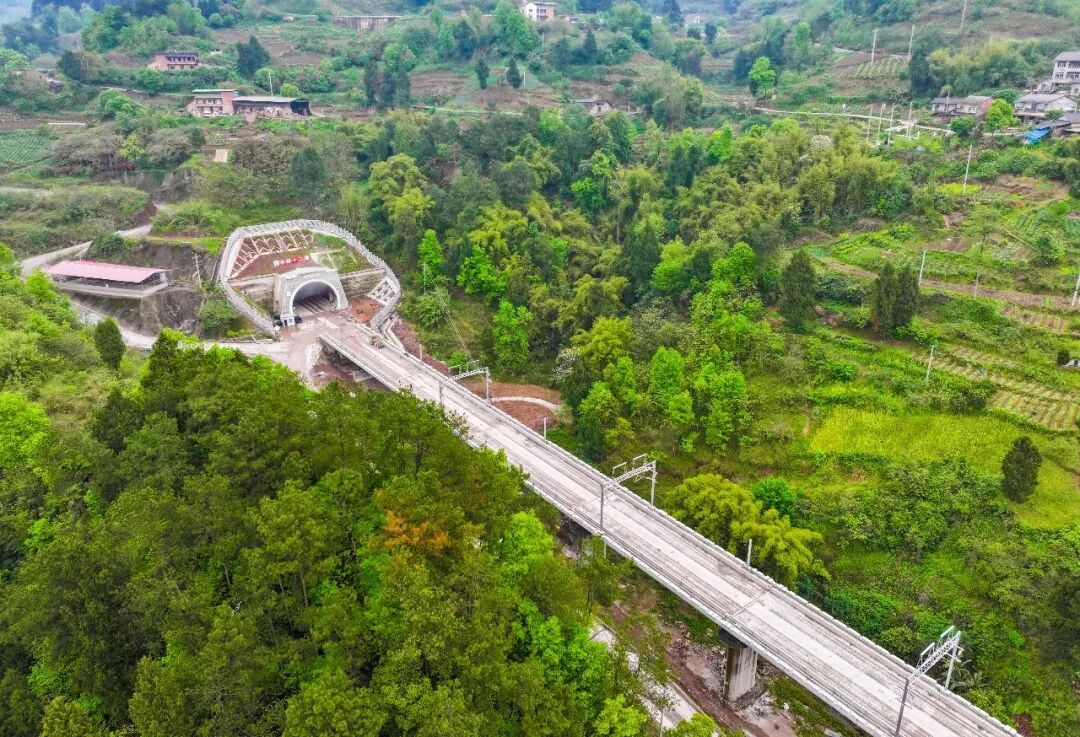
The Changlinggang Tunnel. (Photo/Yuwan Railway Co., Ltd)
The Changlinggang Tunnel, built by China Railway 12th Bureau Group, is the longest tunnel on the line and classified as a high-risk Grade I project. Designed as a single tunnel with dual tracks, it spans 13,325 meters and passes through complex geological conditions, including karst formations, gas-prone zones, and fault-fracture belts.
Project manager Sui Hongtao described the tunnel as a "geological museum" due to the diversity of terrain encountered during construction. The tunnel crosses seven types of surrounding rock, two fault zones and multiple shallow-buried sections. Workers navigated more than 6,200 meters of gas-bearing strata and over 3,800 meters of karst geology, while also managing water inflows exceeding 30,000 cubic meters per day at peak levels.
To address these challenges, engineers deployed a combination of advanced geological forecasting technologies, including transient electromagnetic detection, ground-penetrating radar and seismic wave methods. These tools allowed teams to assess underground conditions in advance and mitigate risks such as gas leaks, collapses and sudden water surges.
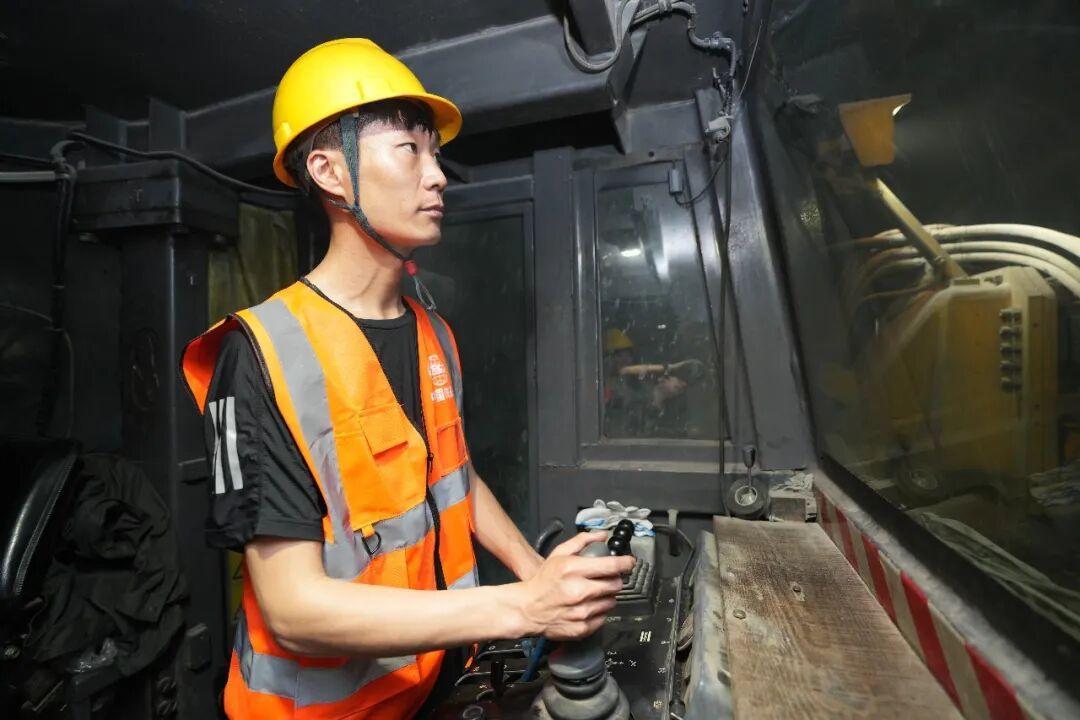
Technical staff carry out operations within the Changlinggang Tunnel. (Photo/Yuwan Railway Co., Ltd)
Construction also incorporated digital engineering systems. Using Building Information Modeling (BIM)- a digital method for creating detailed 3D representations of infrastructure- and drone-based imaging, engineers built high-precision tunnel models. Three-dimensional laser scanning was used to monitor structural changes in real time, improving early warning capabilities.
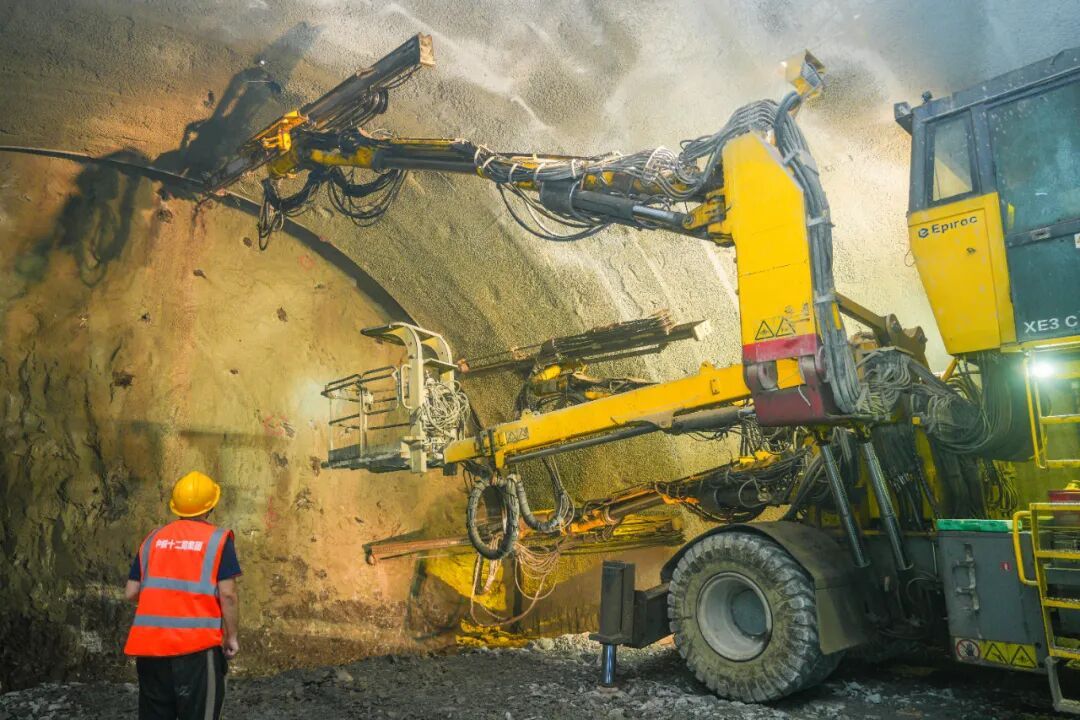
An engineer works inside the Changlinggang Tunnel. (Photo/Yuwan Railway Co., Ltd)
Robotic welding systems and smart lining machinery were used to improve efficiency and reduce labor intensity. Additionally, engineers developed an emergency response robot, known as "Wali," equipped with remote video monitoring, gas detection, and automated risk alerts. According to chief engineer Zhang Xiaofei, the system enables real-time hazard monitoring throughout the excavation process.
Wang Jianhua, head of the Fengdu command center under Yuwan Railway Co., Ltd, said construction has progressed steadily since the project began. The railway has now entered a critical phase involving station construction and "four-electric" systems- referring to power supply, signaling, communication, and electrification infrastructure.
The 251-kilometer railway, designed for speeds of up to 350 km/h, is part of China's "Eight Vertical and Eight Horizontal" high-speed rail network, a national plan to expand connectivity across the country. Once operational, the line is expected to strengthen links between the Three Gorges Reservoir area in northeastern Chongqing and the city's metropolitan core, improving travel efficiency and supporting regional economic development.
By continuing to browse our site you agree to our use of cookies, revised Privacy Policy and Terms of Use. You can change your cookie settings through your browser.
For any inquiries, please email service@ichongqing.info