
Chongqing - China’s New International Land-Sea Trade Corridor (ILSTC), a logistics network linking its western regions to global markets, has completed its initial development goals and is entering a “2.0 phase” marked by expanded networks, rising trade volumes, and deeper regional integration.
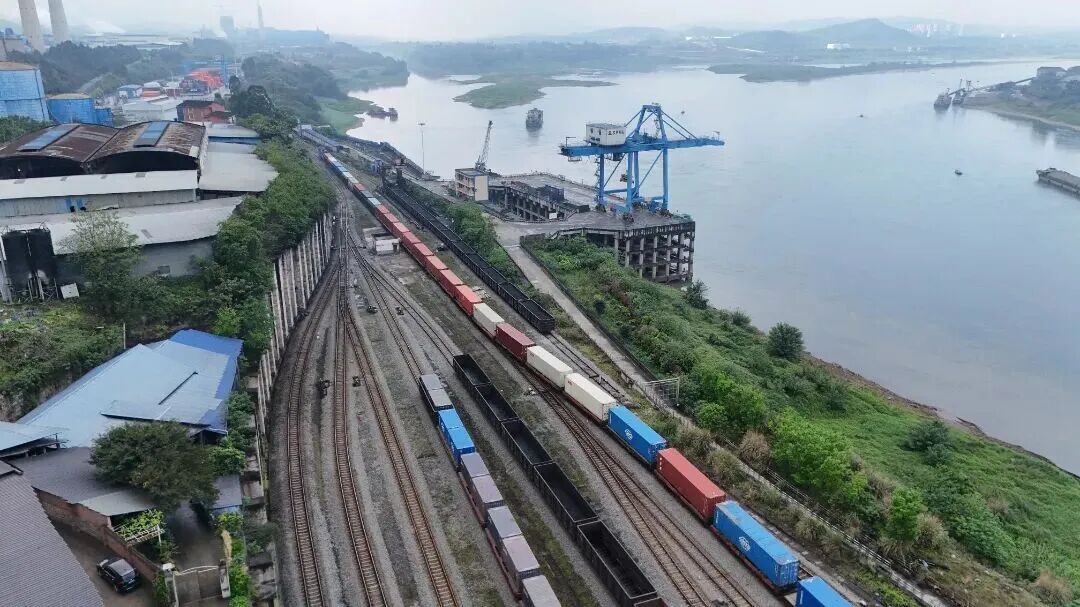
Cargo is dispatched from Luohuang Port in Chongqing aboard a rail-sea intermodal freight train on the New International Land-Sea Trade Corridor. (Photo/New Land-Sea Corridor Operation Co., Ltd)
The corridor stretches across western China, linking inland regions to the Silk Road Economic Belt to the north and the 21st Century Maritime Silk Road to the south. It also connects with the Yangtze River Economic Belt, forming a system enabling "land-sea coordination and two-way opening" between domestic and international markets.
The corridor's network now spans 138 stations across 18 provincial-level regions and links to 584 ports in 127 countries and regions worldwide, expanding at an average pace of one new station every five days, said Yang Lin, director of the Port and Logistics Office of Chongqing Municipal People's Government.
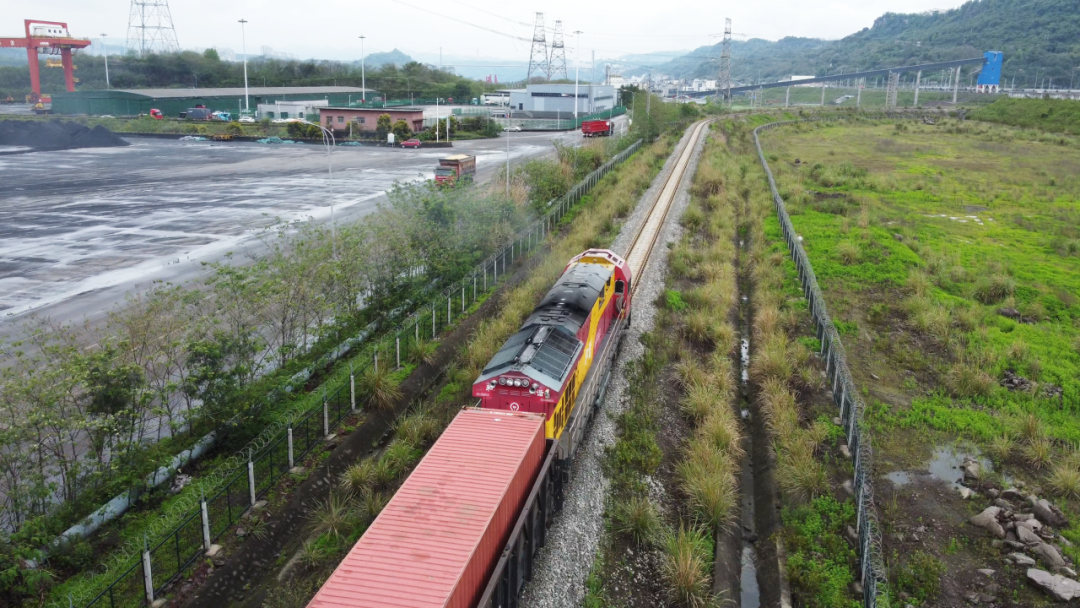
The inaugural Chongqing Fuling-North Africa train carrying automotive knock-down parts departs along the New International Land-Sea Trade Corridor. (Photo/New Land-Sea Corridor Operation Co., Ltd)
The expansion reflects both infrastructure investment and institutional coordination. Major rail projects, including upgrades to key lines in western China and new high-speed links such as the Guiyang-Nanning railway, have improved transport efficiency. Other projects, including the Pinglu Canal - a major inland waterway under construction - are more than 90% complete, while additional rail links are expected to be finished by 2028.
Freight volumes have increased sharply. According to regional officials, container shipments along the corridor rose from 3,382 twenty-foot equivalent units (TEUs) in 2017 to 1.43 million TEUs in 2025. At the same time, the range of goods transported has expanded from around 50 categories to more than 1,200, including electronics, vehicles, machinery, and agricultural products.
The corridor has also supported trade growth. In the first three quarters of 2025, trade conducted via the corridor reached 611.5 billion yuan (about 89.7 billion U.S. dollars), up 19.3% year on year, contributing 3.4 percentage points to overall trade growth in western China.
In addition to infrastructure development, a cross-regional operating platform has been set up to improve logistics efficiency. Liu Yizhen, deputy general manager of New Land-Sea Corridor Operation Co., Ltd, said joint pricing negotiations with railway authorities have cut rail transport costs by around 30% on key routes linking Chongqing and Guangxi.
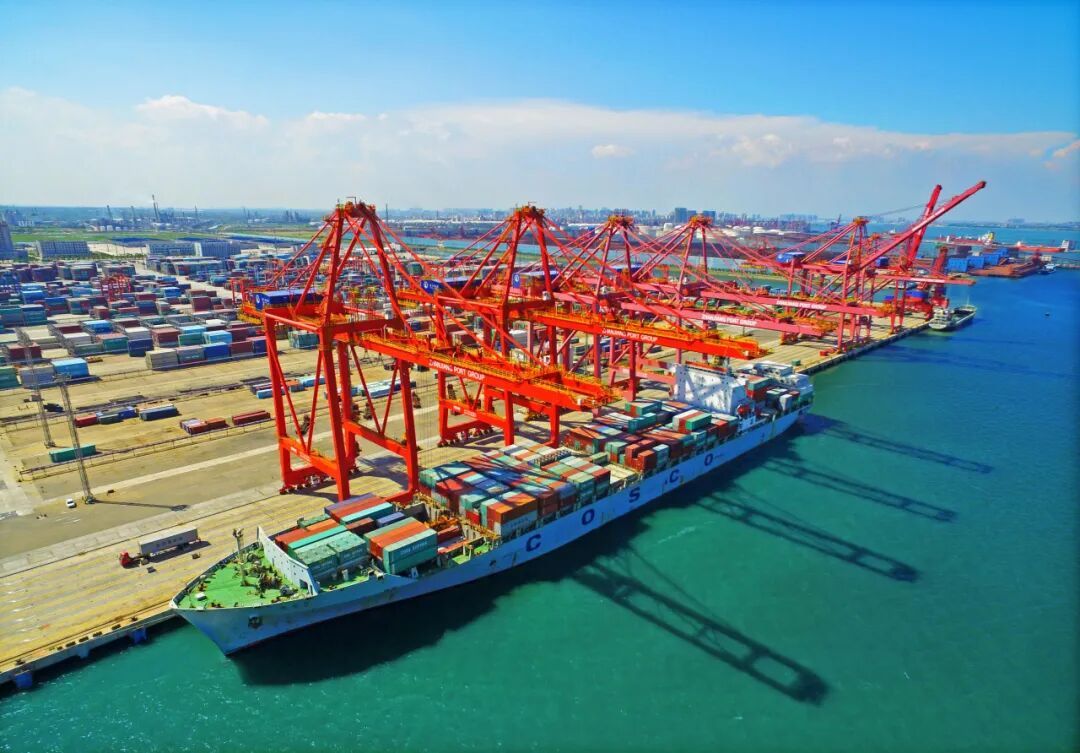
Zhanjiang Port in Guangdong Province, southern China, serves as a key gateway connecting the New International Land-Sea Trade Corridor with global shipping routes. (Photo/New Land-Sea Corridor Operation Co., Ltd)
Despite these advances, analysts say further development will require stronger coordination and a shift in focus from infrastructure construction to system optimization.
Zhou Xiaoxue, a researcher at Beijing Jiaotong University, said the corridor must take on a more important strategic role in response to changes in the global economic environment and the evolving needs of western China's development. She said improvements are needed in cross-regional coordination, institutional authority, and long-term cooperation mechanisms.
Local officials and researchers also pointed to the need to strengthen "soft connectivity" - including regulatory coordination, trade facilitation, and international cooperation - alongside physical infrastructure. While cross-border rail links such as the China-Laos and China-Vietnam routes are already operational, some officials said coordination with overseas partners remains uneven, citing gaps in communication channels and institutional frameworks.
Experts say the next phase of development should focus more on integrating logistics with industrial growth. Zou Yizheng, a professor at Shenzhen University, said the corridor should not only increase freight volumes but also support higher-value industries and supply chains. He suggested encouraging companies to establish production bases, distribution centers, and after-sales networks along the route.
Other proposals include developing shared mechanisms for tax revenue, cost-sharing, and ecological compensation among participating regions to address imbalances in investment and returns.
As the corridor moves into its next phase, officials say the focus is shifting from building connections to improving efficiency, resilience, and economic impact. Analysts describe this transition as moving from "whether the corridor exists" to "how well it operates," with greater emphasis on international integration, rule alignment, and industrial development.
By continuing to browse our site you agree to our use of cookies, revised Privacy Policy and Terms of Use. You can change your cookie settings through your browser.
For any inquiries, please email service@ichongqing.info