
Chongqing - On a sweltering July evening along Danzishi Old Street in Nan'an District, Thai tourist Amelia captures the city's glittering skyline on her phone. "Unbelievable. Chongqing's night view is a world wonder," she says. She has already spent three days exploring Ciqikou, riding the Yangtze River cable car, and tackling spicy hotpot - and she's staying three more for the Dazu Rock Carvings and Fairy Mountain.

The Thousand-Hand Guanyin at Dazu Rock Carvings. (Photo/Dazu District)
Scenes like this have become routine across Chongqing this summer. At Liziba Observation Deck, at Jiefangbei Pedestrian Street, and in the bustling Guanyiniao commercial district, foreign visitors are now a familiar sight. "A few years ago, you'd rarely see them," says Mr. Zhang, a local resident in Yuzhong District. "But this summer, they're everywhere. In one hour at Liziba, I ran into five or six groups."
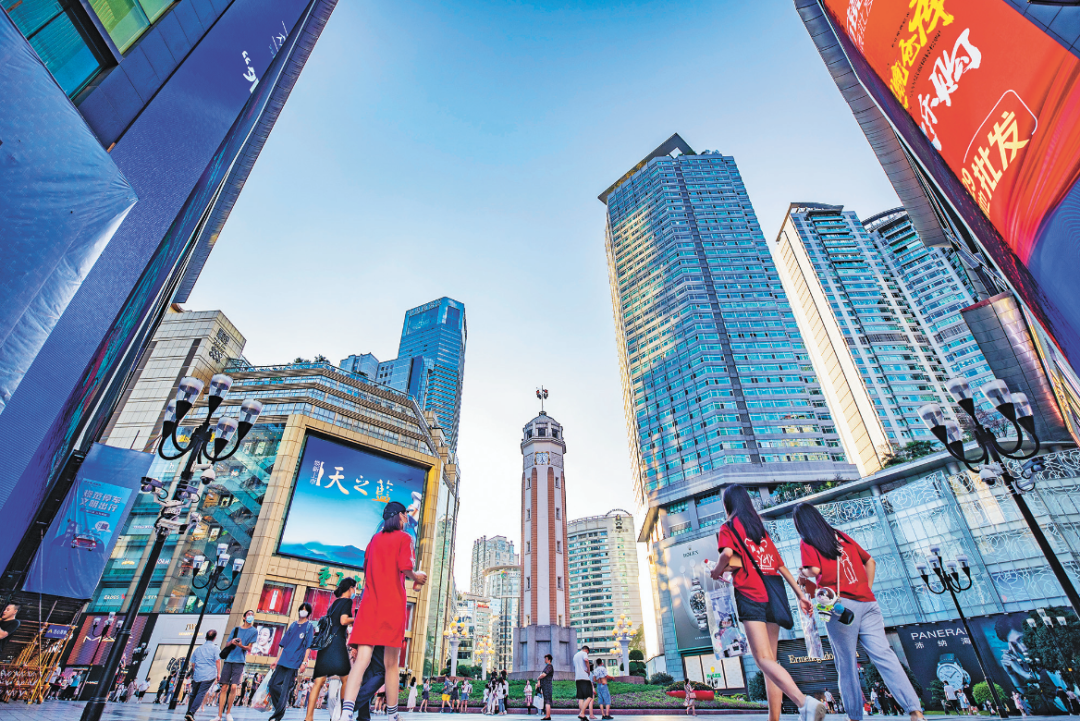
Located in downtown Chongqing, Jiefangbei Pedestrian Street is the busiest and most prosperous business district in western China. (Photo/Chongqing Jiefangbei Business District)
The numbers tell the story. In the first half of 2026, Chongqing Jiangbei International Airport handled more than 1.485 million international and regional passenger trips, up 40 percent year on year - the fastest growth among China's top 10 airports. Foreign passenger entries and exits surged 86 percent to over 610,000. Of these, more than 210,000 arrived under visa-free or 240-hour transit visa-exemption policies, an increase of 83.6 percent. ASEAN visitors led the pack, with Thailand, Malaysia, Singapore, Vietnam, and Indonesia the top five source markets.
This summer's inbound boom reflects a broader shift. Ctrip data show European tourist orders to China jumped 275 percent year on year during June - August, with Chongqing ranking sixth among "Summer's Hottest European Inbound Destinations". Behind the surge lies a triple play of policy, perception, and climate: expanded visa facilitation lowered the barrier to entry; viral travel videos on TikTok and Instagram stoked wanderlust; and record European heatwaves made "cool China" an urgent escape.

Foreign tourists shop at a POP MART store inside Raffles City Chongqing. (Photo/Zheng Ran)
The influx is also reshaping how visitors travel. Jin Bo, who runs both Korean travel firm CCTE and Chongqing Huanjing International Travel Service, has hosted six or seven tour groups in the past ten days alone. He points to three clear trends: independent travel over group tours, a younger demographic (ages 25 to 45), and a shift from sightseeing to immersion. "Korean tourists used to tick boxes," he says. "Now they want to live like locals."
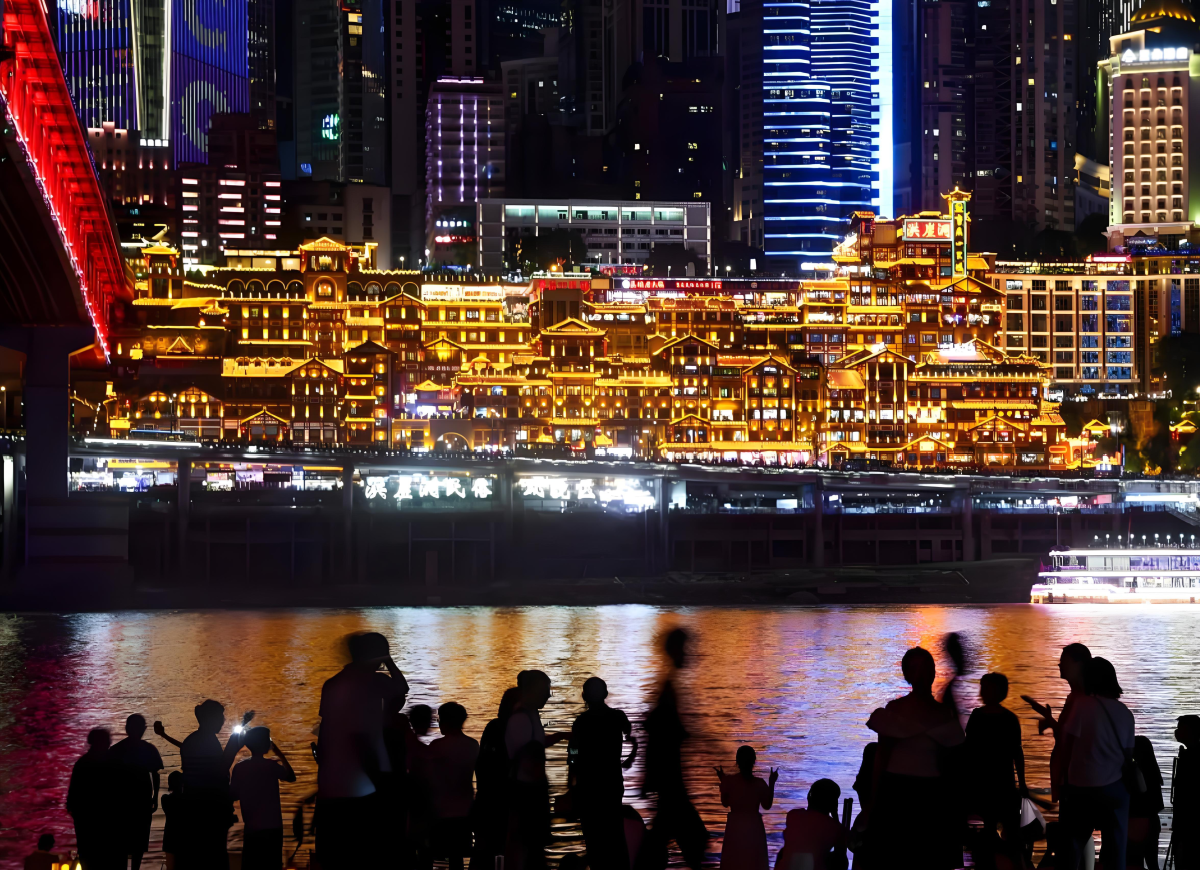
Along the Jialing River in Liangjiang New Area, tourists are taking photos of the night view at Hongya Cave, a popular landmark in Chongqing. (Photo/Liu Chan)
Ctrip Group CEO Sun Jie notes that preferences vary sharply by market. Korean visitors favor stylish, value-driven stays. Southeast Asians rely heavily on feedbacks from social media and love photo-worthy spots. Australians opt for longer, multi-city itineraries. Middle Eastern travelers seek premium customization. Europeans prize sustainability and are drawn to high-speed rail–linked tours across multiple cities.
Chongqing's timing could hardly be better. The State Council has officially designated it a "tourism hub city" and a "key inbound tourism city" under the 15th Five-Year Plan for Building a Tourism Power (2026–2030). The city is one of 24 national hubs for building China's inbound tourism backbone network.
To capitalize, authorities are rolling out the "Majestic Landscapes, Dynamic Chongqing" global promotion campaign. The strategy, dubbed the "Six Batches" initiative, includes recruiting cultural tourism ambassadors, establishing overseas service windows, planning international exchange events, developing blockbuster inbound products, attracting global talent, and certifying service excellence. The target: a 30 percent increase in inbound visitors during the 15th Five-Year Plan period.
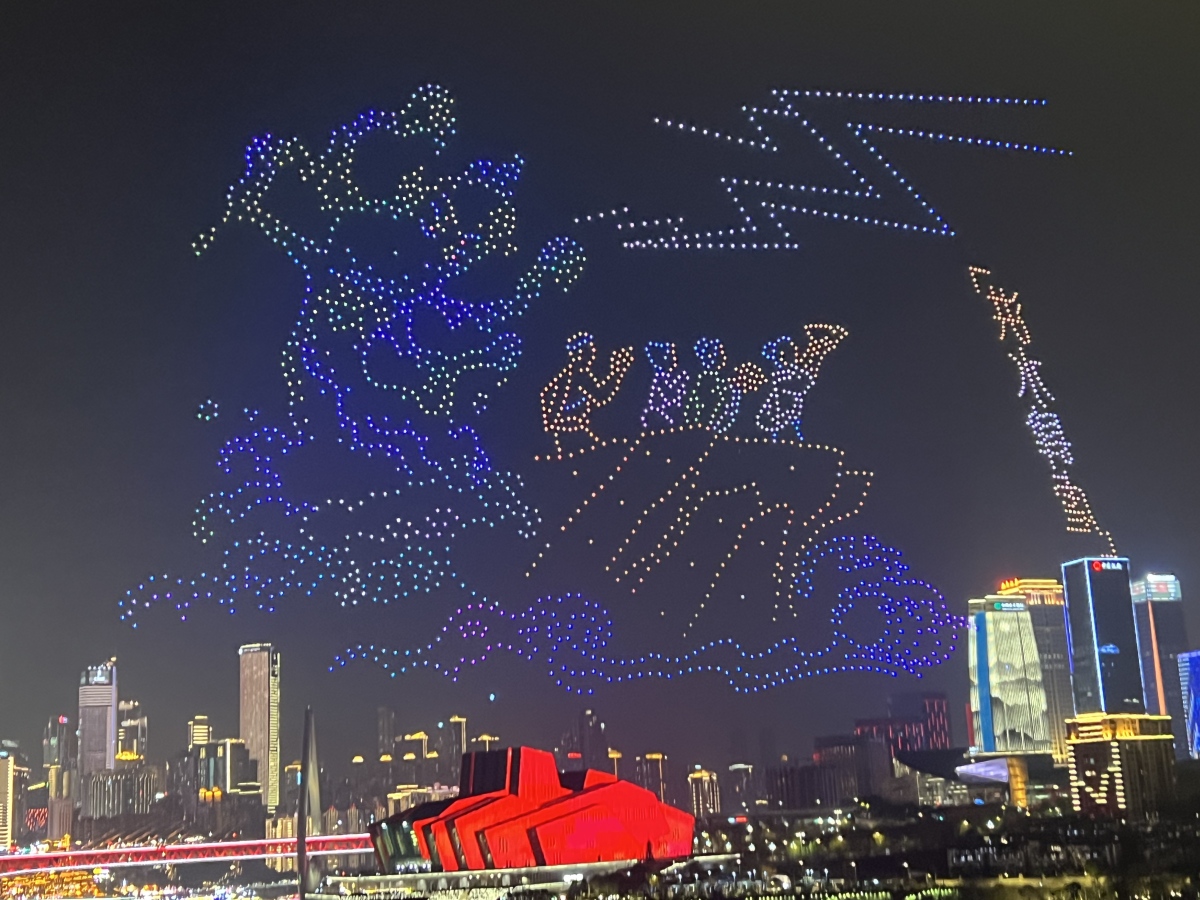
A drone light show illuminates Chongqing's night sky. (Photo/ Vivian Yan)
On the ground, the city has already introduced one-stop online visa applications and "check-in upon arrival" for group tours, alongside expanded foreign-card POS terminals and currency exchange outlets. Tax refund schemes in districts like Jiefangbei and Chaotianmen now process refunds in as little as five minutes.
Looking ahead, Chongqing plans to deepen its ASEAN foothold while expanding into European and American markets with country-specific marketing campaigns. More flights to Southeast Asia are in the pipeline, and the city is collaborating with Chengdu and Xi'an on "multi-entry, multi-stop" itinerary products to strengthen its role as a regional tourism gateway.

Qutang Gorge scenic spot is an important tourist attraction along the Yangtze River. (Photo/2024 Forum for Yangtze River Civilizations)
"During the 15th Five-Year Plan period, our goal is to enter the ranks of China's strong cultural tourism provinces and cities, with inbound tourist numbers rising by more than 30 percent," a Chongqing Municipal Commission of Culture and Tourism Development official said.
For now, the message is clear: Chongqing isn't just open for business - it's putting on a show. And the world is watching.
By continuing to browse our site you agree to our use of cookies, revised Privacy Policy and Terms of Use. You can change your cookie settings through your browser.
For any inquiries, please email service@ichongqing.info