
Chongqing - Chongqing will introduce new rules on December 1 to keep weather forecasts and warnings updated as conditions change, clarify who can issue official alerts and improve coordination between weather agencies and emergency responders, officials said at an October 19 press briefing.
The municipal meteorological bureau and the municipal justice bureau developed the 30-article Measures on Meteorological Information Services in Chongqing to address the challenges of forecasting severe weather in a mountainous megacity, where conditions can vary sharply over short distances.
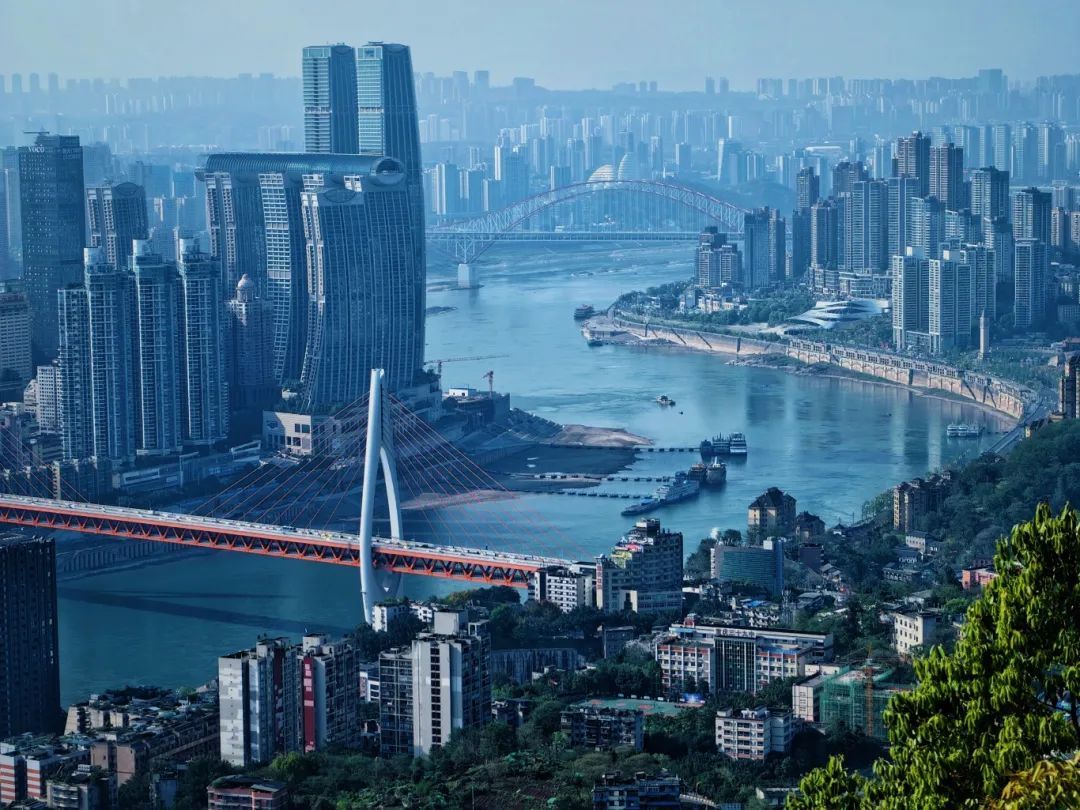
A view of Chongqing's urban landscape. (Photo/Chen Xin)
Zhou Guobing, deputy director of the Chongqing Meteorological Bureau, said the city's forecast accuracy has reached 82%. Forecasters can generally predict widespread weather systems one to three days in advance, but identifying the precise location and timing of heavy rainfall remains difficult.

Schematic of Chongqing Meteorological Bureau's alert workflow for excessive heavy rainfall thresholds. (Graphic/Chongqing Meteorological Bureau)
Chongqing's complex terrain, dense urban development and local heat-island effects can cause sharply different weather conditions across nearby areas. Short-lived events such as intense downpours, thunderstorms, hail and tornadoes are particularly difficult to pinpoint several days ahead.

Firefighters conduct flood rescue operations in Hechuan District, Chongqing, amid extreme convective weather on June 7, 2026. (Photo/Chongqing Fire and Rescue Bureau)
The new rules aim to improve forecasting through denser observation networks, technological innovation, and more frequent updates as conditions evolve.
A central feature is a progressive warning system that provides authorities with successive updates as severe weather approaches.
Chongqing has developed a "24-12-6-2-0 hour" framework, in which forecasts and warnings are refined at successive intervals before an event. Updates can be narrowed to the township level, giving local officials more specific information for emergency planning.

An X-band dual-polarization weather radar in Wulong District, Chongqing. (Photo/Chongqing Meteorological Bureau)
Yang Zhi, deputy director of the Chongqing Meteorological Bureau, said the system had been tested during severe rainfall events. During a rainstorm on June 7, authorities safely relocated more than 8,000 people ahead of danger. Pre-event transfers accounted for 79% of all relocations during the response, according to the bureau.
The measures also formalize a system for ensuring warnings reach responsible officials and residents. Under the mechanism, alerts trigger assigned response tasks through local governance platforms, while emergency broadcasts, electronic geofencing, door-to-door notifications and gongs or whistles help reach communities.
During heavy rainfall in Shizhu Tujia Autonomous County on August 2, local officials, community coordinators and grid workers used these methods to safely evacuate 387 people from 63 households.
The approach reflects China's use of local administrative networks to carry emergency information from municipal authorities to townships, villages and individual households.
The rules also establish a unified system for issuing public weather forecasts and meteorological disaster warnings. Only meteorological stations affiliated with the competent meteorological authorities may release these official notices to the public under their assigned responsibilities.
Media outlets must use the latest information supplied by those stations and identify both the issuing station and publication time.
The measures also prohibit online content producers from creating, reproducing or publishing weather rumors. Platforms must handle illegal or noncompliant information in accordance with the law, while meteorological, cyberspace, and public security authorities must coordinate monitoring and enforcement.
Yin Jie, deputy director of the Chongqing Municipal Justice Bureau, said the rules regulate the release and dissemination of weather information rather than restrict normal communication. Residents can still share weather information on social media and other channels, but official forecasts and disaster warnings should come from authoritative sources.
Beyond emergency warnings, the measures address growing demand for weather services in agriculture, transport, tourism, energy and the low-altitude economy, including activities involving drones and other aircraft operating at relatively low altitudes.

Chongqing's traffic meteorology analysis system provides weather alerts for expressways. (Photo/Chongqing Meteorological Bureau)
The rules establish a public-service role for meteorological authorities while encouraging private investment and market-based services to meet more specialized needs.
They also call for coordination among meteorological, water-resource, natural-resource, and agricultural and forestry departments, including sharing observation data and facilities. This is intended to strengthen joint assessments of risks such as geological disasters, rising water levels in smaller rivers and urban flooding.
For Chongqing, the challenge is not simply to make forecasts more accurate, but to ensure that warnings reach the people responsible for acting on them.
By embedding staged warnings, interdepartmental coordination, and information-sharing requirements into municipal rules, the city aims to improve both weather monitoring and severe-weather response as climate risks and demand for specialized forecasts continue to grow.
By continuing to browse our site you agree to our use of cookies, revised Privacy Policy and Terms of Use. You can change your cookie settings through your browser.
For any inquiries, please email service@ichongqing.info